Improve Your EPC Score in Sunderland
Serving Sunderland and the wider Tyne and Wear area, including Washington, Houghton-le-Spring, Seaham.
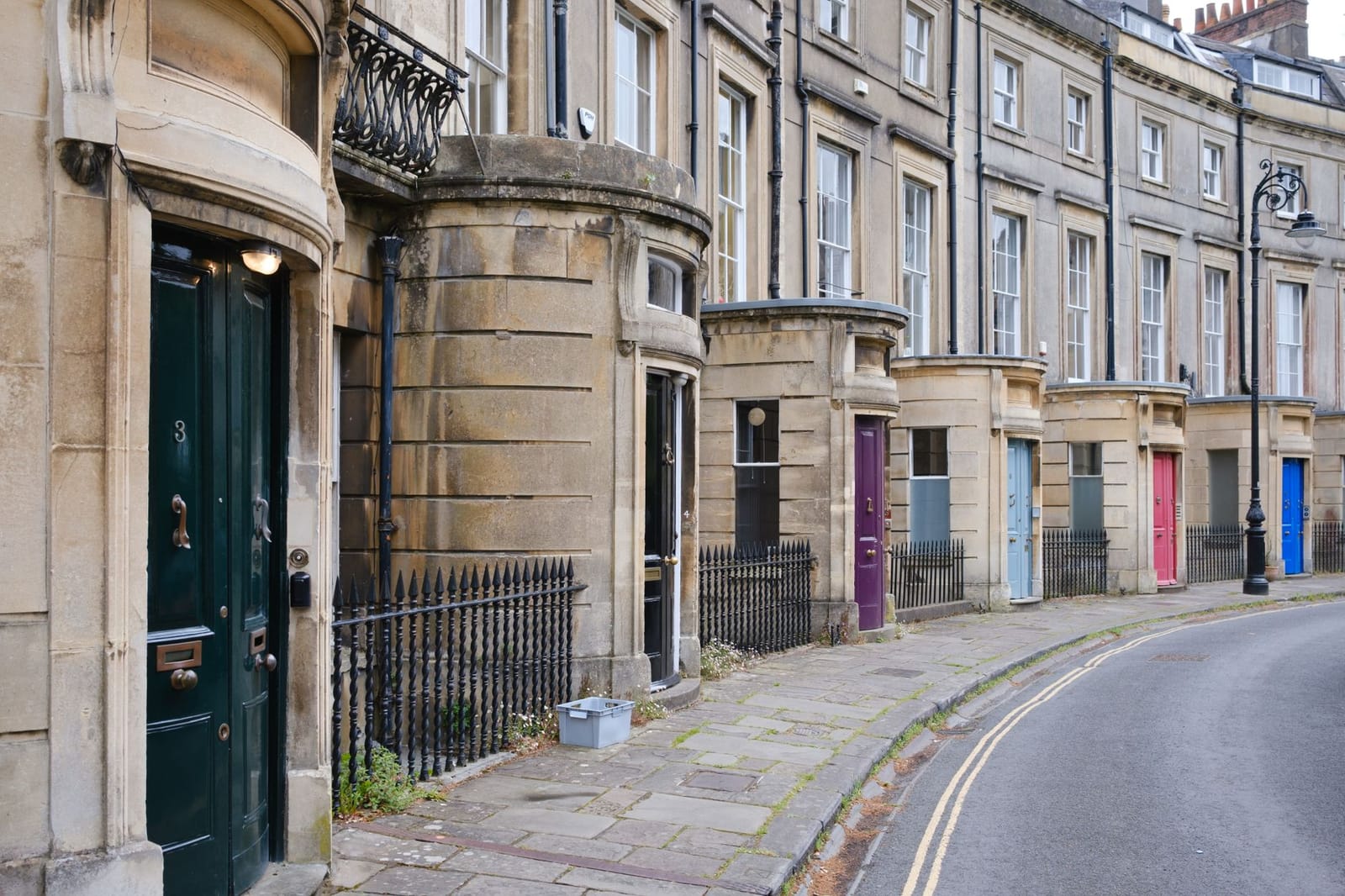
The Sunderland cottage: a single-storey scoring puzzle
Sunderland’s defining housing type is recorded in the Tyne and Wear Historic Environment Record and almost nowhere else in the country: the Sunderland cottage, a single-storey terraced house built in volume between roughly 1860 and 1910 for the town’s shipyard and engineering workforce. Whole grids of them survive, the “Little Egypt” streets of Hendon, Paxton Terrace in Pallion, the alphabet streets of High Barnes, the Scottish streets of Fulwell, with only two streets carrying listed status, so improvement is rarely consent-constrained. For an EPC, the cottage’s geometry changes the arithmetic. RdSAP models cost per square metre, and in a single-storey home the roof spans the entire footprint: heat loss upward covers 100% of the floor area rather than the half-or-less of a two-storey terrace. The practical consequence is that the loft top-up, £300-£800 for typically +5-15 points anywhere, is worth even more of the gap here, while the solid brick walls that would dominate a two-storey terrace’s certificate carry proportionally less of the load. If you want to improve your EPC score in Sunderland, the plan usually starts a metre above your head.
Where Sunderland homes lose EPC points
The cottage grids of Hendon, Pallion, Millfield, High Barnes, Southwick and Fulwell lose points through uninsulated or thinly insulated roofs (the big one), solid walls, suspended timber floors, single-glazed frontages where originals survive, and legacy heating without controls. Coastal exposure on the streets nearest Roker and Hendon makes draught-proofing (£30-£250, typically +1-3 points) deliver more felt benefit than its point count suggests.
The semi and estate belt, Farringdon, Thorney Close, Grindon, Washington’s villages, is cavity-wall stock: fill at £400-£1,500 (typically +5-15 points), loft top-up, and controls form the classic sub-£2,500 route that jumps a band.
Flats and maisonettes, including blocks on electric heating, lose points on modelled electricity costs; high-retention storage heaters, smart controls, a cylinder jacket and LED are the in-demise fixes.
Commercial units, from Pallion’s industrial stock to Doxford’s offices, sit on SBEM asset ratings instead, where LED lighting with controls plus heating upgrades is the standard fastest route up from an F or G, and the first items on any recommendation report.
The rented slice. Private renting reached 14.8% of Sunderland households at Census 2021 (up from 12.2% in 2011), smaller than the big-city student markets, but the E-minimum law and the confirmed 2030 C policy apply identically, and cottages are heavily represented in the city’s cheaper rental stock.
And the paperwork. RdSAP 10, in force since 15 June 2025, scores heating from documented model data and records smart controls and battery storage. Sunderland’s cottages have been improved piecemeal for a century; the certificates only credit what can be evidenced. Arriving at a re-assessment with invoices, the boiler’s model number and loft-depth photographs is routinely worth points on its own.
Cheapest points first on Wearside
The ladder, from published UK ranges, planning figures, property-specific, confirmed by assessment:
- Loft insulation top-up to 270-300mm, £300-£800, typically +5-15 points. Promoted to first place in Sunderland deliberately: on a single-storey cottage the roof-to-floor ratio makes this the dominant fabric measure, and a documented 100mm-to-300mm top-up elsewhere gained 8-9 points for £800.
- LED lamps throughout, £20-£80, typically +1-3 points (£10-£40 per point).
- Hot-water cylinder jacket (80mm+), £15-£80, typically +1-4 points where a tank survives.
- Heating controls, programmer, room thermostat, TRVs, £150-£500, typically +2-5 points; smart controls now recorded.
- Draught-proofing, £30-£250, typically +1-3 points; the coastal streets feel it most.
- Suspended floor insulation, £400-£2,300, typically +2-6 points; cottage floor voids are often accessible.
- Cavity wall insulation, £400-£1,500, typically +5-15 points, estate stock only; the cottages are solid-walled.
The expensive shelf sits where it always sits: condensing boiler swap £2,000-£3,500 (typically +5-15 points, evidence the model number), solar PV £4,500-£8,000 (typically +6-15, and a cottage’s large simple roof is often a good host once the cheap points are banked), glazing (documented at +2 points for £5,400 in a published case) and solid-wall insulation £8,000-£15,000+ (typically +10-20, the last resort). Sub-£500 detail on the cheapest improvements hub; band-jump budgets on the cost guide. All of it inside the 0% VAT window on energy-saving materials, which closes 31 March 2027.
What 707 Gentoo homes tell you about reaching band C
Sunderland is currently home to one of the North East’s clearest demonstrations of sequenced EPC improvement. Gentoo, the city’s largest social landlord, is delivering a £5.69m programme part-funded by a £2.845m Social Housing Decarbonisation Fund Wave 2.2 grant, upgrading 707 Sunderland homes so that every one reaches EPC band C across 2024/25-2025/26, with Mears covering a minimum of 515 homes (£4.145m of works) and RE:GEN 197 homes (£1.54m). Read the measure list closely, because it is a costed vote on what actually moves certificates: loft insulation, cavity wall insulation, improved ventilation, solar PV, low-energy lighting, and smart, zoned heating controls. No wholesale glazing programme; no default solid-wall insulation. It is the cost-per-point ladder, executed at portfolio scale, fabric where cheap, controls everywhere, generation as the finisher, ventilation engineered alongside. Gentoo’s wider £42.9m investment across nearly 6,000 Sunderland homes (announced May 2024) points the same direction. A private cottage owner runs the same play at house scale: roof, quick wins, controls, then decide whether the arithmetic still needs anything four-figure. Our heating and controls guide covers the zoned-controls element the Gentoo spec leans on.
A Fulwell cottage, worked through (illustrative)
Illustrative, assembled from the published ranges, not a guaranteed outcome. A two-bed Sunderland cottage in the Scottish streets sits at E (50): nineteen points short of band C, twelve short of a solid D. Sequence: loft top-up from 75mm to 300mm across the full footprint (£650, typically +5-15, the cottage’s ace), LED throughout (£50, +1-3), draught-proofing the front door, sashes and floor perimeter (£200, +1-3), programmer + room stat + TRVs (£430, +2-5), suspended floor insulation via the void (~£850, +2-6). Indicative outlay: about £2,180, against typical combined uplifts of +11 to +32 points. The central case lands the cottage at or above 69; the cautious case lands high in band D with the walls untouched and roughly £7,800 of headroom left inside the proposed £10,000 cap. The documented benchmark for solid-wall terraces, E (48) to C (77) for around £8,550, loft points at ~£95 each, glazing points at ~£2,700 each, says the shape of this plan is proven, not hopeful. Then the close: a fresh assessment at £45-£120, evidence pack in hand, new certificate lodged for ten years. Start by checking the current score at find-energy-certificate on GOV.UK.
The rulebook: current law and confirmed-but-not-law policy
Law today: privately rented homes must meet EPC E, new tenancies since 1 April 2018, all tenancies since 1 April 2020, with a £3,500 cost cap and penalties up to £5,000 per property, enforced by Sunderland City Council. Confirmed policy, not yet enacted: the government confirmed on 21 January 2026 that rented homes must reach EPC C by 1 October 2030, measured across two of the reformed metrics (fabric performance plus heating system or smart readiness) with a proposed £10,000 cost cap; secondary legislation is reported as targeted for 2027, so final exemption detail is pending. The certificate itself: reformed four-metric EPCs produced by the Home Energy Model are targeted from October 2026, subject to the regulations, with industry reporting flagging possible slippage, existing certificates keep their ten-year validity. The methodology: RdSAP 10 has governed domestic assessments since 15 June 2025; evidence converts to points. Funding beyond the ladder: the Boiler Upgrade Scheme pays £7,500 toward an air source heat pump (no outstanding loft or cavity recommendations allowed on the EPC, fabric first is a grant condition; see our heat pump guide), and the Warm Homes: Local Grant route for D-G homes with household incomes under £36,000 runs via GOV.UK. Before spending anything, Sunderland households can also use Home Energy Advice North East, the North East Combined Authority’s free advice service, staffed by Energy Saving Trust advisors, which supported more than 2,000 North East residents between April 2024 and March 2025, to sanity-check a measure plan at no cost. Sunderland’s citywide 2040 net-zero framework shapes local programmes such as Gentoo’s; it imposes no private duties.
Sunderland EPC improvement FAQs
Why does loft insulation matter more in a Sunderland cottage than in a normal terrace?
Geometry. RdSAP models cost per square metre of floor area, and in a single-storey cottage the roof sits over every square metre, against roughly half in a two-storey terrace. An uninsulated cottage loft therefore drags the score harder, and the £300-£800 top-up recovers more of the gap. It is the rare case where one three-figure measure can carry most of a band jump, provided the depth is photographed and the invoice kept for the assessor.
Are Sunderland cottages hard to improve because they are historic?
No, that is the pleasant surprise. Only two cottage streets are listed, so the overwhelming majority face no heritage consent barriers: loft, floor, controls, LED, draught-proofing and even solar go ahead as standard. The construction is solid-wall, so cavity fill is off the menu, but the documented sequencing evidence shows solid-wall stock reaching C without wall insulation. Where originals survive, secondary glazing beats replacement on cost per point anyway.
What did the Gentoo programme install to get 707 homes to band C?
Loft insulation, cavity wall insulation (on the stock that has cavities), improved ventilation, solar PV, low-energy lighting and smart zoned heating controls, a £5.69m programme with £2.845m of SHDF Wave 2.2 grant, completing across 2024/25-2025/26. The read-across for private owners: no glazing-led route, no default wall insulation; fabric-and-controls first, generation last, ventilation alongside. That is the same order our plans follow.
My SR2 rental is an E. What is legally required and by when?
E is lawful today, the minimum since 1 April 2020 for all tenancies, enforced by Sunderland City Council with penalties up to £5,000. The confirmed policy is C by 1 October 2030 across two reformed metrics with a proposed £10,000 cap, awaiting secondary legislation reported for 2027. With a nineteen-point average gap from mid-E to C, the economical move is to bank the cheap points now, inside the 0% VAT window to 31 March 2027, and re-assess once.
Does coastal weather change which measures work in Roker or Hendon?
The score inputs are the same, but salt-laden wind sharpens two priorities: draught-proofing (cheap, +1-3 points, immediate comfort) and doing any external work, solar fixings, EWI if ever justified, to marine-exposure specifications. Internally nothing changes: roof, controls, lighting and hot water carry the points. Ventilation matters in any tightened-up cottage; the Gentoo spec paired insulation with ventilation for good reason. Broader questions: our FAQs page.
Areas we cover around Sunderland
We build improvement plans across all SR postcodes, the cottage grids of Hendon, Pallion, Millfield, High Barnes, Southwick and Fulwell, the estate belt from Farringdon to Grindon, and the coastal streets of Roker and Seaburn, plus Washington, Houghton-le-Spring, Seaham, South Shields and Peterlee. Nearby city pages: Newcastle for Tyneside-flat arithmetic and Leeds for Yorkshire’s back-to-back stock.
Get your Sunderland plan
Send the address and current rating, or we pull the lodged certificate, and you receive the gap arithmetic, a roof-first sequence built for cottage geometry (or your semi, terrace or flat), the funding checks, and the evidenced re-assessment that lodges the new score for ten years. Request your Sunderland improvement quote.
Postcodes covered in Sunderland
- SR1
- SR2
- SR3
- SR4
- SR5
- SR6
Other areas we cover
Get a free quote in Sunderland
Responds within one working day
- 1. Gap analysis from your current EPC, your score, the gap to the next band, no obligation.
- 2. A ranked plan costed per point, cheapest first, with the evidence to keep.
- 3. Re-assessment by an accredited energy assessor, lodged on the national register.
- Accredited DEAs & NDEAs
- RdSAP 10 evidence-based
- Costed per point
- Lodged on the register