Improve Your EPC Score in Norwich
Serving Norwich and the wider Norfolk area, including Wymondham, Dereham, Aylsham.
Norwich knows what band A looks like, here is how the other 95% catch up
Norwich City Council built the most celebrated energy-efficient homes in Britain. Goldsmith Street, 93 Passivhaus council houses completed in 2019, became the first social housing scheme ever to win the RIBA Stirling Prize, with residents’ heating costs cut by around 70% against a typical home. It is the clearest demonstration in the country of what the top of the EPC scale looks like.
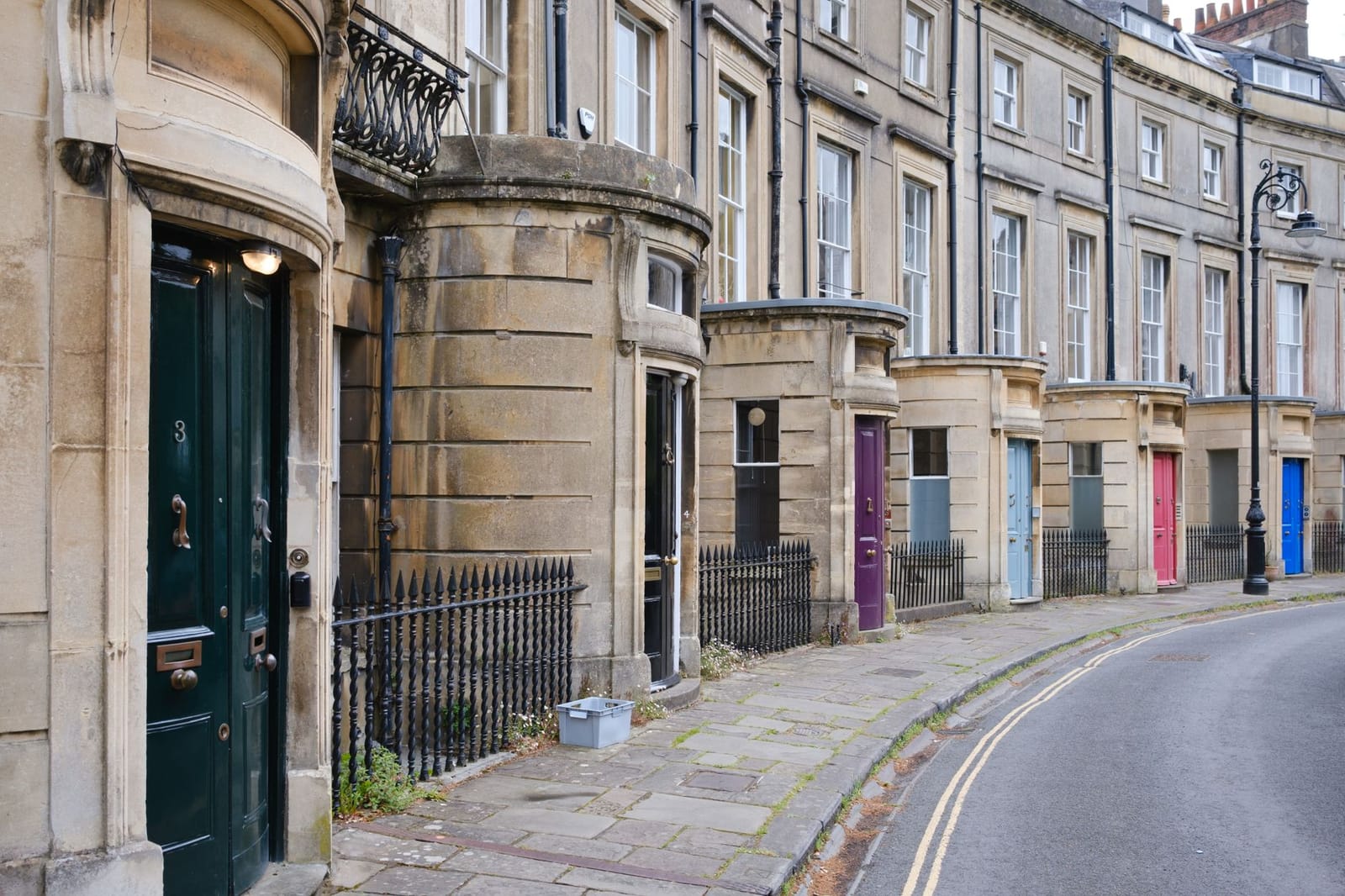
The other side of the ledger is the stock the rest of the city actually lives in. Norwich carries roughly 1,500 listed buildings and 17 conservation areas, and whole districts of pre-1919 solid-wall terraces, the property type that anchors the bottom of the EPC scale. The median English home scores 69, the first point of band C; unimproved Victorian terraces typically assess in the 30s and 40s. Between those two poles sits the real question for Norwich owners and landlords: which points are cheap, which are expensive, and in what order do you buy them. The answer is arithmetic, not ideology, check your score on find an energy certificate, subtract it from 69, and buy the gap at the lowest price per point.
The cheapest EPC points in Norwich
Ranked by cost per point, using published typical ranges (property-specific, confirmed by assessment):
- LED lighting throughout, £20-£80, typically +1-3 points. In a gas-lit-era terrace converted piecemeal over a century, it is common to find half the fittings still halogen.
- Hot-water cylinder jacket, £15-£80, typically +1-4 points. Older Norwich terraces and 1930s semis with original airing-cupboard cylinders gain most.
- Heating controls, programmer, room thermostat, TRVs: £150-£500, typically +2-5 points. Smart controls are recorded under RdSAP 10 since 15 June 2025.
- Draught-proofing, £30-£250, typically +1-3 points. The highest-value measure per pound in sash-windowed conservation-area homes, and no consent is needed.
- Loft insulation top-up to 270-300mm, £300-£800, typically +5-15 points. A documented case gained 8-9 points from an £800 top-up on a Victorian terrace.
- Suspended timber floor insulation, £400-£2,300, typically +2-6 points. Many NR2 and NR3 terraces have accessible voids that keep the cost at the low end.
The expensive end of the ladder matters just as much. Double glazing is documented at 2 points for £5,400, around £2,700 per point, and solid-wall insulation runs £8,000-£15,000+. Both have their place; neither is where a Norwich improvement plan starts. The full ranking lives on our cheapest EPC improvements hub, with £-per-point context in the cost guide.
Where Norwich homes lose their points
The Golden Triangle and the Victorian terraces (NR2). The wedge between Earlham Road and Newmarket Road, the city’s most intensively bought, let and renovated district, is almost entirely terraces and townhouses built between the 1840s and the early 1900s. Solid 9-inch brick walls, single-glazed sashes, suspended timber floors: unimproved, these homes assess at E or low D, and the walls alone are typically the biggest single drag on the score. The same stock runs through Heigham Grove, the streets off Dereham Road and much of NR3 around Magdalen Street.
The interwar council rings. Norwich City Council built over 7,500 homes between the wars, and the flagship 1920s Mile Cross estate is so architecturally significant it has been a designated conservation area since 1979. The EPC profile is friendlier here, most interwar and later homes have cavity walls that can be filled for £400-£1,500 and typically +5-15 points, but the conservation-area status on Mile Cross means external wall changes need care and consent.
The historic core. Inside the medieval street plan, Elm Hill, Tombland, the Lanes, listed status is the norm, and uPVC replacement windows are routinely refused. Improvement here works within consent: secondary glazing (which RdSAP scores), draught-proofing, controls, lighting, and insulation in concealed roof and floor zones.
The postwar and modern estates. From Lakenham and Tuckswood to the newer NR7 and NR8 fringes, cavity-walled stock responds to the standard cheap ladder, and homes built after 2012 mostly sit at B or C already, the ONS’s 2025 analysis puts the median score of new dwellings at 84.
Heritage-safe improvements: points without consent risk
Norwich’s 17 conservation areas push more of the city than you might expect into “check before you alter the outside” territory. The useful fact: almost none of the cheap points touch the exterior. LED lamps, cylinder jackets, heating controls, draught-proofing, loft top-ups and floor insulation are all internal, consent-free and together worth 10-25 points on a typical unimproved terrace, frequently the whole distance from mid-D to C for £500-£1,500.
Where windows genuinely drag the score, secondary glazing is the conservation-safe route: it is scored by the assessor, costs a fraction of replacement sashes, and avoids the planning fight entirely. Our glazing and windows guide sets out the honest arithmetic, windows carry only 10-15% of the score’s weight, so fit them for comfort and noise, and buy your points elsewhere. For the walls-roof-floor decisions on solid-wall terraces, the sequencing is on the insulation hub: loft first, floor second, walls last and only if the points arithmetic still demands them.
Funding a Norwich improvement plan
Two live routes are worth checking before any budget is set. Norwich City Council promotes the Warm Homes: Local Grant for eligible lower-income households, with packages of insulation and low-carbon heating worth up to £30,000 per home, eligibility is income- and EPC-band-tested, so check the council’s current criteria. Across the county, the Norfolk Warm Homes partnership (led by Broadland District Council, covering Norwich) has focused delivery on homes not heated by mains gas.
Everyone else still gets two dated, genuine supports: 0% VAT on energy-saving materials, insulation, controls, heat pumps, solar, until 31 March 2027 (VAT Notice 708/6, see the government guidance), and the £7,500 Boiler Upgrade Scheme grant toward a heat pump, landlords included. There is no grant for the assessment itself: a domestic re-assessment runs £45-£120 and is the step that makes every other pound visible.
A Golden Triangle worked example (illustrative)
A three-bed bay-fronted terrace off Unthank Road, let to sharers, rated E (52), 17 points short of C. The certificate’s own recommendation list, sequenced cheapest-first: LED throughout (£60, +1-3), programmer, room stat and TRVs (£430, +2-5), draught-proof the original sashes (£220, +1-3), loft top-up 100mm to 300mm (£550, +5-15), suspended-floor insulation from the accessible void (~£800, +2-6). Total around £2,060 against typical ranges spanning +11 to +32 points, with the documented central case comfortably clearing the 17-point gap, no wall insulation and no new windows. Evidence pack (invoices, product datasheets, photos of insulation depth) handed to the assessor, fresh certificate lodged. Illustrative arithmetic from published ranges, not a guarantee; your certificate’s recommendation report gives the property-specific version.
The compliance backdrop, with dates
The law today for Norwich landlords: minimum EPC E to let, in force since 1 April 2018 for new tenancies and 1 April 2020 for all tenancies, £3,500 cost cap, penalties up to £5,000 per property enforced by Norwich City Council. Confirmed policy, not yet law: on 21 January 2026 the government confirmed privately rented homes must reach EPC C by 1 October 2030, measured across two reformed metrics with a proposed £10,000 cost cap, secondary legislation is reported as targeted for 2027, so final detail is not settled.
The certificate itself is changing too: from October 2026 (targeted, subject to regulations) domestic EPCs move to four headline metrics, energy cost, fabric performance, heating system, smart readiness, produced with the Home Energy Model. The Norwich-relevant consequence: fabric points (insulation, draught-proofing) and controls score under both the current and reformed regimes, whereas a rating propped up by a single strong element may read differently once split four ways. Cheapest-first happens to be future-proof-first.
Norwich EPC improvement questions
Can I improve the EPC of a listed building in the Norwich Lanes or Tombland?
Yes, within consent. LED lighting, heating controls, a cylinder jacket, draught-proofing, loft insulation where the roof void allows, and secondary glazing are all typically achievable without harming historic fabric, and all score. Replacement uPVC windows and external wall insulation are generally refused on listed buildings; where consent is refused, that refusal can support a registered MEES exemption for landlords, but the internal measures usually deliver the needed points first.
My Golden Triangle terrace was quoted £12,000 for wall insulation. Is that the only route to C?
Usually not. A documented solid-wall Victorian terrace went from E (48) to C (77) for around £8,550, and the points came overwhelmingly from an £800 loft top-up, floor insulation and controls, not the walls. Price the sub-£1,000 measures first, re-run the arithmetic, and treat internal or external wall insulation as the last resort it is. The government’s own estimate for an average rented home reaching C is about £5,400; the English Housing Survey 2023-24 average is £6,864.
Do I need planning permission in a conservation area for loft insulation or a heat pump?
Loft insulation, no, it is internal. Air source heat pumps are usually permitted development, but conservation-area and listed settings carry extra siting conditions, so check with Norwich City Council planning before ordering. Solar needs consent care on listed buildings and in some conservation-area locations. The consent-free core, lighting, controls, draught-proofing, loft, floor, is where every Norwich plan starts regardless.
Whole streets in NR3 seem to be rated D. Why so uniform?
Because RdSAP models standard assumptions across near-identical terraces: same walls, same era, similar heating. The differences that do show up come from documented improvements, an evidenced condensing boiler, a photographed loft top-up, a cavity-fill certificate on the later infill houses. Under RdSAP 10 evidence converts directly to points, which is why two outwardly identical Norwich terraces can sit a band apart.
Does the council give grants for landlords to reach band C?
Not as a general entitlement. The Warm Homes: Local Grant is aimed at lower-income households (owner-occupied, and some private rentals where the tenant qualifies); ECO4 is tenant-eligibility-driven and in its end phase, check current status on GOV.UK. The dependable universal supports are 0% VAT until 31 March 2027 and the £7,500 Boiler Upgrade Scheme. Our FAQs cover every scheme with dates.
Areas we serve around Norwich
We cover every Norwich postcode, NR1 to NR8 and NR14, from the Golden Triangle and the city centre through Mile Cross, Lakenham and Thorpe to the suburban fringe, plus Wymondham, Dereham, Aylsham, Loddon and Acle across the wider Norfolk market. Elsewhere in the East of England, the stock profile shifts and so does the plan: compare our Cambridge page (conservation-area terraces at far higher prices) and Luton (interwar cavity semis, a different cheap-jump entirely).
Start with your number, not a quote for windows
A Norwich EPC plan starts with two numbers: your current score and 69. We sequence the gap cheapest-points-first, consent-safe measures for the conservation areas, fabric-first for the terraces, prepare the RdSAP 10 evidence pack, and arrange the fresh assessment that lodges your new score for ten years. If you want to improve your EPC score without buying a single unnecessary measure, request a free quote and we will map your route to C, costed per point.
Postcodes covered in Norwich
- NR1
- NR2
- NR3
- NR4
- NR5
- NR6
- NR7
- NR8
- NR14
Other areas we cover
Get a free quote in Norwich
Responds within one working day
- 1. Gap analysis from your current EPC, your score, the gap to the next band, no obligation.
- 2. A ranked plan costed per point, cheapest first, with the evidence to keep.
- 3. Re-assessment by an accredited energy assessor, lodged on the national register.
- Accredited DEAs & NDEAs
- RdSAP 10 evidence-based
- Costed per point
- Lodged on the register