Improve Your EPC Score in Hull
Serving Hull and the wider East Yorkshire area, including Beverley, Cottingham, Hessle.
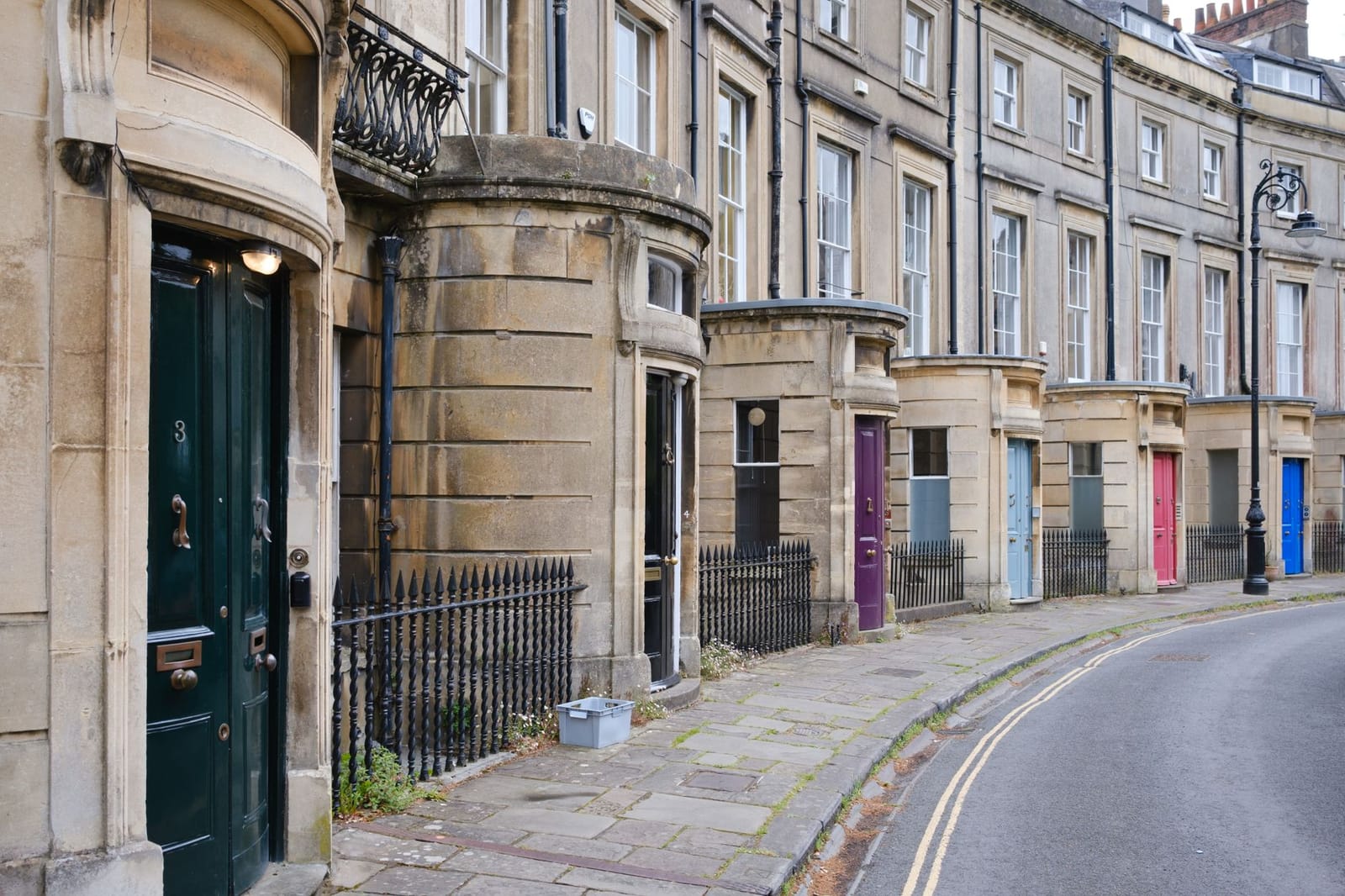
England’s most terraced city, and what that does to EPC scores
Hull’s own Joint Strategic Needs Assessment states it plainly: over half of the city’s housing stock is terraced, 52.7% against roughly 26% for England, across a stock of about 124,750 properties in 2024. No other major English city comes close, and it gives Hull an unusually legible EPC problem. A terrace has two party walls doing it modelled favours and two exposed elevations doing the damage; its score is decided by the loft, the heating system and its controls, the floor, the lighting and, since RdSAP 10 arrived on 15 June 2025, the paperwork. It is also a city where the money side of the arithmetic bites: Hull’s average house price is around £145,000, so a £12,000 wall-insulation quote can approach a tenth of the asset’s value, while the measures that actually close most Hull point-gaps cost hundreds. The route to improve your EPC score in Hull runs through cost-per-point discipline more than anywhere else in Yorkshire: find the score, subtract from 69, and buy the gap from the cheap end of the list.
The cheapest EPC points in Hull
From published UK ranges, planning figures, confirmed for your property by an assessment:
- LED lamps throughout, £20-£80, typically +1-3 points. At £10-£40 per point, the cheapest line on any Hull certificate.
- Hot-water cylinder jacket (80mm+), £15-£80, typically +1-4 points, where a cylinder survives (many Hull terraces converted to combis; skip if so).
- Draught-proofing, £30-£250, typically +1-3 points. Terraced passages, bay junctions and front doors are Hull’s classic leak paths.
- Heating controls, programmer, room thermostat, TRVs, £150-£500, typically +2-5 points. The single commonest deduction on Hull’s rental terraces is a boiler running with no room stat.
- Loft insulation top-up to 270-300mm, £300-£800, typically +5-15 points; a documented 100mm-to-300mm top-up gained around 8-9 points for £800.
- Suspended floor insulation, £400-£2,300, typically +2-6 points, where the ground-floor void allows access.
Above that sit the four-figure measures: a condensing boiler swap (£2,000-£3,500, typically +5-15 points, strongest when replacing a genuinely old non-condensing unit, always with the model number evidenced), solar PV (£4,500-£8,000, typically +6-15, the finisher that lifts a solid C into B), double glazing (documented in a published case at +2 points for £5,400, fit it for comfort, condensation and street noise, never for points-per-pound) and solid-wall insulation (£8,000-£15,000+, the last resort for weak-E and F stock). Full package details on the cheapest improvements hub; whole-band budgets on the cost guide. All of it carries 0% VAT on qualifying residential installs until 31 March 2027.
Where Hull homes lose points
The bay terraces of HU3 and HU5, the Avenues’ fringes, Newland, Spring Bank, Hessle Road’s streets, are pre-1919 solid-brick stock: no cavity to fill, original floors, and rooms-in-roof over many of the larger examples. Their cheap points are in the roof (a straight top-up, or room-in-roof insulation where the attic is a bedroom, the strongest single measure in Propertymark’s analysis at +9.91 points on average) and in controls.
The interwar and post-war estates, North Hull, Bilton Grange, Orchard Park’s houses, Longhill, are cavity-wall territory, where fill at £400-£1,500 (typically +5-15 points) plus loft plus controls is the classic sub-£2,500 band jump.
The rental belt. Hull’s private rented sector has more than doubled this century, from 10.8% of households in 2001 to 22% by 2021, and much of it sits in exactly the terraces above. For landlords the arithmetic is regulatory as well as financial: EPC E has been the legal floor for all tenancies since 1 April 2020, and the confirmed 2030 C policy is aimed squarely at this stock.
Heating edge cases. Census-derived data shows 1.8% of Hull households with no central heating at all, but the figure climbs to 17.2% in some individual output areas. A home heated by plug-in electric heaters is scored punishingly on modelled cost; installing a controlled central heating system is transformative for those certificates, and it is precisely the category local grant funding exists to reach.
Across every category, RdSAP 10’s evidence rules apply: an efficient boiler without its documentation defaults to pessimistic age-band scoring, filled cavities without a guarantee can be assessed as unfilled, and smart controls and batteries only count if recorded. Hull’s improvement history is long and piecemeal; its paperwork rarely kept pace. Bringing evidence to the assessment is free points.
Three measures that fit Hull’s terraces
The loft, first and always. On a two-bed bay terrace the roof is the largest exposed surface after the front and back walls, and the only one that costs three figures to fix. £300-£800 buys the top-up to 270-300mm and typically +5-15 points, the best sub-£1,000 fabric spend in the city. Where the attic is a bedroom, price room-in-roof insulation instead and treat its +9.91-point average as the target.
Controls, second. A programmer, room thermostat and TRVs cost £150-£500, add typically +2-5 points, and fix the deduction that Hull’s uncontrolled combis generate street after street. Smart controls are recorded under RdSAP 10 and feed the smart-readiness metric arriving with the reformed certificates.
Draught-proofing, third, and honestly. At £30-£250 for typically +1-3 points it will not jump a band alone, but on Hull’s exposed east-coast streets it changes how the house feels while the bigger measures are scheduled, and it improves the measured performance of everything around it. What we will not recommend for points: glazing. The documented arithmetic, 2 points for £5,400, is the worst cost-per-point of the common measures, and on a Hull terrace that money nearly always buys two whole measures further up the list. The honest glazing case is comfort and noise; see the glazing guide for when it is genuinely worth it.
£3.4m of local help: Hull Warm Homes
Hull City Council’s Warm Homes team secured £3.4m of Warm Homes: Local Grant funding from the Department for Energy Security and Net Zero, announced 24 July 2025 and running over three years. It funds wall, loft and underfloor insulation, air source heat pumps, smart controls and solar panels, fully funded for eligible households: an EPC of D, E, F or G and household income of £36,000 a year or less (with benefit and postcode pathways too), with delivery handled through E.ON. Applications start at GOV.UK’s Warm Homes: Local Grant page. Around it sit the national schemes: the Boiler Upgrade Scheme’s £7,500 toward a heat pump (fabric-first conditions, no outstanding loft or cavity recommendations on the EPC; see our heat pump guide), and the 0% VAT window to 31 March 2027. Two honesty notes the industry often skips: ECO4 is tenant-eligibility-driven and in its end phase (check current status on GOV.UK before counting on it), and no scheme funds the EPC itself, a re-assessment is a paid service at £45-£120, and it is the step that makes every other measure count.
A Newland terrace, worked through (illustrative)
Illustrative, built from published ranges, not a guaranteed outcome. A two-bed bay terrace off Newland Avenue sits at D (60): nine points short of band C. The sequence: LED throughout (£55, +1-3), draught-proof the front door, bay and passage (£180, +1-3), programmer plus room stat plus TRVs on the existing combi (£420, +2-5), loft top-up from 100mm to 300mm (£520, +5-15). Indicative outlay: roughly £1,175. Typical combined uplift: +9 to +26 points, covering the nine needed in the base case, with headroom in most. The owner photographs the loft depth, keeps all four invoices and the boiler manual, and books the re-assessment (£45-£120); the new certificate lodges on the national register for ten years. The documented benchmark says this is not optimistic: a solid-wall Victorian terrace elsewhere in England went from E (48) to C (77) for about £8,550, and its cheapest points cost £95 each while its glazing cost £2,700 each. Check your own score and gap first at find-energy-certificate on GOV.UK.
Dates and duties: the compliance picture
Law now: rented homes must meet EPC E, new tenancies since 1 April 2018, all tenancies since 1 April 2020, with a £3,500 landlord cost cap and penalties up to £5,000 per property, enforced by Hull City Council. Confirmed policy, not yet law: EPC C by 1 October 2030 for all tenancies (government response, 21 January 2026), measured across two reformed metrics, fabric performance plus heating system or smart readiness, with a proposed £10,000 cap; the secondary legislation is reported as targeted for 2027, so exemption detail is not final. Changing certificate: from October 2026, subject to regulations (and possibly later, per industry reporting), domestic EPCs move to four Home Energy Model metrics; existing certificates keep their ten-year validity. Commercial, for Hull’s shops and units: minimum E has applied to continuing leases since 1 April 2023; the 18 June 2026 interim response proposes EPC B by 2031 for buildings over 1,000 square metres only, and dropped the floated 2027 C milestone. Hull’s own 2030 carbon-neutral plan adds civic momentum, not private legal duties.
Hull EPC improvement FAQs
Why is my Hull terrace rated E when my neighbour’s identical house is a D?
Usually evidence and controls, not construction. Two identical terraces diverge when one has a documented condensing boiler, a room thermostat, 270mm of loft insulation with an invoice, and LED throughout, and the other has the same boiler undocumented, no stat, and an unphotographed loft. Under RdSAP 10 the undocumented house is scored on pessimistic defaults. A fresh, evidenced assessment frequently recovers several points before any work is done.
Does Hull’s flood-risk profile affect EPC improvements?
Not the score itself, flooding is not an EPC input, but it should shape measure choice in the lowest-lying streets: suspended-floor insulation specifications and materials should be chosen with wetting-recovery in mind, and underfloor works are worth coordinating with any flood-resilience measures. The roof, controls, lighting and hot-water measures are unaffected and carry most of the points anyway.
I let three terraces in HU3. What should I budget to reach C?
The honest published range: the government impact assessment averages about £5,400 per property; the English Housing Survey 2023-24 puts the average rented-home route to C at roughly £6,864; a documented solid-wall worst case reached C for around £8,550. Hull terraces with straightforward lofts and no controls typically land well below the averages, often £1,000-£2,500 each, and the proposed 2030 cost cap is £10,000. Sequence cheapest-first and re-assess once per property.
Can I get the Warm Homes grant if I rent my home from a private landlord?
Tenanted properties can qualify under the scheme’s rules with landlord participation, eligibility runs on the household’s income or benefits (or postcode) and the property’s D-G rating, and Hull’s £3.4m allocation is specifically aimed at the city’s least efficient homes. Start the eligibility check on GOV.UK; delivery in Hull runs through E.ON. Landlords should note contribution rules can apply to rented properties.
Is solar worth it on a Hull terrace roof?
As a finisher, often, typically +6-15 points at £4,500-£8,000 for a ~4 kWp system, which at £400-£800 per point is mid-table value. The sensible Hull order: quick wins, loft, controls first (they cost £10-£150 per point), then solar to push a settled C toward B, especially on south-facing rear roofs. Battery storage is now recorded under RdSAP 10, so evidence it if fitted. More process questions are covered on our FAQs page.
Areas we cover around Hull
We produce improvement plans across every HU postcode, the bay terraces of HU3 and HU5, the Avenues and Newland, east Hull’s estates from Bilton Grange to Longhill, and the villages inside the city’s orbit, plus Beverley, Cottingham, Hessle, Withernsea and Hornsea. For neighbouring city stock see Doncaster and Leeds, where the same ladder meets different housing.
Get your Hull quote
Send your address and current rating, or let us pull the lodged certificate, and we return the points gap, the cheapest sequence for a terraced city, the Hull Warm Homes eligibility check, and the re-assessment that lodges your new score for ten years. No glazing sold as a points measure, no wall quotes before the arithmetic demands them. Request your Hull improvement quote.
Postcodes covered in Hull
- HU1
- HU2
- HU3
- HU4
- HU5
- HU6
- HU7
- HU8
- HU9
- HU10
- HU11
- HU13
- HU16
- HU17
Other areas we cover
Get a free quote in Hull
Responds within one working day
- 1. Gap analysis from your current EPC, your score, the gap to the next band, no obligation.
- 2. A ranked plan costed per point, cheapest first, with the evidence to keep.
- 3. Re-assessment by an accredited energy assessor, lodged on the national register.
- Accredited DEAs & NDEAs
- RdSAP 10 evidence-based
- Costed per point
- Lodged on the register