Improve Your EPC Score in Cardiff
Serving Cardiff and the wider South Glamorgan area, including Penarth, Caerphilly, Barry.
Cardiff has more private rentals than anywhere in Wales, and a lot of them sit below C
Cardiff has the highest proportion of privately rented homes of any local authority in Wales: 24.3% of households rented privately at the 2021 Census, up from 21.9% a decade earlier. That is roughly one home in four with a landlord watching the confirmed EPC C by 1 October 2030 standard, and a housing stock, in Cathays, Roath and Grangetown, that is exactly the pre-1919 solid-wall terrace the deadline debate is really about.
The counterweight is the maths. Around 55% of Cardiff dwellings are rated EPC C or above, which leaves close to 45% below the line, and among privately rented homes the shortfall is wider still. Every one of those homes has a current SAP score, a number from 1 to 100, not just the letter, and band C begins at 69. The whole job is arithmetic: find your score, subtract it from 69, and buy the gap at the lowest price per point. Check your number free on find an energy certificate, then read on for the order that gets there cheapest. If you want to improve your EPC score without paying for a single measure you do not need, the sequence below is where a Cardiff plan starts.
Where Cardiff homes lose their points
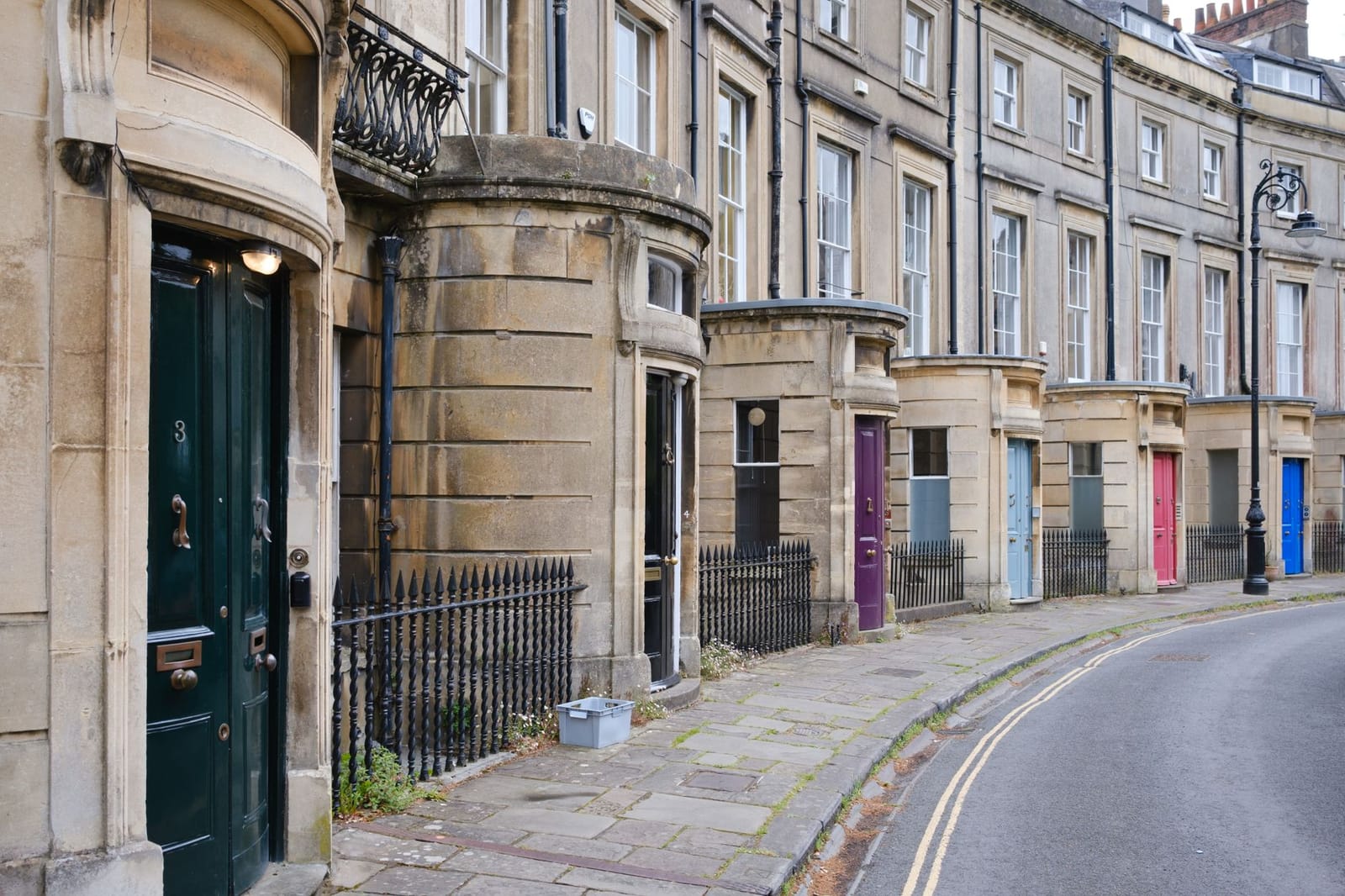
The Victorian terrace belt (CF24, CF11). Cathays and Roath are almost wholly built out in two-storey terraces raised between the 1880s and the early 1900s, the streets around Cathays for the railway and dockworkers, Roath as Cardiff’s Victorian expansion. Solid 9-inch brick or Pennant-sandstone walls with no cavity, single-glazed or early-replacement bays, suspended timber floors: unimproved, this stock assesses at E or low D, and the walls alone are typically the single biggest drag on the score. The same profile runs through Canton, Grangetown and much of Splott. Wales carries the oldest housing stock in the UK, over a quarter of Welsh homes were built before 1919, and Cardiff’s inner ring is where that concentrates. The ONS has confirmed age is the biggest single factor in a home’s energy efficiency, and these are the ages that hurt.
The interwar and postwar semis (CF14, CF23, CF3). Heath, Llanishen, Cyncoed, Rumney and the Llanrumney and Ely estates are dominated by 1920s-70s semis and short terraces, and here the news is good. Most of this stock has cavity walls that can be filled for £400-£1,500 and typically +5-15 points, which is the cheap-jump champion of the whole city. A 1950s cavity semi at D (63) can often reach C for under £1,000 on controls, lighting and a loft top-up alone.
The conservation areas (CF5, CF11). Cardiff has 27 designated conservation areas, Cathedral Road, Pontcanna, Roath Park, Cathays Park, Llandaff and the Cardiff Bay waterfront among them, where external changes are controlled. Rendering over original Pennant sandstone is almost always refused, and external wall insulation projecting beyond the wall line needs consent. The useful fact for improvers: almost none of the cheap points touch the exterior, so the conservation designation rarely blocks a route to C.
The modern fringe and the flats. Newer estates around Pontprennau and St Mellons (CF23, CF3) mostly sit at B or C already, the ONS puts the median score of new dwellings at 84, so the honest answer there is often that little needs doing. The city-centre and Bay apartment blocks are a different problem: leaseholder-controlled measures (controls, cylinder jacket, LED) plus the freeholder-consent layer on communal fabric.
The cheapest EPC points in Cardiff
Ranked by cost per point, using published typical ranges, property-specific, confirmed by a fresh assessment, never guaranteed:
- LED lighting throughout, £20-£80, typically +1-3 points. In a terrace let and re-let for decades it is common to find halogen spots still in half the fittings.
- Hot-water cylinder jacket, £15-£80, typically +1-4 points. Older Roath and Cathays terraces and interwar Heath semis with original airing-cupboard cylinders gain most.
- Heating controls, programmer, room thermostat and TRVs: £150-£500, typically +2-5 points. Smart controls are recorded under RdSAP 10 since 15 June 2025.
- Draught-proofing, £30-£250, typically +1-3 points. The highest-value measure per pound in a single-glazed bay-windowed terrace, and no consent is needed anywhere in the conservation areas.
- Loft insulation top-up to 270-300mm, £300-£800, typically +5-15 points. A documented case gained 8-9 points from an £800 top-up on a Victorian terrace.
- Suspended timber floor insulation, £400-£2,300, typically +2-6 points. Many CF24 and CF11 terraces have accessible under-floor voids that keep the cost toward the low end.
The expensive end of the ladder matters just as much for what it warns you off. Double glazing is documented at 2 points for £5,400, about £2,700 per point, and solid-wall insulation runs £8,000-£15,000+. Both have their place; neither is where a Cardiff improvement plan starts. The full ranking sits on the cheapest EPC improvements hub, with £-per-point context in the cost guide.
Solid-wall Cathays and Roath terraces: the sequence, not the scare quote
The reflex quote on a pre-1919 Cardiff terrace is £10,000-plus for internal or external wall insulation. It is almost never where the arithmetic sends you first. Because the score is built element by element, the cheap measures stack: LED lamps, a cylinder jacket, full heating controls, draught-proofing and a loft top-up together often add 10-25 points for £500-£1,500, frequently the whole distance from mid-D to C without a trowel touching the walls.
A documented solid-wall Victorian mid-terrace went from EPC E (48) to a high C (77) for around £8,550, and the points came overwhelmingly from an £800 loft top-up and floor insulation, not the walls; the boiler was left alone and the glazing, done for other reasons, added just 2 points. In a conservation area such as Cathedral Road or Roath Park, that sequencing is not only cheaper, it sidesteps the consent question entirely: rendering over Pennant sandstone is refused, but a loft top-up needs no permission. Where the walls genuinely have to come into scope, the order is set out on the insulation hub: loft first, floor second, walls last and only if the points arithmetic still demands them.
Interwar and postwar semis: the cheap Cardiff band-jump
The 1920s-70s semis of Heath, Llanishen, Rumney and Ely are the easiest wins in the city. Cavity walls, straightforward loft access, standard gas systems: fill the cavity (£400-£1,500, typically +5-15 points), top up the loft, fit a programmer, room stat and TRVs, and a home sitting at D commonly clears the 69-point C threshold for well under £2,500. On a poorly controlled system the heating and controls guide is the place to start, controls are one of the strongest cost-per-point measures after the quick wins, and under RdSAP 10 a smart control is recorded and maps onto the proposed future smart-readiness metric.
Where a genuinely old, non-condensing boiler is still in place, replacing it with a modern condensing model adds a further 5-15 points (£2,000-£3,500), keep the make, model and serial number, because RdSAP 10 scores the actual boiler from its documented data rather than a pessimistic default. For the last points into band B, and for homes off the mains-gas grid, the heat pump route and solar PV come into play, Wales runs 19% off the gas grid against a UK figure of 15.1%, so a slice of Cardiff’s stock, including some flats and the outer estates, has no gas connection and a stronger case for low-carbon heating.
A Cathays worked example (illustrative)
A three-bed bay-fronted terrace off Whitchurch Road, let to sharers, rated E (52), 17 points short of C. The certificate’s own recommendation list, sequenced cheapest-first: LED throughout (£60, +1-3), programmer, room stat and TRVs (£430, +2-5), draught-proof the original bay and doors (£200, +1-3), loft top-up 100mm to 300mm (£550, +5-15), and suspended-floor insulation from the accessible void (~£800, +2-6). Total around £2,040 against published ranges spanning +11 to +32 points, with the documented central case comfortably clearing the 17-point gap, no wall insulation and no new windows. Evidence pack (invoices, product datasheets, photos of insulation depth) handed to the assessor, fresh certificate lodged. Illustrative arithmetic from published ranges, not a guarantee; your certificate’s own recommendation report gives the property-specific version.
The compliance backdrop, with dates
EPC and MEES law applies across England and Wales, so the deadlines below are the same in Cardiff as in Bristol, only the grant schemes differ. The law today for Cardiff landlords: minimum EPC E to let, in force since 1 April 2018 for new tenancies and 1 April 2020 for all tenancies, £3,500 cost cap, penalties up to £5,000 per property, enforced here by Cardiff Council. Confirmed policy, not yet law: on 21 January 2026 the government confirmed privately rented homes in England and Wales must reach EPC C by 1 October 2030 for all tenancies, measured across two reformed metrics with a proposed £10,000 cost cap, secondary legislation is reported as targeted for 2027, so the final exemption detail is not settled.
The certificate itself is changing too. From October 2026, targeted, subject to the regulations, domestic EPCs move to four headline metrics: energy cost, fabric performance, heating system and smart readiness, produced with the Home Energy Model. The Cardiff-relevant consequence: fabric points (insulation, draught-proofing) and controls score under both the current and the reformed regime, whereas a rating propped up by a single strong element may read differently once split four ways. Cheapest-first happens to be future-proof-first.
Locally, Cardiff Council has committed to a Carbon Neutral Cardiff by 2030 under its One Planet Cardiff strategy, cutting the council’s own direct emissions by 16% between 2019/20 and 2024/25, and the council has itself flagged that faster domestic retrofit across the city is one of the conditions for hitting the target. Improving the terrace stock is not a side issue to that goal; it is central to it.
Cardiff EPC improvement questions
How much of Cardiff is rated below EPC C?
Around 45% of Cardiff dwellings sit below band C, roughly 55% are rated C or above, and among privately rented homes the shortfall is wider, with close to half below the line. Because Cardiff has the highest private-rented share in Wales (24.3% at the 2021 Census), that below-C rented stock is the segment the confirmed EPC C by October 2030 standard bears on most directly. The single number that matters for any one property is its own SAP score against the 69-point C threshold.
Can I get a Welsh grant to improve my EPC rating in Cardiff?
The main Wales scheme is the Welsh Government Warm Homes programme, delivered as Nest. It funds measures such as insulation, a new boiler, central heating, solar or a heat pump for households that own or privately rent and either receive a means-tested benefit or are on a low income, with homes rated EPC D or below prioritised. Note the eligibility route changed as several legacy benefits moved to Universal Credit in March 2026, with some households extended to July 2026, check current eligibility on the Welsh Government Nest pages before assuming you do or do not qualify. It is a household-eligibility scheme, not a general landlord entitlement. The English ECO4 and Great British Insulation Scheme framing does not apply in Wales.
My Cathays terrace was quoted £11,000 for wall insulation. Is that the only route to C?
Usually not. A documented solid-wall Victorian terrace reached a high C from E for around £8,550, and the points came overwhelmingly from an £800 loft top-up, floor insulation and controls, not the walls. Price the sub-£1,000 measures first, re-run the arithmetic, and treat internal or external wall insulation as the last resort it is. The government’s own estimate for an average rented home reaching C is about £5,400; the English Housing Survey 2023-24 average is £6,864. Both are well inside the proposed £10,000 cap.
Do the Cardiff conservation areas stop me improving my EPC?
Rarely, because the cheap points are internal. Across Cardiff’s 27 conservation areas, Pontcanna, Cathedral Road, Roath Park, Llandaff and the rest, replacement uPVC windows and rendering over original Pennant sandstone are routinely refused, and external wall insulation projecting beyond the wall line needs consent. But LED lighting, heating controls, a cylinder jacket, draught-proofing, loft insulation and floor insulation are all internal, consent-free and together usually deliver the points needed. Where windows genuinely drag the score, secondary glazing is the consent-safe route and is scored by the assessor, the honest arithmetic is on the glazing and windows guide.
Whole streets in Roath seem to be rated the same band. Why so uniform?
Because RdSAP models standard assumptions across near-identical terraces: same solid walls, same era, similar heating. The differences that show up come from documented improvements, an evidenced condensing boiler, a photographed loft top-up, a cavity-fill certificate on the later infill houses. Under RdSAP 10 evidence converts directly to points, which is why two outwardly identical Cathays or Roath terraces can sit a band apart. Our FAQs cover the evidence pack and every grant with dates.
Areas we serve around Cardiff
We cover every Cardiff postcode, CF1, CF3, CF5, CF10, CF11, CF14, CF15, CF23 and CF24, from the Victorian terraces of Cathays, Roath, Canton and Grangetown through Heath, Llanishen and Cyncoed to the outer estates at Ely, Rumney and St Mellons, plus Penarth, Caerphilly, Barry, Newport and Pontypridd across the wider region. Elsewhere the stock profile shifts and so does the plan: Newport carries a similar Valleys-edge terrace-and-semi mix, while Swansea has more interwar and coastal stock, a different cheap-jump entirely.
Start with your number, not a quote for windows
A Cardiff EPC plan starts with two numbers: your current score and 69. We sequence the gap cheapest-points-first, consent-safe measures for the conservation areas, fabric-first for the solid-wall terraces, cavity-fill for the interwar semis, prepare the RdSAP 10 evidence pack, and arrange the fresh assessment that lodges your new score for ten years. If you want your route to band C costed per point, with nothing you do not need, request a free quote and we will map it from your actual score.
Postcodes covered in Cardiff
- CF1
- CF3
- CF5
- CF10
- CF11
- CF14
- CF15
- CF23
- CF24
Other areas we cover
Get a free quote in Cardiff
Responds within one working day
- 1. Gap analysis from your current EPC, your score, the gap to the next band, no obligation.
- 2. A ranked plan costed per point, cheapest first, with the evidence to keep.
- 3. Re-assessment by an accredited energy assessor, lodged on the national register.
- Accredited DEAs & NDEAs
- RdSAP 10 evidence-based
- Costed per point
- Lodged on the register