Improve Your EPC Score in Bradford
Serving Bradford and the wider West Yorkshire area, including Keighley, Shipley, Bingley.
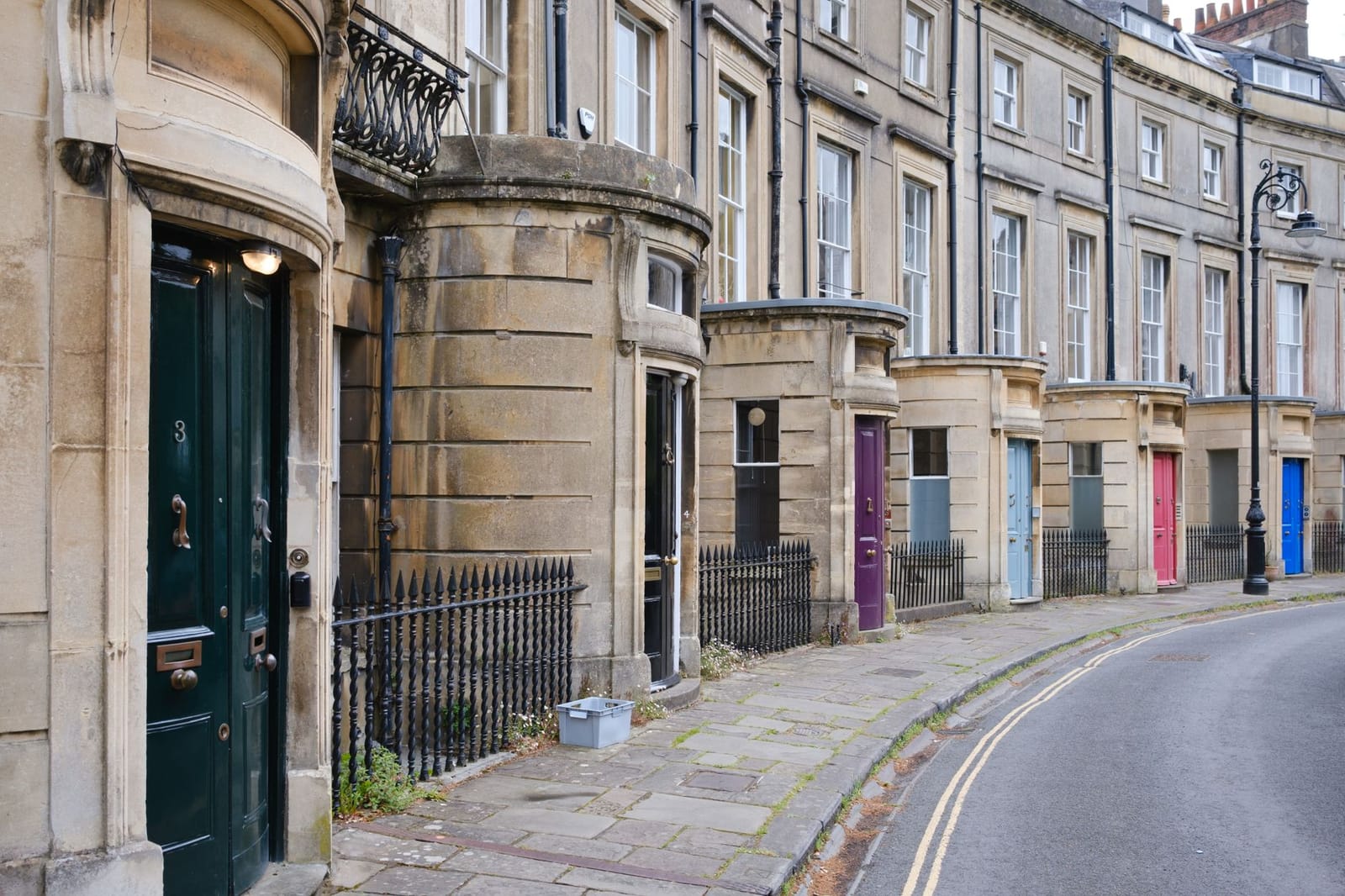
Stone walls and attic bedrooms: Bradford’s scoring problem
Bradford district carries one of the oldest housing profiles of any English city, over a third of its homes were built before 1919, on the district’s own housing strategy figures, and the wool-era streets of Manningham, Girlington, Little Horton and Great Horton were built in local stone, solid through the wall, with no cavity to fill. That alone would predict low certificates. What actually decides them, street by street, is the roof: Bradford’s terraces routinely use the attic as a bedroom, and an unconverted-then-converted room-in-roof with no insulation in its slopes is one of the largest single deductions RdSAP makes. It is also the district’s largest single opportunity, because room-in-roof insulation is the strongest measure in Propertymark’s published analysis, +9.91 points on average, at a fraction of the cost per point of wall insulation. Add the region’s context (Yorkshire and the Humber’s median energy efficiency score is 67, two points under band C, per the ONS 2024 analysis) and Bradford’s improvement story writes itself: most homes are close, the gap is upstairs, and the cheap points come first. That is how you improve your EPC score in BD postcodes without a five-figure quote.
Where Bradford homes lose EPC points
The stone terrace belt, Manningham, Girlington, Little Horton, Great Horton, Barkerend, loses points through solid walls, uninsulated attic rooms, single-glazed timber sashes on the older frontages, and heating systems without controls. The walls are the biggest modelled loss and the most expensive fix; the attic, controls and lighting are where the affordable points sit.
Back-to-backs. Bradford, like Leeds, retains back-to-back terraces in its inner wards, a type with three party walls, one exposed solid elevation, and (usually) an attic bedroom. Their points concentrate even more heavily in the roof and the exposed frontage, which is exactly where the council’s retrofit programmes have aimed.
The suburban cavity belt, interwar and post-war semis across Wibsey, Eccleshill, Wrose and Thackley, carries the standard unfilled-cavity and thin-loft losses, and the standard cheap fix: fill (£400-£1,500, typically +5-15 points), top-up (£300-£800, typically +5-15), controls (£150-£500, typically +2-5).
The rented stock. Bradford’s housing strategy work has flagged that over 11% of private-rented dwellings assessed below band E, below today’s legal letting minimum, not the 2030 one. For those landlords the sequencing question is immediate: the cheap package typically clears E comfortably inside the current £3,500 cost cap, and positions the property for the confirmed 2030 C standard.
Everywhere: evidence. RdSAP 10, in force since 15 June 2025, scores heating from documented model data, measures every window, and records smart controls and batteries. Bradford’s stock has been improved in waves, grant schemes, landlord works, owner DIY, and the paperwork is scattered. An assessment attended by a folder of invoices, guarantees and photos scores measurably better than the same house undocumented.
The Bradford cost-per-point ladder
Published UK ranges, cheapest points first, planning figures, confirmed per property by assessment:
- LED lamps throughout, £20-£80, typically +1-3 points (£10-£40 per point).
- Hot-water cylinder jacket (80mm+), £15-£80, typically +1-4 points where a cylinder exists.
- Heating controls (programmer + room thermostat + TRVs), £150-£500, typically +2-5 points; smart controls now recorded.
- Draught-proofing, £30-£250, typically +1-3 points; stone mullions and older sashes leak generously.
- Loft top-up to 270-300mm, £300-£800, typically +5-15 points, where the attic is not a room.
- Room-in-roof insulation, the Bradford measure: +9.91 points on average (Propertymark), typically £1,500-£2,700 on a terrace footprint.
- Cavity wall insulation, £400-£1,500, typically +5-15 points, suburban stock only, stone terraces have no cavity.
Then the expensive shelf: condensing boiler swap £2,000-£3,500 (typically +5-15, model number evidenced), solar PV £4,500-£8,000 (typically +6-15, the B-band finisher), double glazing (documented at +2 points for £5,400 in a published case, roughly £2,700 per point) and solid-wall insulation £8,000-£15,000+ (typically +10-20, last resort, consent-sensitive on heritage frontages). The cheapest improvements hub details the sub-£500 package; the cost guide prices band jumps; and every measure above qualifies for 0% VAT on residential installs until 31 March 2027.
Room-in-roof: Bradford’s highest-value measure
Bradford Council’s current grant delivery makes the point better than any sales copy could. Its Warm Homes: Local Grant programme, running over three years from 2025, focuses specifically on stone terraced homes with attic room conversions, funding room-in-roof insulation for eligible households in some of the district’s least affluent areas. Eligibility follows the national scheme: an EPC of D to G, plus one of three pathways, living in an income-deprived area (IMD income deciles 1-2), receiving means-tested benefits, or a gross household income under £36,000. Check eligibility and apply via GOV.UK’s Warm Homes: Local Grant page. The council chose that measure for the same reason this site ranks it where it does: insulating the sloping ceilings, flat top and gable of an attic bedroom addresses the certificate’s largest fabric deduction on this stock at hundreds, not thousands, of pounds per band. If you fund it yourself, keep the specification, invoice and photographs: under RdSAP 10, an unevidenced room-in-roof is assumed uninsulated, which hands the points straight back. Full measure detail on our insulation hub.
What the Odsal retrofit proved
Twenty-seven pre-1919 terraced homes in Odsal, the entire street group, were retrofitted by Incommunities with Equans, funded through the UK Shared Prosperity Fund via the West Yorkshire Combined Authority, and completed in 2026. Every one of the 27 reached EPC band C, with residents expected to save around £900 a year. The measure list is a Bradford template: external and internal wall insulation, upgraded attic insulation, new windows and doors where required, smart heating and lighting controls, and improved ventilation. Two lessons for private owners. First, pre-1919 Bradford stone stock reaches C, the construction is not the barrier; sequencing and funding are. Second, note that even in a fully-funded scheme the works bundle led with fabric-and-controls, and ventilation was engineered alongside the insulation, moisture management is not optional on solid stone walls. For a self-funding owner the same outcome usually starts smaller: attic first, controls second, walls only if the gap analysis still demands them. The West Yorkshire mayor’s pledge to retrofit the county’s 650,000 homes by 2038 says which way the regional wind blows; Home Energy West Yorkshire, the Combined Authority’s free advice service, covers Bradford and will sanity-check any plan at no cost.
Saltaire and the heritage constraint
Bradford district holds a UNESCO World Heritage Site with houses in it: Saltaire, the model mill village, a conservation area since 1971 in which most buildings are listed. Replacement windows and doors there must match original proportions and profiles, and standard uPVC double glazing is generally a non-starter, which matters far less to a certificate than owners fear, because glazing is the worst-value points on the ladder anyway. The consent-safe sequence for Saltaire, and for the district’s other conservation areas: draught-proofing, heating controls, LED, hot-water insulation, then secondary glazing, which Historic England guidance supports and RdSAP scores, and roof insulation done sympathetically from within. Listed-building consent questions belong at the start of a heritage plan, not the end; where consent for a measure is refused, that refusal can support a MEES exemption for landlords, though the cheap internal measures almost never trigger the issue. Our glazing guide covers the secondary-glazing arithmetic honestly.
Law now, policy later: the dates
Law now: privately rented homes must meet EPC E, new tenancies since 1 April 2018, all tenancies since 1 April 2020, with a £3,500 cost cap and penalties up to £5,000 per property, enforced by Bradford Council. Confirmed policy, not yet law: EPC C by 1 October 2030 for all tenancies (government response, 21 January 2026), measured across two reformed metrics with a proposed £10,000 cap; secondary legislation reported as targeted for 2027. Certificate reform: four Home Energy Model metrics targeted from October 2026, subject to regulations and reported slippage risk. Methodology now: RdSAP 10 since 15 June 2025, evidence is points. The one deadline that is neither law nor proposal but simple tax fact: 0% VAT on energy-saving materials ends 31 March 2027. Bradford’s district-wide 2038 net-zero ambition frames council priorities, not private duties.
A Great Horton stone terrace, worked through (illustrative)
Illustrative, from published ranges, not a guarantee. A three-bed stone terrace with an attic bedroom sits at D (59): ten points to C. Sequence: LED throughout (£60, +1-3), draught-proofing (£200, +1-3), programmer + room stat + TRVs (£430, +2-5), room-in-roof insulation to the attic (£2,200, average +9.91 per Propertymark). Indicative outlay: about £2,900, against typical combined uplifts of +14 to +21 points, through the C threshold with room to spare in the central case, stone walls untouched, and the fabric metric of the coming dual-metric standard directly fed. Re-assessment (£45-£120) lodges the score for ten years; check the starting number first at find-energy-certificate on GOV.UK.
Bradford EPC improvement FAQs
My terrace’s attic bedroom is freezing. Is that where my EPC points went?
Very probably. An uninsulated room-in-roof is one of the largest single fabric deductions on Bradford’s stone terraces, and its fix is the strongest single measure in Propertymark’s analysis: +9.91 points on average. Insulating the slopes, flat ceiling and gable typically costs £1,500-£2,700 on a terrace, against £8,000-£15,000+ for the walls, and Bradford’s Warm Homes: Local Grant funds exactly this measure for eligible households.
Can a stone-built Bradford terrace realistically reach band C?
Yes, Odsal just demonstrated it 27 times, with every home in the scheme reaching C. Fully-funded schemes bundle wall insulation; self-funders usually do not need to start there. Run the gap: a mid-D terrace needs 7-10 points, which attic insulation plus controls plus quick wins typically covers. The documented private-sector benchmark, a solid-wall Victorian terrace from E (48) to C (77) for about £8,550 without wall insulation, sets the outer bound.
I own a Saltaire cottage. What can I actually change?
Inside: almost everything that matters, LED, draught-proofing, heating controls, hot-water insulation, sympathetic roof insulation, secondary glazing. Externally: replacements must match original proportions and profiles in a conservation area where most buildings are listed, so uPVC double glazing is generally off the table. That costs you little on the certificate: glazing is documented at roughly £2,700 per point, while the internal measures deliver at £10-£150 per point with no consent friction.
Is my BD-postcode rental legal at band E, and what about 2030?
At E you meet today’s minimum, which has applied to all tenancies since 1 April 2020, Bradford Council enforces it with penalties up to £5,000. The confirmed policy for 1 October 2030 is C, across two reformed metrics, with a proposed £10,000 cap, awaiting secondary legislation reported for 2027. Over 11% of the district’s private-rented stock has assessed below even E, so the practical advice is the same at both thresholds: sequence the cheap points now, inside the VAT window.
Does Home Energy West Yorkshire cost anything, and who qualifies?
Nothing, it is the West Yorkshire Combined Authority’s free, impartial energy advice service, open to homeowners, landlords and tenants across Bradford district. It advises on measures, contractors and funding (including the Warm Homes: Local Grant pathways). It does not replace the EPC process: your score only changes when a fresh assessment, typically £45-£120, is lodged on the national register. Process detail on our FAQs page.
Areas we cover around Bradford
We build improvement plans across the BD postcodes, the stone terraces of Manningham, Girlington, Great Horton and Barkerend, the suburban semis of Eccleshill, Wibsey and Thackley, and the heritage stock of Saltaire and Little Germany, plus Keighley, Shipley, Bingley, Ilkley and Halifax. Neighbouring city pages: Leeds for back-to-back sequencing and Manchester across the Pennines.
Move your Bradford score
Send the address and rating, or we pull the lodged certificate, and you get the gap arithmetic, the attic-first sequence where your stock demands it, the Warm Homes and Home Energy West Yorkshire eligibility checks, and the evidenced re-assessment that lodges the result for ten years. Request your Bradford improvement quote.
Postcodes covered in Bradford
- BD1
- BD2
- BD3
- BD4
- BD5
- BD6
- BD7
- BD8
- BD9
- BD10
- BD11
- BD12
- BD13
- BD14
- BD15
- BD16
- BD17
- BD18
Other areas we cover
Get a free quote in Bradford
Responds within one working day
- 1. Gap analysis from your current EPC, your score, the gap to the next band, no obligation.
- 2. A ranked plan costed per point, cheapest first, with the evidence to keep.
- 3. Re-assessment by an accredited energy assessor, lodged on the national register.
- Accredited DEAs & NDEAs
- RdSAP 10 evidence-based
- Costed per point
- Lodged on the register