Improve Your EPC Score in Cambridge
Serving Cambridge and the wider Cambridgeshire area, including Ely, Newmarket, Saffron Walden.
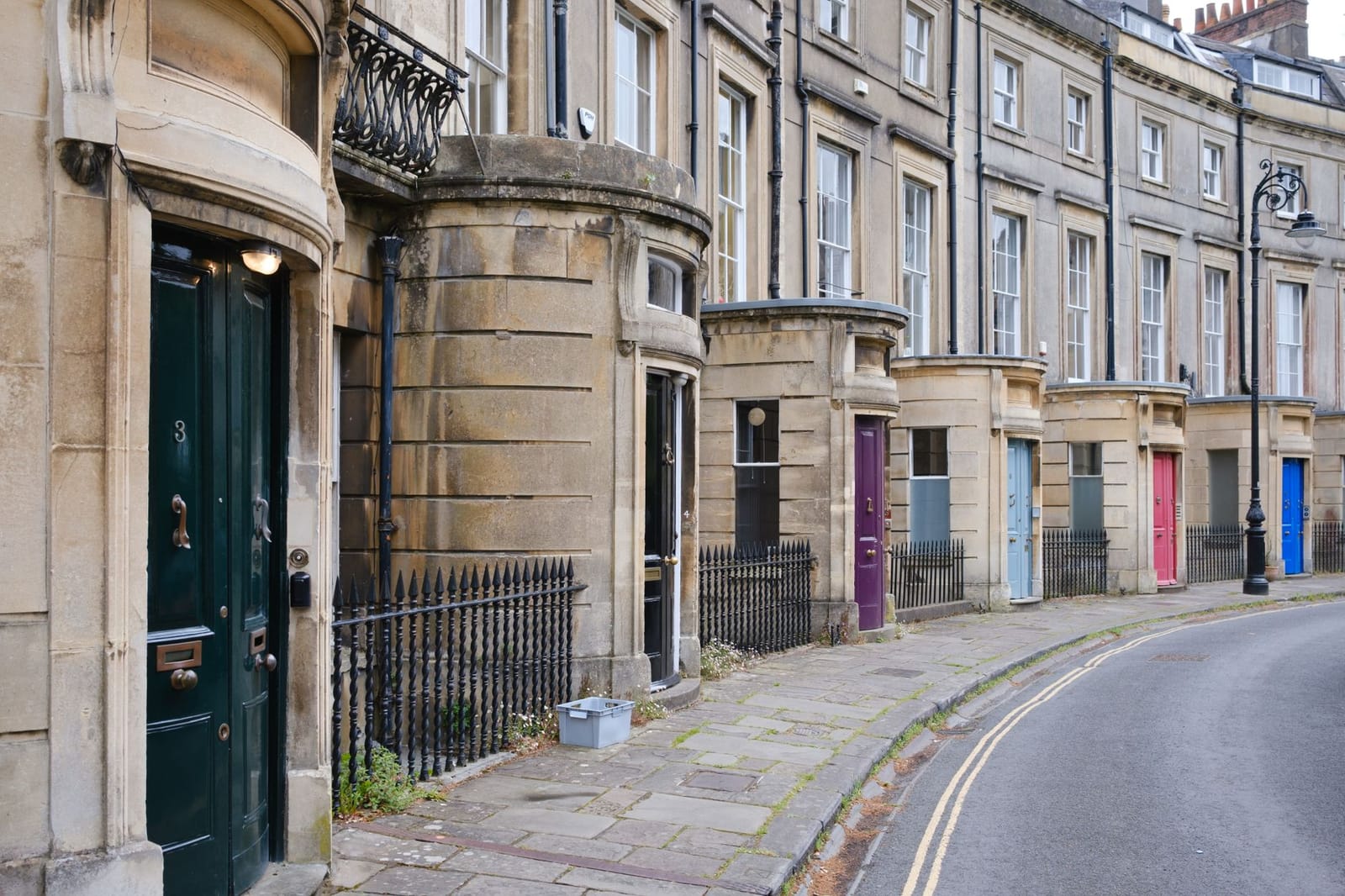
In Cambridge, EPC points carry a price tag on both sides
Cambridge is the rare city where the housing stock is measurably better than the national average and the stakes per band are higher. The Office for National Statistics’ 2025 analysis of energy efficiency of housing in England and Wales singles Cambridge out as a local authority where every local area posts a median score in band C or above, a distinction almost nowhere outside London manages. Yet walk the terraced streets of Romsey, Petersfield or Castle and you are in pre-1919 solid-wall territory, where individual homes still assess at D and E.
The other half of the equation was calculated in this city. Research by Dr Franz Fuerst at the University of Cambridge’s Department of Land Economy, using over 300,000 repeat-sale dwellings for the then Department of Energy and Climate Change, found EPC ratings priced directly into sale values: band C homes sold at around a 10% premium to band G, band D at 8%, and A/B at 14%. At Cambridge’s £510,000 average house price, the two-percentage-point gap between D and C is worth roughly £10,000 on paper, against a typical £900-£1,400 of works to close a 7-point score gap. Few improvement decisions in Britain have arithmetic that lopsided.
What a band is actually worth here
Three Cambridge-specific forces put money behind the score. First, the sale premium above, in the country’s most expensive market outside London, percentage premiums convert to the largest cash sums. Second, green mortgages: lenders increasingly price products on A/B bands, which matters in a city where refinancing sums are large and frequent. Third, the rental market: Cambridge’s substantial private rented sector already faces the minimum-E letting standard, and on 21 January 2026 the government confirmed privately rented homes must reach EPC C by 1 October 2030 (measured across two reformed metrics, proposed £10,000 cost cap), confirmed policy awaiting secondary legislation reported for 2027, and the planning horizon every Cambridge landlord should already be using.
The score is a SAP rating from 1-100, modelled under the government’s Standard Assessment Procedure: band C starts at 69, B at 81. Current score, minus target, equals points needed, everything below is about buying those points at the lowest price.
Where Cambridge homes lose points
The railway terraces: Romsey and Petersfield (CB1). Built in the late 1800s for railway workers, these are the city’s improvement heartland, solid brick walls, suspended timber floors, and sash windows. Since 2018 they sit largely within designated conservation areas (Greater Cambridge Shared Planning lists 18 across the city, the historic central area having been subdivided that year, with the Mill Road area among those now covered), which constrains external alterations but leaves every cheap internal measure untouched.
The historic core and college-adjacent streets (CB2, CB3). Listed status is common, uPVC glazing is routinely refused, and external wall insulation is rarely viable. Improvement works within consent: secondary glazing (scored by RdSAP), draught-proofing, controls, lighting and concealed insulation.
The interwar and postwar rings (CB1, CB4, CB5). Cavity-walled semis around Chesterton, Cherry Hinton and Arbury respond to the standard cheap ladder, cavity fill at £400-£1,500 for typically +5-15 points is the stand-out measure, and it is consent-free.
The modern stock. Post-2012 homes across the southern fringe and CB4’s newer developments mostly sit at B or C from birth (the national median score for new dwellings is 84). The task there is evidence hygiene and, for owners chasing band B, generation.
The cheapest EPC points in Cambridge
In cost-per-point order, using published typical ranges, property-specific numbers come from your certificate’s recommendation report:
- LED lighting throughout, £20-£80, typically +1-3 points (~£10-£40 per point).
- Hot-water cylinder jacket, £15-£80, +1-4 where a cylinder exists.
- Heating controls (programmer + room stat + TRVs), £150-£500, +2-5. Smart controls have been recorded since RdSAP 10 came into force on 15 June 2025.
- Draught-proofing, £30-£250, +1-3, and the single most comfort-improving measure in a sash-windowed terrace.
- Loft insulation top-up to 270-300mm, £300-£800, +5-15.
- Cavity wall insulation (interwar and later stock only), £400-£1,500, +5-15.
- Suspended floor insulation, £400-£2,300, +2-6; Victorian terraces with accessible voids sit at the cheap end.
At the expensive end: double glazing is documented at 2 points for £5,400 (~£2,700 per point) and solid-wall insulation at £8,000-£15,000+. In Cambridge the glazing question usually answers itself, the conservation areas will not take uPVC anyway, and secondary glazing delivers the thermal benefit without the planning fight. The complete ranking is on the cheapest EPC improvements hub, with worked pricing in the cost guide.
Conservation-area terraces: the internal-measures playbook
Romsey and Petersfield owners regularly assume the conservation area blocks meaningful improvement. It blocks almost none of it. Lighting, controls, cylinder jackets, draught-proofing, loft top-ups and floor insulation are internal and consent-free, together typically worth 10-25 points on an unimproved terrace, which is the whole journey from mid-D to C in most cases. Secondary glazing adds window points without touching the street elevation. What the conservation area does constrain, external wall insulation, replacement windows, sits at the bottom of the value-per-point table anyway, and the documented benchmark case (a solid-wall Victorian terrace taken from E 48 to C 77 for around £8,550, walls never insulated) shows C is reachable without it. Where a genuinely constrained listed building cannot reach the standard, the MEES exemptions regime exists for landlords, the backstop, never the plan. Sequencing detail for period homes is on our glazing and windows guide.
From C to B: the finisher measures
Uniquely among our East of England pages, Cambridge has a large cohort of owners starting at C and aiming at B (81 points), for green-mortgage pricing or sale positioning near the top of the market. Once fabric and controls are done, the B-band tools are:
- Solar PV (~4 kWp), £4,500-£8,000, typically +6-15 points. Mid-table value per point, but often exactly the 6-12 points a solid C needs for B. Battery storage is now recorded under RdSAP 10; roof-mounted panels are usually permitted development, though conservation-area and listed settings need checking. Full numbers on the solar PV and EPC page.
- Air source heat pump, often +10-20 points and the clearest fit for the reformed “heating system” metric; £7,500 Boiler Upgrade Scheme support applies in England and Wales, with fabric-first eligibility conditions.
Both carry 0% VAT on residential installation until 31 March 2027, a dated, genuine reason to schedule this year rather than after the window closes.
A Romsey pre-sale example (illustrative)
A two-bed terrace off Mill Road, D (62), going to market in autumn. Gap to C: 7 points. Sequence: LED throughout (£55), programmer, room stat and TRVs (£430), loft top-up to 300mm (£520), draught-proofing the sashes (£210). Total ~£1,215 against published ranges of +9 to +26 points, the 7-point gap covered with headroom. Re-assessment at £45-£120 lodges the C before listing; the agent markets a band-C Victorian terrace, and the Fuerst premium arithmetic (D 8%, C 10% versus band G baseline) suggests the improvement pays for itself many times over at Cambridge prices. Illustrative, using published typical ranges, no uplift is guaranteed, and your own recommendation report gives the per-measure estimates for your property.
Funding and the compliance calendar
Cambridge’s council-delivered route is Action on Energy Cambridgeshire, a partnership of Cambridge City Council, Cambridgeshire County Council and the neighbouring districts that has channelled central retrofit funding (£11.5m secured in earlier rounds) and currently delivers the Warm Homes: Local Grant for eligible lower-income households; eligibility is income- and EPC-tested, so check the partnership’s current criteria. ECO4 remains tenant-eligibility-driven and in its end phase, verify status on GOV.UK before counting on it.
The dated backdrop every Cambridge owner should have on the calendar: minimum EPC E to let (law since 1 April 2018/2020, £3,500 cap, up to £5,000 penalties, enforced by Cambridge City Council); the confirmed-but-not-yet-legislated EPC C by 1 October 2030 landlord standard; reformed four-metric EPCs produced with the Home Energy Model targeted from October 2026, subject to regulations; and 0% VAT on energy-saving materials until 31 March 2027. Fabric and controls score under both today’s SAP and the reformed metrics, the cheap points are also the future-proof points.
Cambridge EPC improvement questions
Is my Romsey or Petersfield terrace in a conservation area, and does it stop me improving?
Very likely yes to the first, no to the second. The 2018 subdivision of the central conservation area brought the Mill Road streets under designation. But conservation control governs external appearance, every measure in the cheap half of the ladder (lighting, controls, draught-proofing, loft, floor, cylinder jacket) is internal and unaffected. Secondary glazing handles the windows without consent risk.
We are remortgaging, does the EPC band really change the rate?
Increasingly, yes. Green-mortgage products offer preferential rates or cashback for A/B-rated homes, and some for C. With Cambridge loan sizes, a fraction of a percentage point is real money. Check your current score first: if you are at 75-80, a single finisher measure (often solar) reaches 81; if you are at 62, the £1,000 quick-win package gets you to C and a wider product set.
Do college or university-let properties follow the same rules?
The MEES letting standard applies to privately rented homes; specific tenancy types have carve-outs, and purpose-built student accommodation is its own category. But the score arithmetic is identical for every dwelling, and any landlord letting ordinary Cambridge terraces or flats to students should plan against the minimum-E law now and the confirmed EPC C by 2030 policy.
What adds more in a Victorian terrace, floor insulation or new windows?
Per pound, the floor, and it is not close. Suspended timber floor insulation runs £400-£2,300 for typically +2-6 points; the documented glazing case bought 2 points for £5,400. Windows carry only 10-15% of the score’s weight. If the sashes are failing, repair and draught-proof them (~£30-£250, +1-3 points) and spend the difference on measures that move the model.
My certificate is from 2017, should I renew it before selling?
If you have improved anything since, boiler, insulation, controls, almost certainly. A certificate cannot be edited; only a fresh assessment (typically £45-£120) captures the improvements, and under RdSAP 10 the assessor scores documented evidence: invoices, model numbers, FENSA and MCS certificates. An outdated D on the portal listing costs you the exact premium the research says a C earns. More detail in our FAQs.
Areas we serve around Cambridge
We cover all Cambridge postcodes, CB1 through CB5, from Romsey, Petersfield and the central conservation areas to Chesterton, Arbury, Cherry Hinton and Trumpington, plus Ely, Newmarket, Saffron Walden, Royston and St Neots across the wider market. The stock story changes with the geography: Norwich pairs a medieval core with Victorian terraces at half the prices, while Milton Keynes barely has a solid wall in the city.
Turn 7 points into a band before you transact
Whether you are selling a Romsey terrace, remortgaging a Newnham semi or planning a rental portfolio against the 2030 standard, the method is identical: current score, target threshold, cheapest points first, evidence pack, fresh certificate. We build the plan that will improve your EPC score for the least capital the arithmetic allows, request a free quote and start from your number.
Postcodes covered in Cambridge
- CB1
- CB2
- CB3
- CB4
- CB5
Other areas we cover
Get a free quote in Cambridge
Responds within one working day
- 1. Gap analysis from your current EPC, your score, the gap to the next band, no obligation.
- 2. A ranked plan costed per point, cheapest first, with the evidence to keep.
- 3. Re-assessment by an accredited energy assessor, lodged on the national register.
- Accredited DEAs & NDEAs
- RdSAP 10 evidence-based
- Costed per point
- Lodged on the register