Improve Your EPC Score in Leeds
Serving Leeds and the wider West Yorkshire area, including Bradford, Wakefield, Harrogate.
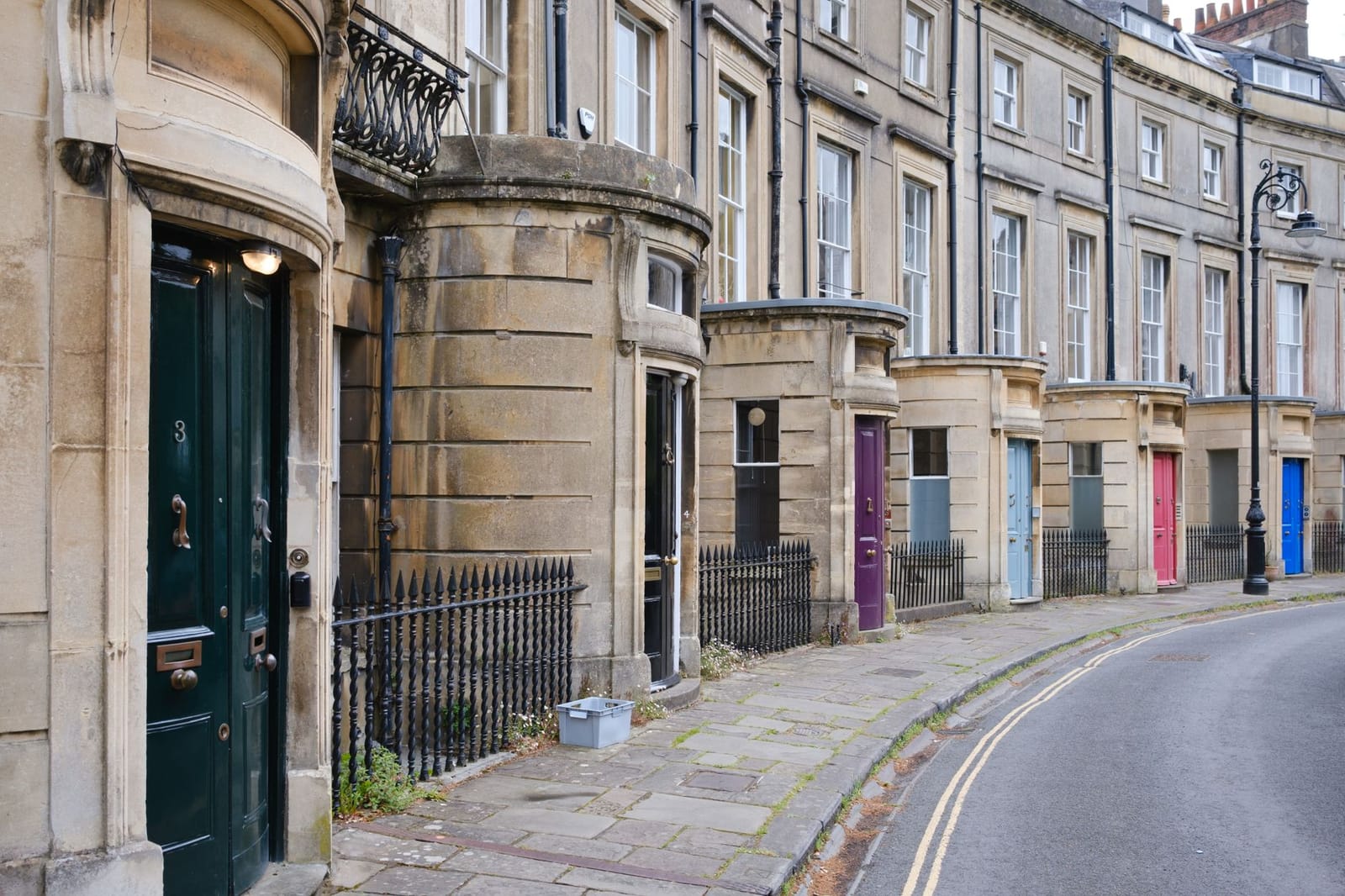
The back-to-back question: why Leeds scores low
No English city took the back-to-back house further than Leeds, and no housing type shapes a city’s EPC profile quite like it. Research at the University of York puts the surviving stock at around 19,500 pre-1919 back-to-backs still in use, whole neighbourhoods of Harehills, Beeston, Holbeck and Armley are built of them. A back-to-back shares three of its four walls with neighbours, which RdSAP actually treats kindly: party walls lose less modelled heat than exposed ones. What drags the certificate down is everything else, the one exposed solid-brick wall, single-glazed sashes where they survive, the attic bedroom under an uninsulated roof slope, and heating systems installed long before anyone fitted a room thermostat. The result is a stock that assesses at D and E not because it is hopeless but because its points sit in unusual places. Improving it is a sequencing exercise: the region’s median energy efficiency score is 67, two points short of band C, per the ONS analysis of EPCs in England and Wales (2024), and two-to-ten-point gaps are exactly what cheap measures close.
Where Leeds homes lose EPC points
Beyond the back-to-backs, Leeds loses its points in four recognisable places.
Through-terraces and larger Victorian semis in Headingley, Hyde Park, Burley and Chapel Allerton carry the classic solid-wall penalty plus, in the student belt, a decade of hard wear on heating systems that were never properly controlled. Controls and a loft top-up are usually worth more here, per pound, than any fabric measure a landlord would rather talk about.
Interwar and post-war suburbs, Gipton, Seacroft, Middleton, Halton, are cavity-wall territory. An unfilled cavity plus a 100mm loft is 10-25 points of cheap uplift waiting: cavity fill runs £400-£1,500 for typically +5-15 points, and the loft top-up £300-£800 for typically +5-15 more.
Attic rooms. Half of Leeds’ older terraces and back-to-backs use the roof space as a bedroom, and an uninsulated room-in-roof is one of the biggest single losses on any certificate. It is also one of the biggest single gains: Propertymark’s analysis found room-in-roof insulation the most effective measure it studied, at +9.91 points on average.
Undocumented improvements. Since RdSAP 10 came into force on 15 June 2025, assessors score heating from evidenced model data and record smart controls and batteries. A Leeds home with a good boiler and no paperwork is scored on age-band defaults, points lost for admin reasons, recovered by turning up to the re-assessment with invoices and serial numbers.
Fuel poverty makes the stakes concrete: around one in ten Leeds households were fuel poor on the council’s own figures even before the 2022 price shocks, and the homes in question are overwhelmingly the D-to-G stock this page is about.
Cheapest points first: the Leeds cost-per-point ladder
Ranked by cost per point from published UK ranges, planning figures, confirmed per property by assessment:
- LED lighting throughout, £20-£80, typically +1-3 points (£10-£40 per point).
- Hot-water cylinder jacket, £15-£80, typically +1-4 points, where a cylinder exists.
- Heating controls (programmer + room thermostat + TRVs), £150-£500, typically +2-5 points; smart controls now count under RdSAP 10.
- Draught-proofing, £30-£250, typically +1-3 points; disproportionately useful on Leeds’ exposed hillside terraces.
- Loft or room-in-roof insulation, loft top-up £300-£800 for typically +5-15 points; room-in-roof insulation averages +9.91 points and is the signature Leeds measure given the attic-bedroom stock.
- Cavity wall insulation, £400-£1,500, typically +5-15 points, for the suburban semi belt only.
Then the expensive tier: a condensing boiler swap (£2,000-£3,500, typically +5-15 points, model number evidenced), solar PV (£4,500-£8,000, typically +6-15 points, a strong finisher into band B), double glazing (documented at +2 points for £5,400 in a published case, fit it for comfort and noise, not points) and solid-wall insulation (£8,000-£15,000+, the genuine last resort). The full arithmetic lives on our cheapest EPC improvements hub and the cost guide; the honest case against glazing-for-points is set out on the glazing page.
Lessons from Leeds retrofit schemes you can copy
Leeds City Council has been running exactly this playbook at scale, and the choices it made are instructive for any private owner. Its back-to-back programme put £11.9m (£6.6m housing revenue account, £5.3m ERDF) into improving the thermal efficiency of 750 council-owned back-to-backs, and a further £4.4m scheme upgraded around 100 back-to-backs in the Cedars area of Armley, leading with external wall and attic-room insulation plus replacement doors and windows where required. Note the order: on this stock the council paired the one exposed wall with the room-in-roof, because that is where a back-to-back’s points actually are. For private owners the same logic applies at domestic scale, minus the ERDF: room-in-roof first, controls and quick wins alongside, the exposed wall only when the gap analysis still demands it.
For advice and funding routes, Home Energy West Yorkshire, the West Yorkshire Combined Authority’s service, offers free impartial guidance to homeowners, landlords and tenants across Leeds, and its Armley case work has taken homes from E and D ratings to C. The Combined Authority’s ambition is not small: the mayor has pledged retrofit across West Yorkshire’s 650,000 homes by 2038. Nationally, the Boiler Upgrade Scheme pays £7,500 toward a heat pump (fabric-first conditions apply, see our heat pump guide), and 0% VAT on energy-saving materials runs until 31 March 2027.
Community heating and the Leeds PIPES factor
Leeds has one advantage most cities lack: Leeds PIPES, the district heating network fed by heat recovered from the city’s non-recyclable waste. It now serves more than 4,100 homes, including over 2,000 council flats, and around 30 public and commercial buildings through 30km of pipework, saved more than 7,000 tonnes of carbon in 2025 alone, and is expanding under a new delivery partner. For an EPC, connection matters: community heating from a low-carbon network is scored by RdSAP as the home’s heating system, and for flats along the network’s route through Lincoln Green, Burmantofts and the city centre it can transform the heating element of the score without any in-flat gas plant at all. In February 2025 the government’s heat network zoning programme published a Zone Opportunity Report for Leeds, signalling where the network is likely to grow next, worth checking before you specify a new heating system in a connected corridor.
Law today, policy tomorrow: EPC dates that matter in Leeds
Current law: rented homes must meet EPC E, new tenancies since 1 April 2018, all tenancies since 1 April 2020, with a £3,500 landlord cost cap and penalties up to £5,000 per property, enforced by Leeds City Council. Confirmed policy, not yet law: the government confirmed on 21 January 2026 that privately rented homes must reach EPC C by 1 October 2030, assessed across two reformed metrics (fabric performance plus heating system or smart readiness) with a proposed £10,000 cap; the enabling secondary legislation is reported as targeted for 2027, so treat final details as unsettled. The certificate itself is being reformed too: from October 2026, subject to the regulations, new-style domestic EPCs carry four headline metrics produced by the Home Energy Model, and industry commentary flags possible slippage, so check GOV.UK before relying on the date. Two Leeds-relevant conclusions: insulation and controls score under both the current and reformed regimes, and a back-to-back improved fabric-first is positioned for the 2030 standard’s fabric metric in a way a generation-led score is not.
A Harehills back-to-back, worked through (illustrative)
An illustrative, not guaranteed, sequence for a two-bed back-to-back at E (52), seventeen points short of C. Quick wins: LED throughout (£60, +1-3), draught-proofing the front door, sashes and floor voids (£180, +1-3), a programmer, room stat and TRVs on the combi system (~£420, +2-5). Fabric: insulate the attic bedroom’s sloping ceilings, flat top and gable (room-in-roof; average +9.91 points per Propertymark, typically £1,500-£2,700 on this footprint). Indicative total: roughly £2,200-£3,400 for typical combined uplifts of +14 to +21 points, clearing 69 in the base case, with the solid front wall untouched. Compare the documented benchmark: a solid-wall Victorian terrace taken from E (48) to C (77) for about £8,550, where loft insulation cost roughly £95 per point and glazing £2,700 per point. After works, a fresh assessment (£45-£120) lodges the new score for ten years, bring every invoice; RdSAP 10 pays for paperwork.
Leeds EPC improvement FAQs
Do back-to-backs score worse than through-terraces on an EPC?
Not inherently, three party walls mean less modelled heat loss than a through-terrace’s two exposed walls. Back-to-backs under-score because of what else they typically carry: an uninsulated room-in-roof, a solid exposed frontage, and legacy heating without controls. Fix the attic and the controls and many Leeds back-to-backs land within a handful of points of C, which is why the council led its own 750-home programme with attic-room and wall insulation rather than windows.
What is room-in-roof insulation worth on a Leeds terrace?
It is the strongest single measure Propertymark’s analysis found, at +9.91 points on average, more than the average loft top-up (+4.9) and at a fraction of the cost per point of glazing or solid-wall insulation. Given how many Leeds terraces and back-to-backs use the attic as a bedroom, it is frequently the difference between a D and a C on its own. Evidence the depth and materials for the assessor.
My Hyde Park student let has an old combi and no thermostat. Where do I start?
Controls, not the boiler. A programmer, room thermostat and TRVs cost £150-£500 and typically add +2-5 points; a boiler swap costs £2,000-£3,500 for +5-15. If the combi is a modern condensing unit, evidence its model number at re-assessment, under RdSAP 10 an undocumented boiler defaults to pessimistic assumptions, which in a student HMO that has lost its paperwork is often several free points recovered.
Can my flat connect to Leeds PIPES, and does it help the EPC?
If you are on or near the network’s route, city centre, Lincoln Green, Burmantofts and expanding, connection is worth investigating, and over 4,100 homes are already served. RdSAP scores community heating as the dwelling’s heating system, and a low-carbon network typically scores well. For most Leeds houses away from the network, the equivalent heating-metric play is controls now and a Boiler Upgrade Scheme heat pump (£7,500 grant) when the boiler is due.
Is EPC C by 2030 already law for my Leeds rental?
No. It is confirmed government policy, 21 January 2026, for all tenancies by 1 October 2030, across two reformed metrics with a proposed £10,000 cap, but it awaits secondary legislation reported for 2027. The law today is EPC E, enforced by Leeds City Council with penalties up to £5,000. Planning for C now, cheapest points first inside the 0% VAT window to 31 March 2027, is strategy rather than obligation. More detail on our FAQs page.
Areas we cover around Leeds
We work across every LS postcode, the back-to-back neighbourhoods of Harehills, Beeston, Holbeck and Armley, the Victorian terrace belts of Headingley and Chapel Allerton, and the cavity-wall suburbs from Gipton to Middleton, and across Bradford, Wakefield, Harrogate, Castleford and Pudsey. Neighbouring city pages: Bradford for stone-terrace and attic-room stock, and Sheffield for South Yorkshire’s arithmetic.
Start with your Leeds score
Every plan we build starts from two numbers: your current score and the 69-point C threshold. Send your address or certificate and we return a sequenced, costed route, attic first where the stock demands it, controls and quick wins alongside, expensive measures only where the arithmetic insists, plus the funding checks and the re-assessment that makes it official. It is the fastest honest way to improve your EPC score in Leeds: buy only the points you need, in price order. Request your Leeds improvement quote.
Postcodes covered in Leeds
- LS1
- LS2
- LS3
- LS4
- LS5
- LS6
- LS7
- LS8
- LS9
- LS10
- LS11
- LS12
- LS13
- LS14
- LS15
- LS16
- LS17
- LS18
- LS19
- LS20
- LS21
- LS22
- LS25
- LS26
- LS27
- LS28
Other areas we cover
Get a free quote in Leeds
Responds within one working day
- 1. Gap analysis from your current EPC, your score, the gap to the next band, no obligation.
- 2. A ranked plan costed per point, cheapest first, with the evidence to keep.
- 3. Re-assessment by an accredited energy assessor, lodged on the national register.
- Accredited DEAs & NDEAs
- RdSAP 10 evidence-based
- Costed per point
- Lodged on the register