Improve Your EPC Score in Manchester
Serving Manchester and the wider Greater Manchester area, including Salford, Trafford, Stockport.
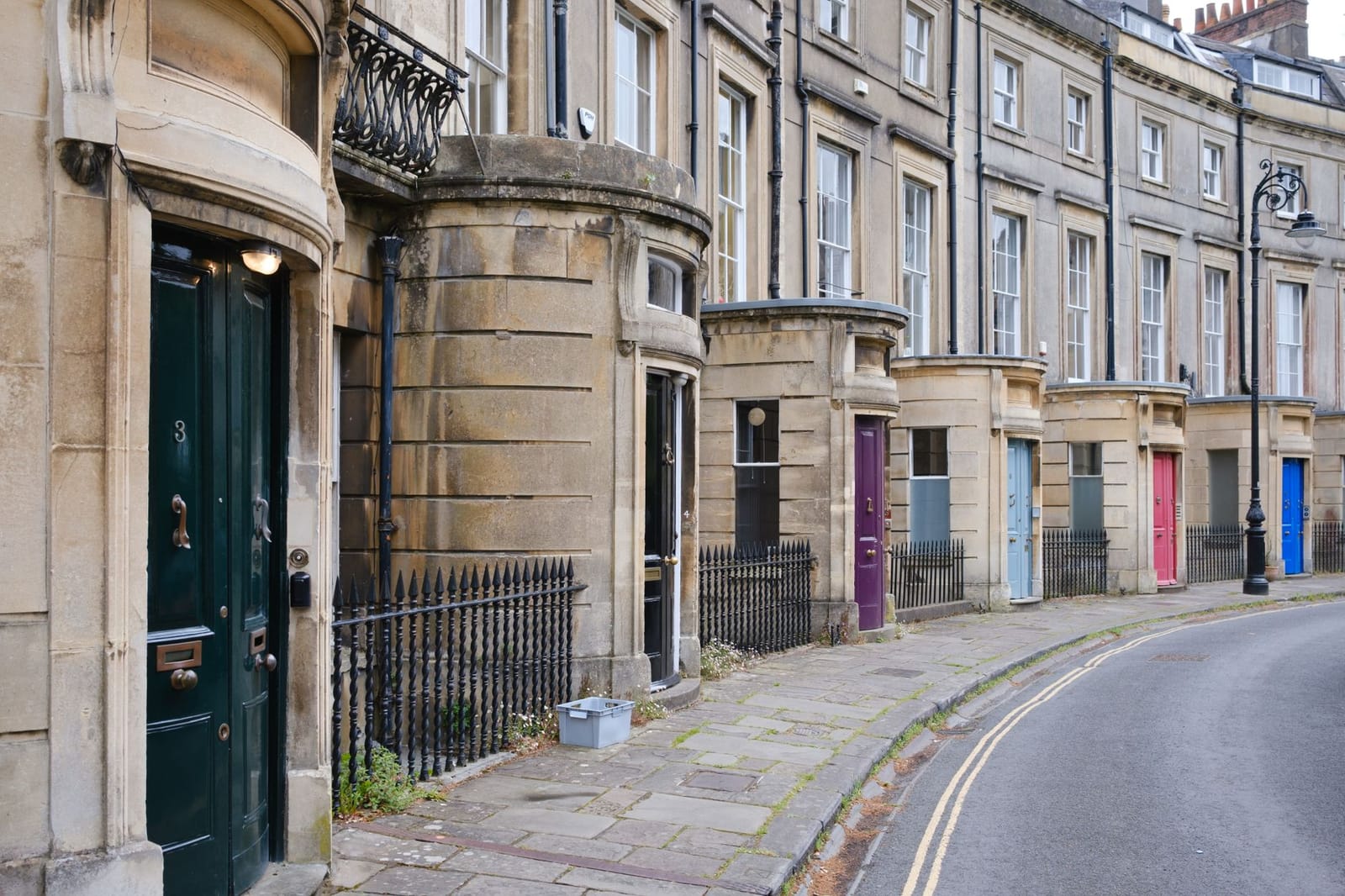
Manchester’s EPC problem is a points problem, not a spending problem
Analysis of lodged EPC data puts roughly 43% of Manchester homes below band C, the threshold that starts at 69 SAP points. Zoom out and the scale is starker: the Greater Manchester Combined Authority has calculated that around 1.2 million homes across the city-region need retrofit work to hit its 2038 carbon-neutral date, which works out at roughly 61,000 homes a year. Nobody improves 61,000 homes a year by starting with £12,000 wall quotes. The homes that move up a band fastest in Manchester are the ones where the owner knows the gap, current score, minus 69, and buys exactly that many points in cost-per-point order. That is what this page sets out: where Manchester’s stock actually loses its points, which measures buy them back cheapest, and how to improve your EPC score without paying for glazing that adds two points or wall insulation the arithmetic never required.
Where Manchester homes lose their EPC points
Manchester’s score losses cluster by era, and the M postcodes contain all three of the difficult ones.
Pre-1919 solid-wall terraces, the streets of Levenshulme, Gorton, Openshaw, Moss Side and Old Trafford’s fringes, lose most of their points through walls that have no cavity to fill. RdSAP models an uninsulated solid wall harshly, and it is the single biggest drag on the certificate. The trap is concluding that walls must therefore be fixed first: at £8,000-£15,000+ for internal or external insulation, they are the most expensive points in the city, and a documented case elsewhere in England took an identical property type from E (48) to C (77) for around £8,550 without touching the walls at all.
Interwar and post-war cavity semis, Wythenshawe, built as one of Europe’s largest garden-suburb council estates in the 1930s, plus the semi belts of Burnage, Chorlton Park and Blackley, lose points through unfilled cavities, quarter-filled lofts and heating systems running without proper controls. This stock is the cheapest in Manchester to lift a whole band.
Flats and conversions, Ancoats mills, 1960s, 70s blocks in Hulme and Collyhurst, city-centre apartments, lose points on electric heating and hot water. Panel heaters and an unjacketed immersion cylinder are scored on cost, and modelled electricity costs are high, so an otherwise sound flat can sit at D or E. The levers inside a leaseholder’s control are smaller but real: high-retention storage heaters, smart controls, a cylinder jacket, LED throughout.
Since 15 June 2025, RdSAP 10 has added a fourth loss category that applies to every era: missing paperwork. Assessors now score heating from documented model data and measure every window individually, an efficient boiler with no evidence defaults to pessimistic age-band assumptions. In a city where so much stock has been improved piecemeal by successive owners, undocumented improvements are silently costing Manchester homes points they have already paid for.
The cheapest EPC points in Manchester
Published UK ranges, applied to Manchester’s stock, produce a consistent ladder. Treat the figures as planning ranges confirmed by an assessment, never guarantees.
- LED lamps throughout, £20-£80, typically +1-3 points. Roughly £10-£40 per point, and almost every pre-2010 fitting in the city still counts against the score.
- Hot-water cylinder jacket (80mm+), £15-£80, typically +1-4 points. Most relevant in Manchester’s flats and older semis that kept a cylinder.
- Full heating controls, programmer, room thermostat, TRVs, £150-£500, typically +2-5 points. Smart controls are now recorded under RdSAP 10.
- Draught-proofing, £30-£250, typically +1-3 points, and it improves how every other measure performs in a draughty terrace.
- Loft insulation top-up to 270-300mm, £300-£800, typically +5-15 points. The best sub-£1,000 fabric measure on almost any Manchester certificate; a documented 100mm-to-300mm top-up gained around 8-9 points for £800.
- Cavity wall insulation, £400-£1,500, typically +5-15 points, but only on cavity stock, which in Manchester means broadly post-1920s. Wythenshawe yes; Levenshulme no.
The expensive end of the ladder is where Manchester owners most often overspend. Double glazing is documented at 2 points for £5,400 in a published landlord case, roughly £2,700 per point, and solid wall insulation runs £8,000-£15,000+. Both have their place; neither is where a D-rated home starts. The full ranking, with the arithmetic shown, is on our cheapest EPC improvements page, and the cost guide sets out what whole band-jumps typically cost. One dated reason not to wait: 0% VAT applies to energy-saving materials on residential installs until 31 March 2027, when it reverts to 5%.
Terrace or Wythenshawe semi: two Manchester routes to band C
The pre-1919 terrace route. Sequence: quick wins first (LED, jacket, draught-proofing, often +4-8 points for under £400), then the loft top-up, then floor insulation where a cellar or suspended timber floor gives access (typically +2-6 points; documented at about £150 in materials where a cellar made the underside reachable), then heating controls, then, only if the gap analysis still demands it, a boiler replacement (+5-15 points, £2,000-£3,500, with the model number evidenced) or wall insulation as the last resort. Most mid-D terraces in Levenshulme or Gorton clear 69 well before the wall question arises. Our insulation guide covers the loft, floor and wall trade-offs in detail.
The cavity semi route. A 1930s, 1970s semi in Wythenshawe, Burnage or Blackley is the cheap-jump champion of the city: cavity fill plus a loft top-up plus full heating controls frequently adds 12-25 points for under £2,500, enough to take a mid-D home comfortably into C and a weak E into D and beyond. Manchester City Council’s own programme is instructive here: the £60m energy efficiency and decent homes programme it approved in July 2023 put £49.7m into 1,603 council-owned homes, leading with insulation, new heating and solar rather than glazing, the same sequencing logic, at estate scale.
Flats on electric heating follow a third, narrower route: high-retention storage heaters with automatic charge control, smart controls, cylinder jacket, LED, and, where the lease allows, secondary glazing. Where communal walls or roofs are outside a leaseholder’s control, improvements stop at the demise line and the certificate reflects what is achievable.
A worked example from the M postcodes (illustrative)
Take a Levenshulme two-bed mid-terrace at D (62): seven points short of C. An illustrative sequence from the published ranges: LED throughout (£60), an 80mm cylinder jacket (£25), a programmer, room stat and TRVs (£420), and a loft top-up from 100mm to 300mm (£450). Total outlay under £1,000 against typical combined uplifts of +9 to +25 points, comfortably covering the seven needed, with headroom. This is an illustration built from published cost-per-point ranges, not a guaranteed outcome; the anchor case behind it is real and documented, though: a solid-wall Victorian mid-terrace taken from E (48) to C (77) for around £8,550, where the £800 loft top-up delivered points at roughly £95 each and £5,400 of glazing delivered them at £2,700 each. Same certificate, twenty-eight times the price per point. After the works, a fresh assessment (£45-£120) lodges the new score on the national register, check your current score and gap first at find-energy-certificate on GOV.UK.
Help that exists in Manchester right now
Manchester owners have two genuinely useful local routes. Your Home Better, the retrofit advice service procured by the Greater Manchester Combined Authority, provides impartial whole-house assessments and improvement plans with likely costs, it does not hand out grants, but it identifies what funding a specific address can reach. The Warm Homes: Local Grant funds energy performance measures and low-carbon heating for eligible households in EPC bands D-G with incomes under £36,000 (or in qualifying postcodes), check eligibility and apply via GOV.UK’s Warm Homes: Local Grant page. Nationally, the Boiler Upgrade Scheme pays £7,500 toward an air source heat pump (landlords eligible; the property’s EPC must carry no outstanding loft or cavity recommendations), and 0% VAT on energy-saving materials runs to 31 March 2027. There is no grant for the assessment itself, a domestic re-assessment is a paid service, typically £45-£120.
The rules and the dates: what is law and what is proposed
The law today: privately rented homes in England and Wales must meet EPC E, new tenancies since 1 April 2018, all tenancies since 1 April 2020, with a £3,500 cost cap and penalties of up to £5,000 per property, enforced locally by Manchester City Council. The confirmed direction: on 21 January 2026 the government confirmed that rented homes must reach EPC C by 1 October 2030, measured across two of the reformed metrics (fabric performance plus heating system or smart readiness), with a proposed £10,000 cost cap. That is confirmed policy, not yet enacted law, secondary legislation is reported as targeted for 2027, so final exemption detail is still to land. Separately, domestic EPCs themselves are changing: from October 2026, subject to regulations (and industry reporting suggests the date could slip), new-style certificates carry four headline metrics produced by the Home Energy Model. The practical Manchester read: fabric and controls score under both regimes, and the city’s 2038 carbon-neutral framework means local policy pressure only points one way. None of this requires panic; all of it rewards sequencing the cheap points now.
Manchester EPC improvement questions
How many points does a loft top-up add in a Levenshulme terrace?
Typically +5-15 points for £300-£800 when topping up to 270-300mm, with a documented 100mm-to-300mm top-up gaining around 8-9 points for £800. Propertymark’s analysis puts the average top-up at +4.9 points. On a mid-D terrace needing seven points for C, the loft alone often closes most of the gap. Photograph the installed depth and keep the invoice, under RdSAP 10, unevidenced insulation is scored on pessimistic assumptions.
My Ancoats flat has electric panel heaters. What actually lifts the score?
Work the levers inside your demise: high-retention storage heaters with automatic charge control, smart heating controls (now recorded under RdSAP 10), an 80mm jacket on the hot-water cylinder, and LED throughout. Together these typically add meaningful points at four-figure-or-less cost. Communal fabric, walls, roof, windows in some leases, needs freeholder consent, and where that consent is refused the MEES third-party-consent exemption exists as a backstop for landlords.
Do I need solid wall insulation to reach C in Manchester?
Usually not. Wall insulation adds +10-20 points but costs £8,000-£15,000+, and the documented Victorian-terrace case reached C (77) from E (48) for around £8,550 without it, loft, floor, and sequencing did the work. Run the gap arithmetic first: a mid-D home at 62 needs +7, which the sub-£1,000 measures typically cover. Walls are the last resort for weak-E and F-rated solid-wall stock, not the default.
Does Manchester’s 2038 net-zero target change my legal duties?
No, legal duties come from national MEES regulations, not the Manchester Climate Change Framework. The 2038 target matters differently: it shapes where council and combined-authority money flows (the £60m council-stock programme, Your Home Better), and it signals that local enforcement and future schemes will keep tightening. Your binding dates are national: E now for rentals, confirmed policy of C by 1 October 2030 pending secondary legislation.
What does a re-assessment cost in Manchester, and when should I book it?
Typically £45-£120 for a domestic re-assessment, booked after the works are complete and the paperwork is assembled, invoices, boiler model and serial, insulation depth photos, FENSA or MCS certificates. The certificate cannot be edited, so the score only changes when the new assessment is lodged on the national register, where it stays valid ten years. Under RdSAP 10, arriving with evidence is frequently worth several points on its own. More general questions are answered on our FAQs page.
Areas we cover around Manchester
We plan and deliver EPC score improvements across every Manchester postcode district from M1 to M23, the terrace belts of Levenshulme, Gorton and Moss Side, the semi suburbs of Burnage, Blackley and Wythenshawe, and the flat and conversion stock of Ancoats, Hulme and the city centre, plus the wider boroughs of Salford, Trafford, Stockport, Tameside, Oldham, Rochdale and Bury. The same cost-per-point method applies across the North West: see our Liverpool page for the city region’s terrace stock, or Leeds across the Pennines for back-to-back-specific sequencing.
Get your Manchester EPC score moving
Send us your address and current rating, or let us pull the lodged certificate, and you get back a sequenced, costed plan: your exact points gap to C or B, the cheapest measures that close it for your construction type, the funding your household can actually reach, and the re-assessment that makes the new score official. No glazing sold for points it will not add. Request your Manchester improvement quote and start from the number that matters: yours.
Postcodes covered in Manchester
- M1
- M2
- M3
- M4
- M5
- M6
- M7
- M8
- M9
- M11
- M12
- M13
- M14
- M15
- M16
- M17
- M18
- M19
- M20
- M21
- M22
- M23
Other areas we cover
Get a free quote in Manchester
Responds within one working day
- 1. Gap analysis from your current EPC, your score, the gap to the next band, no obligation.
- 2. A ranked plan costed per point, cheapest first, with the evidence to keep.
- 3. Re-assessment by an accredited energy assessor, lodged on the national register.
- Accredited DEAs & NDEAs
- RdSAP 10 evidence-based
- Costed per point
- Lodged on the register