Improve Your EPC Score in Sheffield
Serving Sheffield and the wider South Yorkshire area, including Rotherham, Barnsley, Chesterfield.
Start with the number: Sheffield’s gap arithmetic
Analysis of lodged EPC data puts 55.8% of Sheffield homes below band C-a majority of the city sitting under the threshold the government has confirmed as the 2030 goal for rented homes. The useful response is arithmetic, not alarm. Band C starts at 69 SAP points and B at 81; pull your certificate on find-energy-certificate on GOV.UK, read the score (the number, not the letter), and subtract. A mid-D Hillsborough semi at 62 needs +7 points. A weak-E Page Hall terrace at 42 needs +27. Those are different projects with different budgets, and neither starts with the measure Sheffield owners are most often quoted first, new windows, documented in a published landlord case at 2 points for £5,400. The whole discipline of how to improve your EPC score is buying your particular gap in cost-per-point order, and in Sheffield that order depends on which of the city’s three stock types you own, stone terrace, thirties semi, or connected flat.
Where Sheffield homes leak EPC points
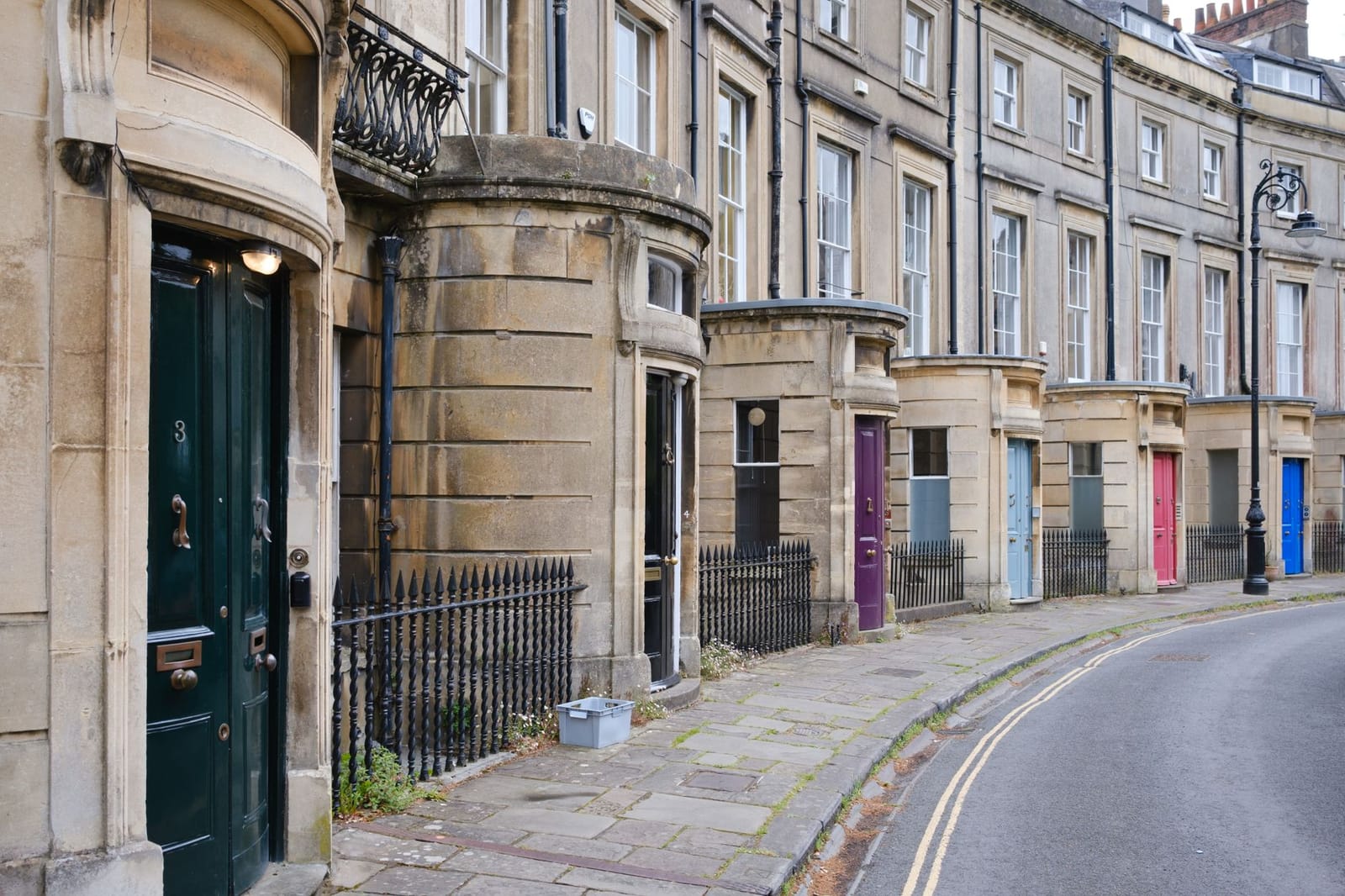
Stone and brick pre-1919 terraces, Walkley, Crookes, Heeley, Sharrow, Hillsborough’s older streets, leak points through solid walls that RdSAP scores harshly, through original suspended floors, and through rooms-in-the-roof left uninsulated when the attic became a bedroom. Altitude sharpens it: much of west Sheffield sits high and exposed, so infiltration (draughts) costs these homes more comfort than the certificate strictly records, which makes draught-proofing the rare measure that over-delivers relative to its modest +1-3 points.
The interwar semi belt, Ecclesall’s fringes, Norton, Gleadless, Wisewood, mostly has cavities, and an unfilled cavity is the single cheapest big win in the city: £400-£1,500 for typically +5-15 points. Add the loft top-up and proper controls and this stock frequently jumps a whole band for under £2,500.
Flats, blocks and the district-heated centre. Sheffield runs one of the UK’s most established district energy networks: more than 140 buildings and over 2,800 dwellings, Park Hill and other city-centre and Netherthorpe blocks among them, draw heat from the Energy Recovery Facility through roughly 45km of pipe, delivering around 120,000 MWh a year. RdSAP scores community heating as the dwelling’s heating system, so connected flats often carry respectable heating points already and lose their score instead on lighting, hot-water insulation and controls, cheap fixes. In February 2025 the government’s heat network zoning programme published its Zone Opportunity Report for Sheffield, mapping where the network could reach next; if your building sits in a designated zone, factor that into any heating decision.
Across all three types, RdSAP 10 (in force 15 June 2025) has made the paperwork part of the fabric: heating scored from documented model data, every window measured individually, smart controls and batteries recorded. A Crookes terrace with a 2019 combi and no manual is being under-scored today for the lack of a PDF.
The city’s commercial stock leaks differently. Units across Tinsley Park, Don Valley and the older estates are scored on SBEM asset ratings rather than RdSAP, and the fastest, cheapest lift for an F- or G-rated unit is almost always LED lighting with occupancy controls, followed by heating upgrades, exactly the order the certificate’s own recommendation report ranks them. With average commercial energy spend running around £42,000 a year locally, the measures that raise the asset rating are the same ones that cut real overheads, which is why they rarely need a compliance deadline to justify themselves.
Stone terrace, thirties semi or district-heated flat: three Sheffield starting points
The stone terrace plan. Quick wins first, LED throughout (£20-£80, +1-3), cylinder jacket if a tank survives (£15-£80, +1-4), draught-proofing (£30-£250, +1-3), then the roof: a straight loft top-up (£300-£800, typically +5-15) or, where the attic is a bedroom, room-in-roof insulation, the strongest single measure in Propertymark’s analysis at +9.91 points on average. Then heating controls (£150-£500, +2-5). Only if the gap survives all that does the conversation reach floor insulation (+2-6), a boiler swap (+5-15, £2,000-£3,500) or solid-wall insulation (+10-20, £8,000-£15,000+, damp-risk survey first on stone).
The thirties semi plan. Cavity fill, loft top-up, controls, usually in that order, usually under £2,500 all-in, usually 12-25 points. This is the stock the published averages love: the government’s own impact assessment put the mean cost of reaching C at about £5,400, and cavity semis routinely come in far under it. Details and trade-offs on the insulation hub.
The connected-flat plan. If the block is on the district network, heating is largely banked; spend on LED, controls compatible with the communal system, hot-water insulation and draught-proofing, and evidence everything. If the block is electric-heated and off-network, high-retention storage heaters plus smart controls are the in-demise heating play, and solar PV is generally a house measure, not a leaseholder’s.
One benchmark worth holding onto: Sheffield City Council reports its own housing stock at an average rating of 73, band C, against a national average of 60. The gap between council stock and the private terraces around it is not construction; it is decades of sequenced measures. Private owners are just running the same programme, one house at a time.
The cheapest points in Sheffield, priced
The ladder, from published UK ranges (property-specific; confirmed by assessment): LED £10-£40 per point · cylinder jacket £10-£40 per point · draught-proofing £30-£150 per point · loft top-up £50-£100 per point · cavity fill £80-£150 per point · controls £75-£150 per point. Then the expensive shelf: boiler £200-£400 per point, solar £400-£800 per point, solid wall £500-£1,000 per point, glazing up to roughly £2,700 per point on the documented case. Prices carry 0% VAT on qualifying energy-saving materials until 31 March 2027, a real, dated reason to sequence works this year rather than queue behind the 2030 rush. Whole-jump budgets: the English Housing Survey 2023-24 average for bringing a rented home to C is about £6,864; the documented worst-case-stock example (solid-wall Victorian terrace, E 48 to C 77) came in around £8,550; efficient post-1990 homes often need only the sub-£1,500 package. Full figures on the cost guide.
A Crookes stone terrace, worked through (illustrative)
Illustrative, built from the published ranges, not a guarantee. A three-bed stone-fronted terrace with an attic bedroom sits at D (58): eleven points to C. Sequence: LED throughout (£65, +1-3), draught-proof the front door, bay and skirting gaps (£220, +1-3, and immediately warmer on an exposed street), programmer + room stat + TRVs (£420, +2-5), room-in-roof insulation to the attic bedroom (£1,800-£2,600, average +9.91 per Propertymark). Indicative outlay: roughly £2,500-£3,300 against typical combined uplifts of +14 to +21 points, clearing 69 with margin in the central case, stone walls untouched. The certificate then only changes when a fresh assessment is lodged: £45-£120, ten years’ validity, and under RdSAP 10 the invoices and depth photographs are themselves worth points. The same arithmetic, run on your actual score, is the first thing we produce for any Sheffield address.
What the law says now, and what is only proposed
Three tiers, kept precise. Law now: rented homes must meet EPC E, new tenancies since 1 April 2018, all tenancies since 1 April 2020, with a £3,500 cost cap and penalties up to £5,000 per property, enforced by Sheffield City Council. For commercial premises the floor is also E, and it has applied to continuing leases since 1 April 2023. Confirmed policy, not yet law: the government’s response of 21 January 2026 commits rented homes to EPC C by 1 October 2030, measured across two reformed metrics, with a proposed £10,000 cap, delivery via secondary legislation reported as targeted for 2027. Proposal only: for larger commercial buildings over 1,000 square metres, EPC B by 2031 (interim response, 18 June 2026), with the previously floated 2027 C milestone dropped. Alongside all three: domestic EPCs move to four Home Energy Model metrics targeted from October 2026, subject to regulations and possible slippage, and RdSAP 10 has governed assessments since 15 June 2025. Anyone telling you “C by 2030 is law” or “commercial B by 2030” is working from stale copy.
Sheffield EPC improvement FAQs
Does living on a Sheffield hillside actually affect my EPC?
Exposure itself is not separately scored in RdSAP the way owners sometimes assume, but its consequences are real: draughts and infiltration on exposed west-Sheffield streets make draught-proofing (+1-3 points, £30-£250) deliver more comfort per pound than anywhere else in the city, and a well-evidenced loft top-up matters more when the roof takes the weather. Treat exposure as a reason to prioritise the cheap fabric measures, not as a penalty to appeal.
My flat is on the district energy network. What is left to improve?
Usually the small, cheap items: LED throughout, a hot-water cylinder jacket if your flat has a tank, controls compatible with the communal system, and draught-proofing. Community heating from the network is scored as your heating system and often scores well, over 2,800 Sheffield dwellings are connected, so the remaining gap to the next band is typically 2-8 points, exactly the range the sub-£500 measures cover. Evidence any battery or smart controls; RdSAP 10 records both.
Is cavity wall insulation safe on a 1930s Sheffield semi?
Generally yes, where the cavity is sound and the installer surveys for exposure and damp first, and it is the city’s best-value big measure at £400-£1,500 for typically +5-15 points. Keep the guarantee (CIGA or equivalent): under RdSAP 10, an unevidenced filled cavity can be assessed as unfilled, which throws the points away. Stone-built pre-1919 terraces have no cavity; for them the roof and floor carry the fabric plan.
What does it cost to get from E to C in Sheffield?
The honest range: the government impact assessment averages about £5,400; the English Housing Survey 2023-24 average is roughly £6,864; and the documented solid-wall worst case reached C for around £8,550 without wall insulation. Sheffield’s cavity semis usually come in well under the averages; its stone terraces sit nearer the top unless the attic-room measure does the heavy lifting. The proposed 2030 cost cap is £10,000, most homes clear C well inside it when sequenced cheapest-first.
Who enforces EPC rules in Sheffield, and what are the penalties?
Sheffield City Council enforces the domestic minimum standard: letting below EPC E (without a registered exemption) carries penalties up to £5,000 per property, and the E rule has covered all tenancies since 1 April 2020. The 2030 C standard is confirmed policy awaiting secondary legislation, not yet enforceable, so today’s enforcement question is E, and today’s planning question is C. Our FAQs page covers exemptions, evidence and re-assessment in more depth.
Areas we cover around Sheffield
We produce improvement plans across all Sheffield postcodes, the stone terraces of Walkley, Crookes and Heeley, the semi belts of Norton, Gleadless and Wisewood, Kelham Island’s conversions and the district-heated centre, and across Rotherham, Barnsley, Chesterfield, Doncaster and Worksop. Nearby city pages: Doncaster for South Yorkshire’s cavity-stock towns and Leeds for West Yorkshire’s back-to-backs.
Re-assess and lodge: finishing the job in Sheffield
Improvements that are never re-assessed do not exist, not to buyers, lenders, letting agents or enforcement. The close of every Sheffield plan is the same: works done, evidence pack assembled (invoices, model numbers, depth photos, certificates), fresh RdSAP assessment at £45-£120, new score lodged on the national register for ten years. We sequence the points, check your funding eligibility, and book that final step. Request your Sheffield improvement quote.
Postcodes covered in Sheffield
- S1
- S2
- S3
- S4
- S5
- S6
- S7
- S8
- S9
- S10
- S11
- S12
- S13
- S14
- S17
- S20
- S35
- S36
Other areas we cover
Get a free quote in Sheffield
Responds within one working day
- 1. Gap analysis from your current EPC, your score, the gap to the next band, no obligation.
- 2. A ranked plan costed per point, cheapest first, with the evidence to keep.
- 3. Re-assessment by an accredited energy assessor, lodged on the national register.
- Accredited DEAs & NDEAs
- RdSAP 10 evidence-based
- Costed per point
- Lodged on the register