Improve Your EPC Score in Portsmouth
Serving Portsmouth and the wider Hampshire area, including Gosport, Fareham, Havant.
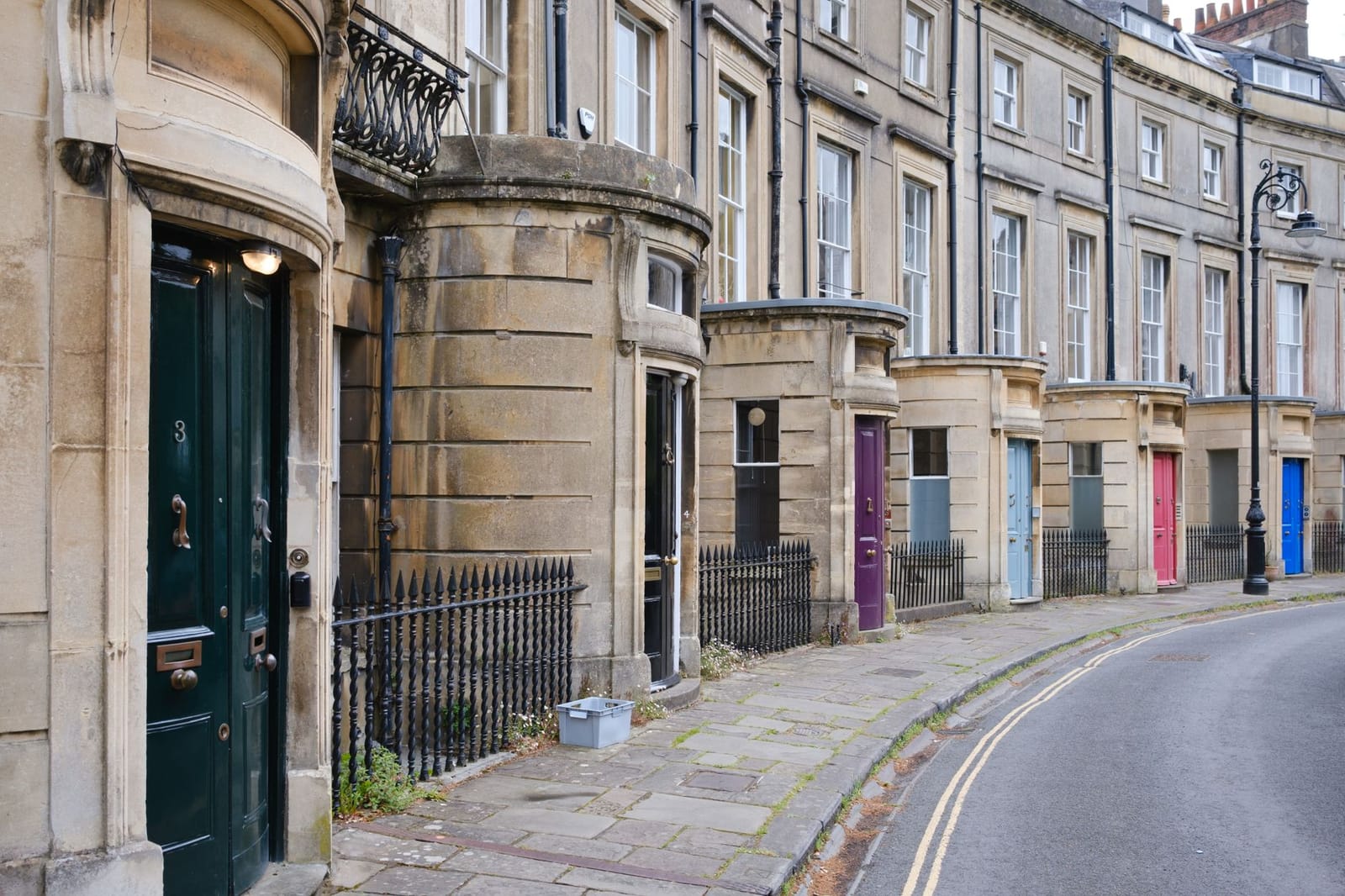
Improving an EPC score in Portsmouth is a terraced-house problem
A domestic EPC is a SAP rating from 1 to 100, and band C starts at 69 points. Your certificate shows a letter, but the plan lives in the number, subtract your score from 69 and you have the gap. Portsmouth is defined by one building type more than almost any city in England: over 42% of its housing stock is terraced, close to double the national average, and most of it was built between 1850 and 1910 to house naval dockyard workers. Packed onto Portsea Island, the UK’s only island city and the most densely populated outside London, at 50 to 75 dwellings per hectare across wide areas, these are solid-brick terraces with no cavity, single glazing and, very often, thin loft insulation and an ageing gas system.
That density cuts two ways for the EPC. The solid walls and dense street layout mean a lot of these homes assess D or E. But the same terracing means most of the party walls are shared and heat-retaining, so the heat loss is concentrated on the front and rear elevations and the roof, which is exactly where the cheap fabric measures work. The instinct on solid-wall stock is to reach for the walls, and the internal-insulation quote that follows stalls the project. It rarely needs to: a documented solid-wall Victorian mid-terrace was taken from EPC E (48) to a high C (77) for around £8,550 without wall insulation and without a new boiler (published by The Independent Landlord; most of that spend was glazing bought for other reasons). This page sets out where Portsmouth homes lose EPC points and how to buy them back cheapest first. For the method, start with how to improve your EPC score.
Where Portsmouth homes lose EPC points
The EPC models what a home should cost to heat, light and run per square metre, so it penalises heat loss, and on Portsmouth’s terraces the losses have a specific shape.
Solid front and rear walls with no cavity are the biggest drag. The 1850-1910 dockyard terraces of Portsea, Fratton, Buckland and North End are 225mm solid brick, and RdSAP scores an uninsulated solid wall harshly. Because the homes are terraced, the two party walls are shared and warm, so the loss concentrates on the two external elevations and the roof, a smaller solid-wall problem than a detached house, and a cheaper one to work around.
Thin loft insulation and missing controls are the quiet losers. Many Portsmouth lofts hold 100mm or less against a 270-300mm benchmark, and older gas systems frequently run without a room thermostat or TRVs. Both are cheap and score well, and on a terrace the roof is a proportionally large share of the exposed surface, so the loft matters more here than on a bigger, more compact home.
Coastal exposure and undocumented improvements. Portsmouth’s exposed island position drives draughts through single-glazed sash and casement windows, which the model penalises through ventilation loss. And since RdSAP 10 came into force on 15 June 2025, the assessor measures every window individually and scores insulation and heating from evidence, so a home improved years ago can be scored on pessimistic defaults if the paperwork is gone, losing points already paid for.
The cheapest EPC points in Portsmouth
Ranked by cost per point, the division competitors skip, the order holds across Portsmouth’s terraced stock, and it starts nowhere near the walls. Our cheapest EPC improvements hub details the full sub-£500 package; applied to Portsmouth’s Victorian terraces:
- LED lamps throughout, £20 to £80, typically one to three points. The cheapest points on any certificate.
- Hot-water cylinder jacket (80mm+), £15 to £80, typically one to four points where a cylinder exists.
- Full heating controls, programmer, room thermostat and TRVs, £150 to £500, typically two to five points, now recorded under RdSAP 10.
- Draught-proofing, £30 to £250, typically one to three points, and it directly addresses the coastal-draught losses.
- Loft insulation top-up to 270-300mm, £300 to £800, typically five to fifteen points. The best sub-£1,000 fabric measure, and disproportionately valuable on a terrace where the roof is a large share of the exposed surface.
Stacked, that package routinely delivers 10 to 25 points for under £1,500, enough to move most D-rated Portsmouth terraces to C, and to close a good part of a two-band E-to-C gap. Against the proposed £10,000 landlord cost cap, most homes clear C with a wide margin. The same order is costed nationally on our cost and cost-per-point guide.
The measures that fit Portsmouth’s terraced stock
Loft, draught-proofing and controls before walls
On a Portsmouth dockyard terrace the recommendation report almost always leads with the loft, and it should: topping up to 270-300mm is £50 to £100 per point, and on a terrace with a large roof share it pulls its weight. Draught-proofing earns its place here more than in most cities because of the coastal exposure, sealing the single-glazed windows and the floor gaps addresses real ventilation loss for £30 to £250. Add full controls and you have most of a band jump for well under £1,500, walls untouched. Our insulation EPC improvements hub covers the fabric sequence. Solid-wall insulation is the big lever, ten to twenty points, but at £8,000 to £15,000+ it is the last resort on the worst-scoring homes, and where expert advice shows it would damage the fabric, the wall-insulation exemption applies. On a mid-terrace the shared party walls also mean internal wall insulation, if ever used, only needs to cover two elevations rather than four.
Heating, controls and the funded route
Where the heating is old, full controls come first, then a condensing boiler if the existing one is genuinely dated (five to fifteen points for £2,000 to £3,500), keeping the model and serial number because RdSAP 10 scores the actual unit from documented data. Portsmouth also has real local funding: the council leads a Warmer Homes consortium, and Portsmouth City Council with 30 partner authorities secured a £26 million Warm Homes: Local Grant award funding insulation, solar and air-source heat pumps for eligible households, following the earlier £23.8 million HUG2 scheme that targeted off-gas-grid low-income homes. All of it is eligibility- and address-dependent, so check what is currently open before assuming. Our heating EPC improvements hub sets out the order. Heating measures qualify for 0% VAT on energy-saving materials until 31 March 2027.
Glazing, for comfort, rarely for points
Portsmouth’s exposed windows are genuinely draughty, and owners are sold replacements as an EPC fix, but the documented arithmetic pushes back: £5,400 of new front-elevation double glazing added exactly two points in the published case, around £2,700 a point against £50 to £100 for the loft. Windows carry only 10-15% of the score. Draught-proofing captures much of the same comfort benefit at a fraction of the cost, and on Old Portsmouth’s heritage stock secondary glazing is the consent-safe route and is scored. Fit glazing for warmth and saleability; buy your points elsewhere. The detail is on our glazing EPC improvements hub.
A Portsmouth worked example
Take the Fratton terrace in the scenario: an 1890 dockyard-worker mid-terrace, solid brick, no cavity, packed into a street at 60-plus dwellings per hectare, assessed E (50), nineteen points short of C. The two party walls are shared and warm, but the front and rear solid walls, a 100mm loft, single glazing and an old gas system pull it down. The quote was internal wall insulation to reach C, several thousand pounds inside an occupied home.
Sequenced cheapest-first: a loft top-up to 300mm (around £500), full heating controls (around £420), draught-proofing the windows and floor (around £180), LED throughout (around £60) and a cylinder jacket (around £25). That is roughly £1,200 to £1,300, and on the published cost-per-point ranges it closes most of the nineteen-point gap, with the shared party walls doing quiet work in the model, leaving a modest remainder that a condensing boiler swap or a further measure would clear into C. The evidence pack went to the assessor, because under RdSAP 10 documentation converts directly to points. This is an illustrative scenario from the published ranges, not a guarantee, but it mirrors the documented E-to-C case on exactly this stock.
Compliance context: why the number matters, and by when
Raising the score is worth doing on its own terms, but for Portsmouth landlords there is a dated backdrop. Current law is a minimum of EPC E to let, in force for all tenancies since 1 April 2020, cost cap £3,500, penalties up to £5,000 per property enforced by Portsmouth City Council. Ahead of that, the government confirmed on 21 January 2026 that privately rented homes in England and Wales must reach EPC C by 1 October 2030, measured across two of the reformed metrics (fabric performance plus heating system or smart readiness), with a proposed £10,000 cost cap. That is confirmed government policy, not yet enacted law, delivered through secondary legislation reported as targeted for 2027, so the final exemption detail is not settled. For Portsmouth’s dense terraced stock the read is the same: the cheap fabric points are the future-proof points, scoring under both today’s SAP and the coming metrics. Portsmouth declared a climate emergency in 2019 and holds a 2030 net-zero target for council operations under its Climate Emergency plan.
Portsmouth EPC improvement FAQs
My Portsmouth terrace scores an E, how many points to reach C?
Subtract your current score from 69. The letter alone is not enough for planning, an E at 50 needs nineteen points, an E at 54 needs fifteen, a D at 62 needs seven. Check your current number free on the government’s find-energy-certificate service. A terrace with shared party walls loses heat mainly through the front, rear and roof, so the loft, draught-proofing and controls package tends to punch above its weight; deeper E-rated homes may need a boiler or heating upgrade on top to clear C.
My dockyard terrace is solid brick with no cavity, do I have to insulate the walls?
Usually not, and on a mid-terrace the walls are a smaller problem than on a detached house because the two party walls are shared and warm. A documented solid-wall Victorian mid-terrace reached a high C (77) from E (48) without touching the walls. Sequence the loft, draught-proofing and controls first; treat wall insulation as the last resort on the worst-scoring homes, and where it is used on a terrace it only needs to cover the two external elevations.
Does Portsmouth’s coastal exposure affect my EPC?
Indirectly, yes. The exposed island position drives draughts through single-glazed windows and gaps, and RdSAP penalises that ventilation loss, which is why draught-proofing earns a higher place in the Portsmouth sequence than in more sheltered cities. Sealing windows, doors and floor gaps for £30 to £250 addresses real heat loss and scores. It also makes every other measure work better, because a draughty home wastes the heat the improved fabric retains.
Is there grant funding to improve my EPC in Portsmouth?
There can be. Portsmouth City Council leads a Warmer Homes consortium and, with 30 partner authorities, secured a £26 million Warm Homes: Local Grant award funding insulation, solar and heat pumps for eligible households, after an earlier £23.8 million HUG2 scheme aimed at off-gas-grid low-income homes. It is eligibility- and address-dependent, so confirm current availability with the council. Nationally, 0% VAT on energy-saving materials runs until 31 March 2027, and the Boiler Upgrade Scheme offers £7,500 toward a heat pump.
Do I need a new EPC after improving a Portsmouth home, and what does it cost?
Yes, a certificate cannot be edited, so the score only changes when a fresh assessment is lodged on the national register, superseding the old one for ten years. A domestic re-assessment in Portsmouth typically runs £45 to £100. It is the cheapest line in the project and the only one that makes the improvements visible to letting agents, buyers, lenders and MEES enforcement. Hand the assessor your invoices, boiler model number and insulation depth photos, under RdSAP 10, evidence converts directly to points.
Areas we cover around Portsmouth
We plan EPC improvements across all of Portsmouth’s postcode districts, PO1 to PO6, from the dense dockyard terraces of Portsea, Fratton and Buckland to the seafront stock of Southsea and the newer development at Port Solent and North Harbour. Beyond the island we also cover Gosport, Fareham, Havant, Waterlooville and Southsea, along with the mixed commercial-and-residential stock around Lakeside North Harbour and Voyager Park. Whether it is a single Victorian terrace in PO1 or a portfolio across PO4, the plan is the same: find the gap, buy the cheapest points first, re-assess. For nearby markets see our Southampton and Reading pages.
Plan your Portsmouth EPC improvement, cheapest points first
Start from your actual number. Pull your current score, subtract from 69, and sequence the measures by cost per point for your specific Portsmouth property, loft, draught-proofing and controls before glazing and walls, evidence in hand for the re-assessment. Browse the full method on our FAQs, see the measures costed on our cost guide, or begin with the flagship cheapest EPC improvements hub. Confirm your current rating and check the lodged inputs on the national EPC register (gov.uk), and read the reformed-EPC direction in the Warm Homes Plan (gov.uk).
Postcodes covered in Portsmouth
- PO1
- PO2
- PO3
- PO4
- PO5
- PO6
Other areas we cover
Get a free quote in Portsmouth
Responds within one working day
- 1. Gap analysis from your current EPC, your score, the gap to the next band, no obligation.
- 2. A ranked plan costed per point, cheapest first, with the evidence to keep.
- 3. Re-assessment by an accredited energy assessor, lodged on the national register.
- Accredited DEAs & NDEAs
- RdSAP 10 evidence-based
- Costed per point
- Lodged on the register