Improve Your EPC Score in Newcastle upon Tyne
Serving Newcastle upon Tyne and the wider Tyne and Wear area, including Gateshead, Sunderland, South Shields.
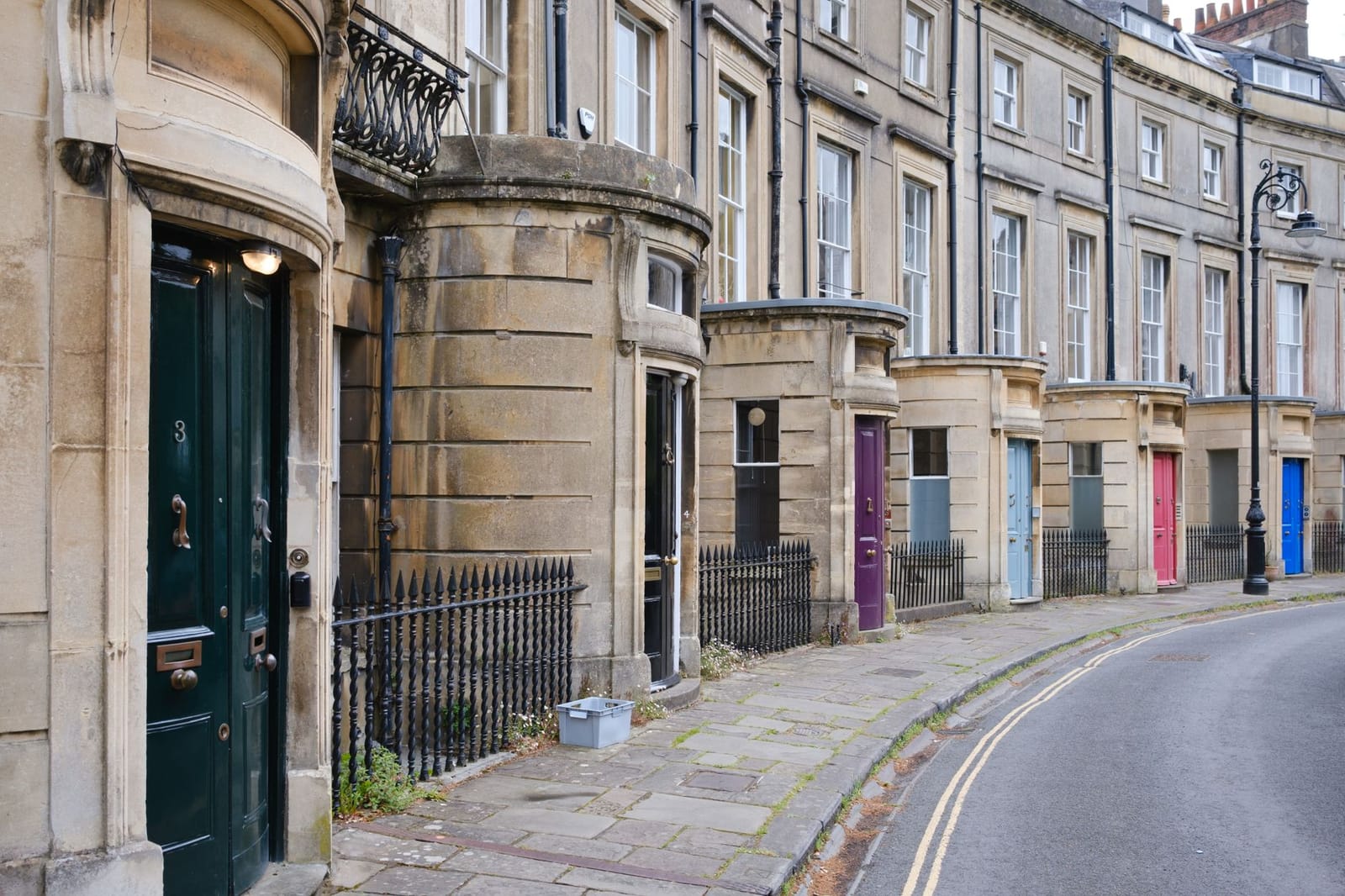
The Tyneside flat problem, and its cheap fix
Newcastle’s signature housing type exists almost nowhere else in England: the Tyneside flat, a pair of single-storey flats stacked inside what looks like a two-storey terrace, each with its own front door onto the street. Built in volume from the 1870s to 1914, they dominate the older streets of Heaton, Byker, Benwell and parts of Jesmond and Gosforth, and they produce a distinctive EPC pattern. Solid brick walls drag both certificates. But the points then split: the upper flat owns the roof, so an uninsulated or thin loft is its biggest cheap loss (and a £300-£800 top-up, typically +5-15 points, its biggest cheap win); the lower flat owns the suspended timber ground floor and the draughts that come with it, so floor insulation (+2-6 points) and draught-proofing (+1-3) matter disproportionately. Both flats share the measures that cost least per point anywhere: LED throughout, a cylinder jacket where a tank survives, and proper heating controls. Understanding which half of the building you own is the first step to improve your EPC score here without wasting a pound on the wrong elevation.
Where Newcastle homes lose EPC points
Beyond the flat pairs, Newcastle’s losses group into four.
Pre-1919 terraces and larger Victorian semis in Fenham, Arthur’s Hill, Sandyford and Jesmond carry the solid-wall penalty, original floors, and, in the student belt, heating systems that have never met a room thermostat. Newcastle’s private rented sector is large and growing: 22.8% of households rented privately at Census 2021, up from 19.1% in 2011, so a substantial share of the city’s D and E certificates belong to landlords with a 2030 planning question.
Interwar and post-war estates, Kenton, Fawdon, Denton, Walkergate, are cavity-wall stock, where fill (£400-£1,500, typically +5-15 points) plus a loft top-up plus controls is the classic sub-£2,500 band jump.
Electric-heated flats and maisonettes, from 1960s blocks to quayside apartments, lose points on modelled electricity costs. High-retention storage heaters, smart controls (recorded under RdSAP 10), hot-water insulation and LED are the in-demise levers.
Missing evidence. Since 15 June 2025, RdSAP 10 scores heating from documented model data, measures every window individually, and records smart controls and batteries. Tyneside flats have often passed through many hands; the boiler manual rarely survives the journey. An efficient but undocumented system scores on pessimistic age-band defaults, several points, lost to a missing PDF, recoverable at the next assessment with the serial number.
Cheapest points first in Newcastle
The ladder, from published UK ranges, planning figures, confirmed per property by an assessment, never guaranteed:
- LED lamps throughout, £20-£80, typically +1-3 points (about £10-£40 per point).
- Hot-water cylinder jacket (80mm+), £15-£80, typically +1-4 points.
- Heating controls, programmer, room thermostat, TRVs, £150-£500, typically +2-5 points.
- Draught-proofing, £30-£250, typically +1-3 points; lower Tyneside flats and single-glazed bays feel this most.
- Loft insulation top-up to 270-300mm, £300-£800, typically +5-15 points; a documented top-up gained 8-9 points for £800.
- Cavity wall insulation, £400-£1,500, typically +5-15 points, on the post-1920s estates only.
- Suspended floor insulation, £400-£2,300, typically +2-6 points; documented at about £150 in materials where access existed from below.
The expensive shelf, where Newcastle owners overspend when nobody shows them the division, starts with a boiler swap (£2,000-£3,500, typically +5-15 points, worthwhile when the old unit is non-condensing), then solar PV (£4,500-£8,000, +6-15 points, a strong finisher toward band B on houses with their own roof), then glazing (documented at +2 points for £5,400, about £2,700 per point) and solid-wall insulation (£8,000-£15,000+). The sub-£500 package is broken down on our cheapest improvements hub; band-jump budgets are on the cost guide. Every measure listed qualifies for 0% VAT on residential installs until 31 March 2027.
Upper flat, lower flat: who buys which points
A Tyneside flat pair often improves best as a coordinated project even though it carries two certificates. The upper flat’s plan leads with the roof: loft top-up or, where the attic has been converted, room-in-roof insulation (the strongest single measure in Propertymark’s analysis, +9.91 points on average). The lower flat’s plan leads with the floor void and the front-door draught strip, then controls. Both flats benefit from the quick wins, and both need their paperwork straight, freeholder-leaseholder arrangements on these buildings vary, and where a measure sits outside your demise (a shared roof on a leasehold upper flat, say), consent comes first. For rented pairs, the current legal floor is EPC E; the 2030 C standard confirmed on 21 January 2026 is policy awaiting secondary legislation, and it will be measured across two reformed metrics, one of them fabric performance, which is exactly what the roof and floor measures feed. Details by measure: insulation and heating and controls.
Funding and free help in Newcastle
Newcastle owners have an unusually direct advice route: Home Energy Advice North East (HEANE), the North East Combined Authority’s free service, staffed by Energy Saving Trust advisors, over 2,000 residents used it between April 2024 and March 2025, and in Newcastle it includes a free online energy action plan for your address, funded through the UK Shared Prosperity Fund. For grant-funded works, the Warm Homes: Local Grant covers insulation, solar and low-carbon heating for eligible households in EPC bands D-G (income under £36,000, means-tested benefits, or qualifying postcodes), check the route in via GOV.UK. The Boiler Upgrade Scheme pays £7,500 toward an air source heat pump, landlords included, provided the property’s EPC shows no outstanding loft or cavity insulation recommendations, the fabric-first rule written into the grant itself. And the benchmark for what sequenced improvement achieves at scale sits inside the city’s own programme: Newcastle City Council secured Social Housing Decarbonisation Fund money to upgrade 680 council homes with insulation, low-carbon heating and solar, each selected to reach EPC band C. None of these schemes fund the certificate itself: a domestic re-assessment is a paid service at £45-£120, and it is what makes any improvement official.
A Heaton flat pair, worked through (illustrative)
Illustrative, from the published ranges, not a promise. Upper flat, D (61), eight points to C: LED (£50, +1-3), cylinder jacket (£25, +1-4), loft top-up from 100mm to 300mm (£500, +5-15). Indicative spend about £575; typical combined uplift +7 to +22, clearing the gap in the central case with the walls untouched. Lower flat, E (52), seventeen points to C: LED (£50), draught-proofing the door, bay and floor perimeter (£220, +1-3), programmer + room stat + TRVs (£420, +2-5), suspended floor insulation via the front void (~£900, +2-6), and, if the re-assessment still models short, a condensing boiler swap with the model number evidenced (+5-15). Indicative spend before the boiler: about £1,590 for typical +6 to +17. The documented anchor case for this stock class, a solid-wall Victorian terrace, E (48) to C (77) for around £8,550 without wall insulation, shows the ceiling of what sequencing achieves. Check both flats’ current scores first at find-energy-certificate.
The compliance calendar: law vs proposal
Kept precise, because stale claims are everywhere. In force: minimum EPC E for rented homes, new tenancies since 1 April 2018, all tenancies since 1 April 2020-£3,500 cost cap, penalties up to £5,000 per property, enforced by Newcastle City Council. In force since 15 June 2025: RdSAP 10, the evidence-based assessment methodology. Confirmed policy, not yet law: EPC C for all rented homes by 1 October 2030 (government response, 21 January 2026), measured across two reformed metrics with a proposed £10,000 cap; secondary legislation reported as targeted for 2027. Targeted, subject to regulations: four-metric domestic EPCs produced by the Home Energy Model from October 2026, industry reporting flags possible slippage, so verify on GOV.UK before relying on the date. Proposal, commercial: EPC B by 2031 for privately rented buildings over 1,000 square metres (interim response, 18 June 2026); smaller commercial premises stay on the E minimum that has covered continuing leases since 1 April 2023. Hard date for everyone: 0% VAT on energy-saving materials ends 31 March 2027. Newcastle’s own Net Zero 2030 ambition adds local momentum but no private legal duty.
Newcastle EPC improvement FAQs
I own the upstairs Tyneside flat, is the loft mine to insulate?
Usually the roof space sits within the upper flat’s demise or its recognised use, but Tyneside flat titles vary: some pairs are freehold house-splits, some leasehold with a shared freeholder. Check the title plan before commissioning work. Once confirmed, the loft top-up is the best points-per-pound measure available to you, £300-£800 for typically +5-15 points, and RdSAP 10 wants the depth photographed and the invoice kept.
What lifts a student HMO in Jesmond or Sandyford fastest?
Controls and evidence, then fabric. A programmer, room thermostat and TRVs (£150-£500, +2-5 points) fix the commonest deduction on student lets; documenting the existing combi’s model number recovers points RdSAP 10 otherwise assumes away; LED and draught-proofing add the cheap remainder. With 22.8% of Newcastle households renting privately, assessors here see undocumented, uncontrolled systems weekly, the fix costs less than one month’s rent on most HMOs.
Do storage heaters condemn my flat to a low band?
No, but old, uncontrolled ones score poorly. Modern high-retention storage heaters with automatic charge control, plus smart controls (now recorded under RdSAP 10), materially improve the heating element of an electric flat’s score; a cylinder jacket and LED close more of the gap. Where a communal system or fabric sits outside your lease, improvements stop at the demise and the certificate reflects what you can lawfully change.
Is the Boiler Upgrade Scheme worth it on a Newcastle terrace?
Where the existing boiler is due for replacement, often yes: £7,500 toward an air source heat pump, landlords eligible, typical uplifts of +10-20 points, and it squarely feeds the future heating-system metric. Two conditions matter: an MCS-certified installer, and no outstanding loft or cavity recommendations on your EPC, so the cheap insulation happens first by design. On today’s cost-based SAP the exact uplift varies with tariff assumptions; get a per-property answer, not a slogan.
How do I find out my current score and gap?
Free, in two minutes: pull your certificate on GOV.UK’s find-energy-certificate service, read the SAP score, and subtract it from 69 (band C) or 81 (band B). The certificate’s recommendation report also lists indicative rating changes per measure, the raw material of a sequencing plan. If there is no lodged EPC, a fresh assessment (£45-£120) establishes the baseline. More on process and evidence on our FAQs page.
Areas we cover around Newcastle
We build improvement plans across the NE postcodes, the Tyneside-flat streets of Heaton, Byker and Benwell, the terraces of Fenham and Sandyford, Gosforth’s semis and the quayside’s apartments, and across Gateshead, Sunderland, South Shields, North Shields and Wallsend. Nearby city pages: Sunderland for single-storey cottage stock with its own roof arithmetic, and Leeds for Yorkshire’s back-to-backs.
Your next step in Newcastle
Send the address and rating, or let us pull the lodged certificate, and you get back the points gap, the cheapest sequence for your side of the flat pair (or your terrace, semi or block), the funding and advice routes your household qualifies for, and the re-assessment that lodges the new score for ten years. Request your Newcastle improvement quote.
Postcodes covered in Newcastle upon Tyne
- NE1
- NE2
- NE3
- NE4
- NE5
- NE6
- NE7
- NE8
- NE9
- NE10
- NE11
- NE12
- NE13
- NE15
- NE16
- NE17
- NE18
Other areas we cover
Get a free quote in Newcastle upon Tyne
Responds within one working day
- 1. Gap analysis from your current EPC, your score, the gap to the next band, no obligation.
- 2. A ranked plan costed per point, cheapest first, with the evidence to keep.
- 3. Re-assessment by an accredited energy assessor, lodged on the national register.
- Accredited DEAs & NDEAs
- RdSAP 10 evidence-based
- Costed per point
- Lodged on the register