Improve Your EPC Score in Oxford
Serving Oxford and the wider Oxfordshire area, including Abingdon, Witney, Bicester.
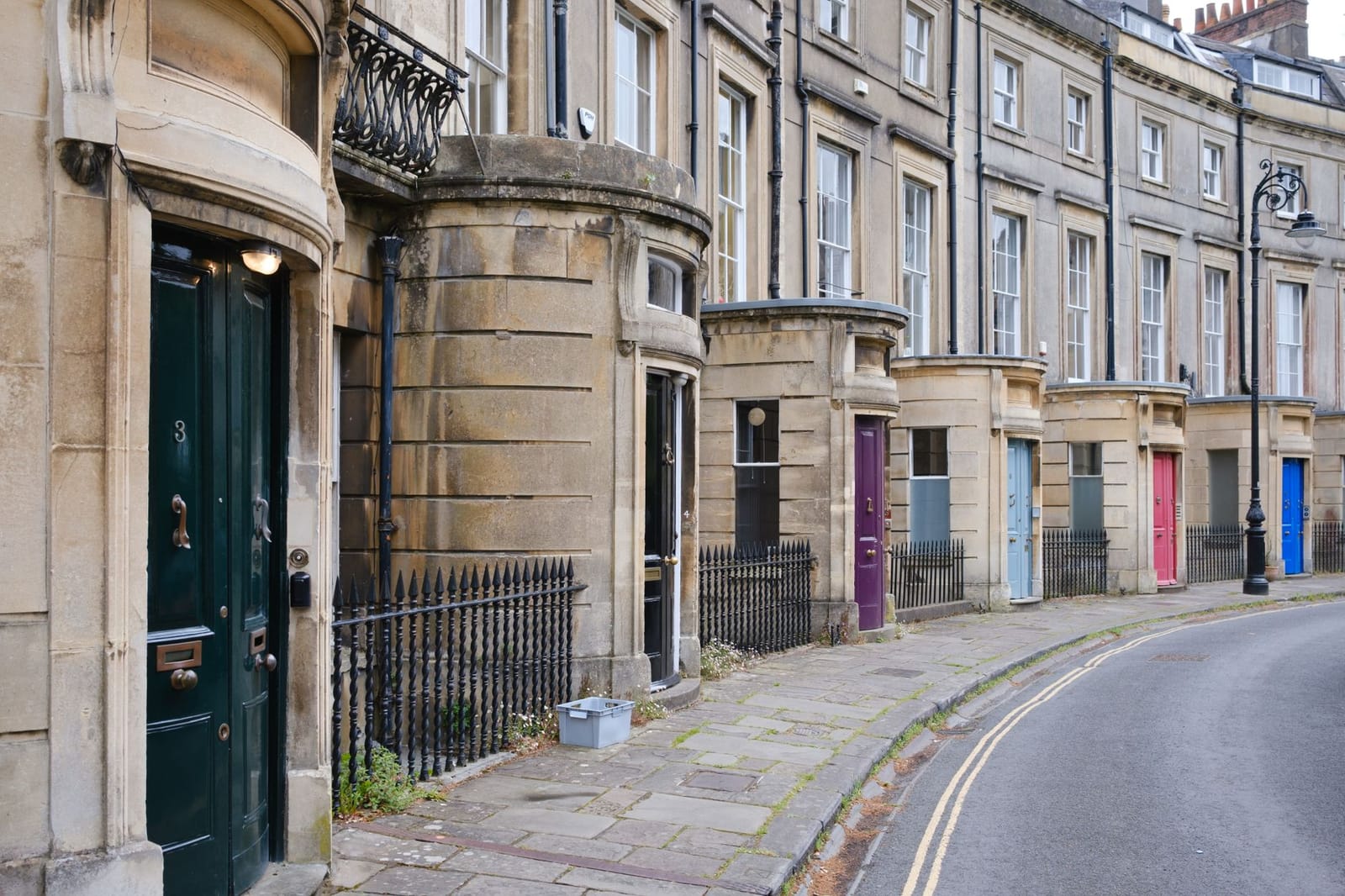
Improving an EPC score in Oxford means working with the heritage, not against it
A domestic EPC is a SAP rating from 1 to 100, and band C starts at 69 points. Your certificate shows a letter, but the plan lives in the number, subtract your score from 69 and you have the gap. Oxford is one of the most heritage-constrained cities in England, and that shapes every EPC decision. The city holds 19 conservation areas and 1,186 listed buildings, and its residential character is defined by the solid-brick Victorian terraces of Jericho, Osney, East Oxford and the grand North Oxford Victorian Suburb, much of it built as artisan and college-linked housing, and much of it now let. Two of those conservation areas, Jericho and Osney, carry Article 4 directions that remove permitted-development rights, so even modest external changes need consent.
That combination, solid walls plus heavy heritage protection, is exactly the setup that makes owners fear an EPC upgrade is impossible or ruinously expensive. It is neither. The instinct on solid-wall stock is to reach for the walls, and the internal or external insulation quote that follows stalls the project. A documented solid-wall Victorian mid-terrace was taken from EPC E (48) to a high C (77) for around £8,550 without wall insulation and without a new boiler (published by The Independent Landlord; most of that spend was glazing bought for other reasons). The points came from an £800 loft top-up and floor insulation, measures that a conservation area or listing does not touch. This page sets out where Oxford homes lose EPC points and how to buy them back cheapest first, within the constraints. For the method, start with how to improve your EPC score.
Where Oxford homes lose EPC points
The EPC models what a home should cost to heat, light and run per square metre, so it penalises heat loss and wasted energy, and on Oxford’s period stock the losses cluster in predictable places, most of which sit away from the protected frontage.
Solid walls with no cavity are the biggest single drag. The Jericho, Osney and East Oxford terraces are 225mm solid brick, and RdSAP scores an uninsulated solid wall harshly. But the heritage protection that constrains the walls, Article 4 in Jericho and Osney, conservation-area status across much of the city, and full listing on many properties, mostly affects what you can do to the visible exterior, not the loft, the floor, the controls or the lighting.
Thin loft insulation and missing controls are the quiet losers, and crucially they are the measures heritage rules leave alone. Many Oxford lofts hold 100mm or less against a 270-300mm benchmark, and older gas systems frequently run without a room thermostat or TRVs. Both are cheap, score well, and need no consent.
Original single glazing and undocumented improvements. The original sash windows so common in Oxford’s terraces lose heat, but replacement is usually refused on protected frontages, which points to secondary glazing rather than new units. And since RdSAP 10 came into force on 15 June 2025, the assessor measures every window individually and scores insulation and heating from evidence, so a home genuinely improved years ago can be scored on pessimistic defaults if the paperwork is gone, losing points already paid for.
The cheapest EPC points in Oxford
Ranked by cost per point, the division competitors skip, the order holds across Oxford’s stock, and it starts with exactly the measures heritage protection leaves untouched. Our cheapest EPC improvements hub details the full sub-£500 package; applied to Oxford’s period terraces:
- LED lamps throughout, £20 to £80, typically one to three points. The cheapest points on any certificate, and no consent needed.
- Hot-water cylinder jacket (80mm+), £15 to £80, typically one to four points where a cylinder exists.
- Full heating controls, programmer, room thermostat and TRVs, £150 to £500, typically two to five points, now recorded under RdSAP 10.
- Draught-proofing, £30 to £250, typically one to three points, and it lifts the performance of everything else.
- Loft insulation top-up to 270-300mm, £300 to £800, typically five to fifteen points. The best sub-£1,000 fabric measure, and unaffected by conservation-area or listing rules on the interior.
Stacked, that package routinely delivers 10 to 25 points for under £1,500, enough to move most D-rated Oxford terraces to C without any external alteration at all. Against the proposed £10,000 landlord cost cap, most homes clear C with a wide margin. The same order is costed nationally on our cost and cost-per-point guide.
The measures that fit Oxford’s heritage stock
Loft, floor and controls, the consent-free points
On an Oxford terrace the recommendation report almost always leads with the loft, and it is doubly right here because the loft, floor and controls sit entirely inside the property, beyond the reach of Article 4 or conservation-area rules. Topping up to 270-300mm is £50 to £100 per point; where a terrace has a suspended timber floor, floor insulation adds another two to six points. Add full controls and you have most of a band jump for a four-figure sum, the protected frontage untouched. Our insulation EPC improvements hub covers the fabric sequence. Solid-wall insulation is the big lever, ten to twenty points, but in Oxford it is doubly the last resort: expensive at £8,000 to £15,000+, and on listed or Article 4 stock it may need consent and can be refused. Where independent expert advice shows wall insulation would damage the fabric, or where consent is refused, the domestic MEES wall-insulation and third-party-consent exemptions legitimately apply.
Secondary glazing, not replacement windows
Oxford is the city where the glazing decision is clearest. Replacing original sashes with uPVC double glazing is routinely refused on listed and Article 4 frontages, and it is poor value for points regardless, £5,400 bought two points in the documented case, around £2,700 a point. Secondary glazing, fitted behind the original windows, is the consent-safe route: it preserves the heritage frontage, cuts heat loss and draughts, and is scored under RdSAP. Our glazing EPC improvements hub covers the heritage-glazing detail. Fit it for comfort and to satisfy the assessor’s ventilation modelling; do not expect it to carry the score on its own.
Heating, controls and the funded route
Where the heating is old, full controls come first, then a condensing boiler if the existing one is genuinely dated (five to fifteen points for £2,000 to £3,500), keeping the model and serial number because RdSAP 10 scores the actual unit from documented data. Oxford has real local funding: Oxford City Council works with Oxfordshire County Council to deliver the Warm Homes: Local Grant for lower-income homeowners and private tenants at risk of fuel poverty, and the council secured £1.08 million to improve non-gas-heated homes in the city. It is eligibility- and address-dependent, so check what is currently open. Our heating EPC improvements hub sets out the order. Heating measures qualify for 0% VAT on energy-saving materials until 31 March 2027.
An Oxford worked example
Take the Jericho cottage in the scenario: two-bed, solid brick, no cavity, in an Article 4 conservation area, assessed D (60), nine points short of C. Internal wall insulation had been suggested, but it would shrink already-small rooms and trigger a pre-planning process; external insulation was a non-starter on the frontage.
Sequenced cheapest-first, all within the constraints: a loft top-up to 300mm (around £500), full heating controls (around £420), a cylinder jacket (around £25), LED throughout (around £60) and slimline secondary glazing behind the original sashes (around £400 for the key rooms). That is roughly £1,400, and on the published cost-per-point ranges the loft and controls carry most of the nine points, with lighting and secondary glazing closing the rest into C, the heritage frontage completely untouched. The evidence pack, invoices, boiler details, insulation depth photos, went to the assessor, because under RdSAP 10 documentation converts directly to points. This is an illustrative scenario from the published ranges, not a guarantee, but it shows the Oxford pattern: the consent-free interior measures do the work.
Compliance context: why the number matters, and by when
Raising the score is worth doing on its own terms, but for Oxford landlords there is a dated backdrop. Current law is a minimum of EPC E to let, in force for all tenancies since 1 April 2020, cost cap £3,500, penalties up to £5,000 per property enforced by Oxford City Council. Ahead of that, the government confirmed on 21 January 2026 that privately rented homes in England and Wales must reach EPC C by 1 October 2030, measured across two of the reformed metrics (fabric performance plus heating system or smart readiness), with a proposed £10,000 cost cap. That is confirmed government policy, not yet enacted law, delivered through secondary legislation reported as targeted for 2027, so the final exemption detail is not settled. For Oxford’s heritage stock the read is the same: the cheap, consent-free fabric points are the future-proof points, scoring under both today’s SAP and the coming metrics. Oxford City Council holds one of the earliest net-zero targets in the country, 2040, under Zero Carbon Oxford, a full decade ahead of the national 2050 date.
Oxford EPC improvement FAQs
My Oxford home is in a conservation area or listed, can I still reach C?
Yes, and usually without touching the protected exterior. Oxford has 19 conservation areas and 1,186 listed buildings, with Article 4 directions in Jericho and Osney, but those rules mainly govern the visible frontage, external wall insulation and replacement windows. The measures that lift a home to C, loft insulation, heating controls, cylinder insulation, LED and secondary glazing, are interior or consent-safe, and a documented solid-wall terrace reached a high C without any external work. Where a listing or Article 4 direction blocks a measure that would otherwise be needed, the relevant MEES exemption applies.
My Jericho or Osney property has an Article 4 direction, what does that change?
Article 4 removes permitted-development rights, so external alterations that would normally be automatic instead need planning consent. For EPC purposes that mainly rules out external wall insulation and replacement glazing on the frontage. It does not affect loft insulation, floor insulation, heating controls, cylinder jackets, LED lighting or secondary glazing, which are where the cheap points live. Plan around the frontage rather than fighting for it, and the score usually reaches C regardless.
How many EPC points do I need on an Oxford home to reach C?
Subtract your current score from 69. The letter alone is not enough for planning, a D at 60 needs nine points, a D at 64 needs five. Check your current number free on the government’s find-energy-certificate service. Much of Oxford’s terraced stock sits at a mid-D, which is squarely within reach of the consent-free quick-win package, loft, controls, lighting and cylinder insulation, before any external or four-figure measure is considered.
Is there grant funding to improve my EPC in Oxford?
There can be. Oxford City Council works with Oxfordshire County Council to deliver the Warm Homes: Local Grant for lower-income homeowners and private tenants at risk of fuel poverty, and secured £1.08 million to improve non-gas-heated homes. It is eligibility- and address-dependent, so confirm current availability with the council. Nationally, 0% VAT on energy-saving materials runs until 31 March 2027, ECO4 has been extended to 31 December 2026 for qualifying households, and the Boiler Upgrade Scheme offers £7,500 toward a heat pump.
Do I need a new EPC after improving an Oxford home, and what does it cost?
Yes, a certificate cannot be edited, so the score only changes when a fresh assessment is lodged on the national register, superseding the old one for ten years. A domestic re-assessment in Oxford typically runs £50 to £110. It is the cheapest line in the project and the only one that makes the improvements visible to letting agents, buyers, lenders and MEES enforcement. Hand the assessor your invoices, boiler model number, secondary-glazing details and insulation depth photos, under RdSAP 10, evidence converts directly to points.
Areas we cover around Oxford
We plan EPC improvements across all of Oxford’s postcode districts, OX1, OX2, OX3 and OX4, from the listed and Article 4 terraces of Jericho and Osney to the Victorian streets of East Oxford and Cowley Road and the grand stock of the North Oxford Victorian Suburb. Beyond the city we also cover Abingdon, Witney, Bicester, Didcot and Kidlington, along with the research-campus context of Harwell and Milton Park. Whether it is a single listed cottage in OX2 or a portfolio of student lets across OX4, the plan is the same: find the gap, buy the cheapest consent-free points first, re-assess. For nearby markets see our Reading and Swindon pages.
Plan your Oxford EPC improvement, cheapest points first
Start from your actual number. Pull your current score, subtract from 69, and sequence the measures by cost per point for your specific Oxford property, the consent-free interior measures before any external work, evidence in hand for the re-assessment. Browse the full method on our FAQs, see the measures costed on our cost guide, or begin with the flagship cheapest EPC improvements hub. Confirm your current rating and check the lodged inputs on the national EPC register (gov.uk), and read the reformed-EPC direction in the Warm Homes Plan (gov.uk).
Postcodes covered in Oxford
- OX1
- OX2
- OX3
- OX4
Other areas we cover
Get a free quote in Oxford
Responds within one working day
- 1. Gap analysis from your current EPC, your score, the gap to the next band, no obligation.
- 2. A ranked plan costed per point, cheapest first, with the evidence to keep.
- 3. Re-assessment by an accredited energy assessor, lodged on the national register.
- Accredited DEAs & NDEAs
- RdSAP 10 evidence-based
- Costed per point
- Lodged on the register