Improve Your EPC Score in Liverpool
Serving Liverpool and the wider Merseyside area, including Birkenhead, Bootle, Wallasey.
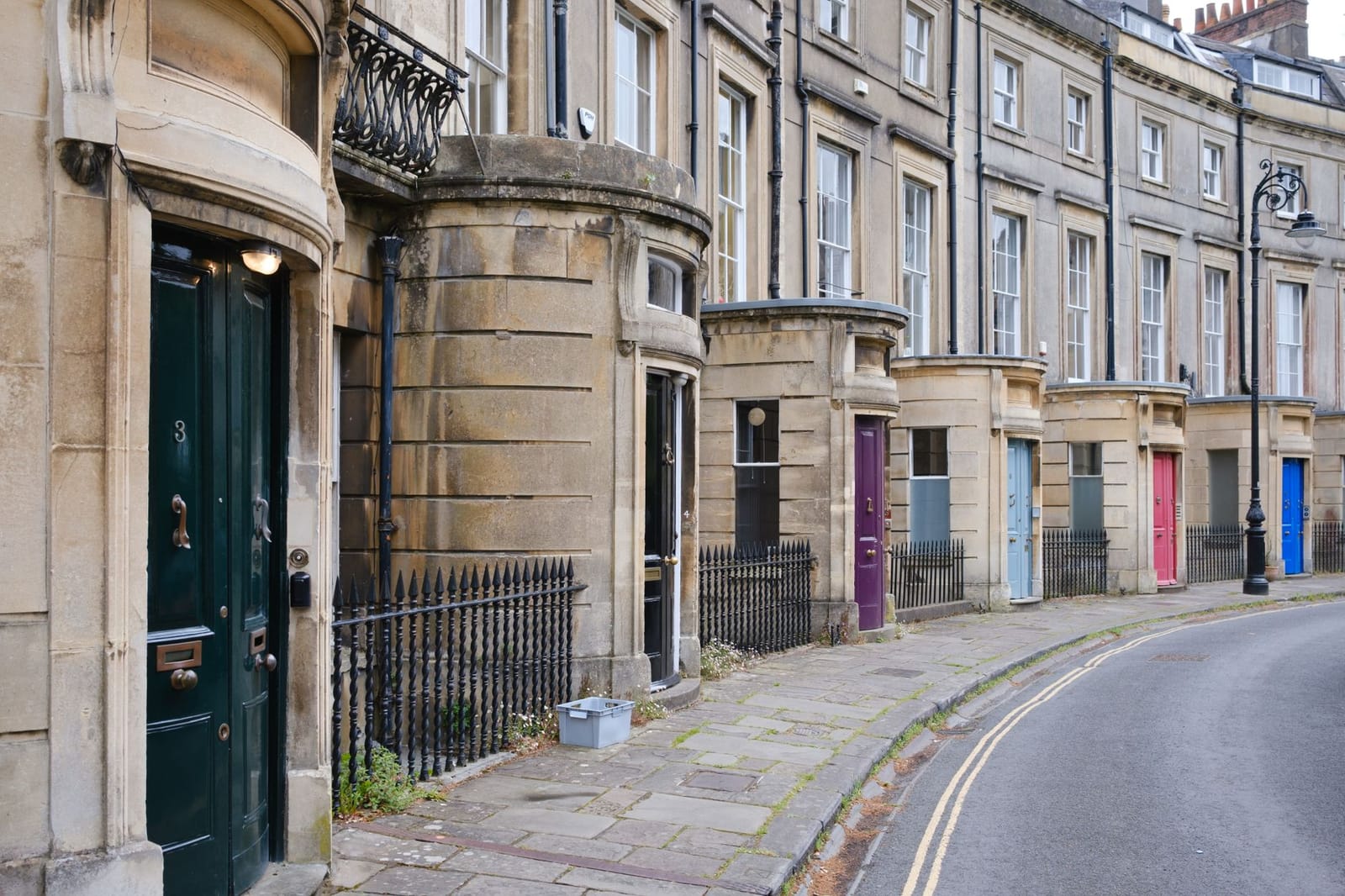
The cheapest EPC points in Liverpool, ranked
Start with the ladder, because in Liverpool the order of works matters more than the budget. Published UK ranges, ranked by cost per point, planning figures to be confirmed for your property by an assessment:
| Measure | Typical cost | Typical points | Approx. £ per point |
|---|---|---|---|
| LED lamps throughout | £20-£80 | +1-3 | £10-£40 |
| Hot-water cylinder jacket (80mm) | £15-£80 | +1-4 | £10-£40 |
| Heating controls (programmer, stat, TRVs) | £150-£500 | +2-5 | £75-£150 |
| Draught-proofing | £30-£250 | +1-3 | £30-£150 |
| Loft top-up to 270-300mm | £300-£800 | +5-15 | £50-£100 |
| Cavity wall insulation (post-1920s stock) | £400-£1,500 | +5-15 | £80-£150 |
| Suspended floor insulation | £400-£2,300 | +2-6 | varies |
| Condensing boiler (replacing non-condensing) | £2,000-£3,500 | +5-15 | £200-£400 |
| Solar PV (~4 kWp) | £4,500-£8,000 | +6-15 | £400-£800 |
| Double glazing (front elevation) | £3,000-£6,000+ | +2-10 (documented +2) | up to ~£2,700 |
| Solid wall insulation (IWI/EWI) | £8,000-£15,000+ | +10-20 | £500-£1,000 |
Two Liverpool-specific readings of that table. First, the city’s dominant improvable stock, the pre-1919 bay terrace, has no cavity to fill, so the middle of the ladder compresses: quick wins, loft, floor, controls, then a decision. Second, the bottom two rows are where Liverpool owners get mis-sold. A published landlord case paid £5,400 for front-elevation double glazing and gained 2 points; the £800 loft top-up in the same project gained 8-9. Band C starts at 69 points, B at 81, subtract your current score from the threshold and buy that many points from the top of the table down. The cost guide prices full band-jumps, and the cheapest improvements hub shows the sub-£500 package in detail.
Where Liverpool homes lose their points
The Liverpool City Region Combined Authority’s own figures set the scene: more than 60% of the city region’s 720,000 homes sit at EPC band D or below. Liverpool’s share of that problem is concentrated in three places.
The terrace belts. Anfield, Walton, Wavertree, Kensington, Toxteth, Dingle, street after street of pre-1919 solid-brick terraces, the North of England’s signature stock (across the North, roughly 24% of homes pre-date 1919, per a University of Liverpool policy briefing from January 2024). RdSAP penalises the uninsulated solid wall hard, and many of these homes also carry suspended timber ground floors, original single-glazed bays behind later secondary additions, and heating installed without controls. Their points sit in the loft, the floor void, the controls and the paperwork, rarely in the windows.
Leasehold flats and conversions. Georgian conversions around Canning and Falkner Square, dockside warehouse apartments, and 1960s, 70s blocks carry the electric-heating penalty: modelled electricity costs drag the score even when the fabric is passable. In-demise fixes, high-retention storage heaters, smart controls, cylinder jacket, LED, move the number; communal fabric needs freeholder consent.
Heritage constraint. Liverpool has 36 conservation areas covering around 9% of the city and roughly 19,000 properties, from Sefton Park to St Michael’s Hamlet. Inside them, replacement uPVC double glazing is often restricted anyway, which matters less than owners fear, because glazing is the worst-value points on the certificate. Secondary glazing, which conservation officers routinely accept, is scored by RdSAP and delivers a slice of the same benefit at a fraction of the cost.
And everywhere, the RdSAP 10 factor: since 15 June 2025, assessments are evidence-based. A Kensington terrace with a decent condensing combi but no manual, or cavity fill from 2008 with no CIGA certificate, scores as if neither existed. In a city with this much incrementally-improved stock, lost paperwork is one of Liverpool’s quietest point drains.
Solid walls, sash windows and 36 conservation areas: improving without overspending
The Welsh Streets in Toxteth are the emblem: Victorian terraces once slated for clearance, refurbished instead, now a Historic England design case study, and let as warm, modern homes. The improvement lesson generalises. On Liverpool’s solid-wall stock the certificate’s own recommendation report, sequenced cheapest-first, nearly always beats the £15,000 scare quote. A documented case on exactly this property type went from EPC E (48) to C (77), a 29-point gain for around £8,550, without wall insulation and without a new boiler: loft top-up (£800, roughly £95 per point), suspended-floor insulation fitted from below (about £150 in materials where access existed), and glazing bought for other reasons.
For terraces where the floor void is accessible from a cellar or crawl space, floor and loft insulation are the two fabric measures worth pricing before anything else. For conversions and heritage frontages, the consent-safe sequence is draught-proofing, shutters and heavy curtains for comfort, secondary glazing for points, and heating controls throughout. Solid-wall insulation, internal or external, belongs at the end of the plan for weak-E and F stock only, priced against the +10-20 points it typically buys and the damp-risk survey it genuinely requires on a 130-year-old brick wall.
Funding Liverpool owners can actually use
Liverpool currently has one of the better-funded local improvement pipelines in England. The Liverpool City Region Combined Authority was allocated £31.8m of Warm Homes: Local Grant funding, delivered over three years from April 2025 across the city region’s councils: fully funded measures, insulation, solar, heat pumps and high-retention storage heaters, for owner-occupiers (and some private tenancies) in EPC bands D-G with household incomes under £36,000, on means-tested benefits, or in qualifying postcodes. Applications route through GOV.UK’s Warm Homes: Local Grant service. The Combined Authority has also announced a further £80m secured in March 2025 to upgrade around 10,000 homes across the region. Nationally: the Boiler Upgrade Scheme pays £7,500 toward an air source heat pump (fabric-first eligibility, no outstanding loft or cavity recommendations on your EPC), and 0% VAT applies to energy-saving materials on residential installs until 31 March 2027. None of these fund the assessment itself: a domestic re-assessment is £45-£120, paid, and it is the only step that makes an improved score official.
An Anfield terrace, worked through (illustrative)
Illustrative, not guaranteed. A two-bed bay terrace near the stadium sits at E (54), fifteen points short of C. Sequence from the published ranges: LED throughout (£70, +1-3), draught-proofing the bay, doors and letterbox (£200, +1-3), programmer plus room stat plus TRVs (£430, +2-5), loft top-up from 75mm to 300mm (£600, +5-15). Indicative spend: about £1,300, against typical combined uplifts of +9 to +26 points. In the midpoint case the home lands at or above 69; if the re-assessment models it just short, suspended-floor insulation from the front-room void (+2-6 points) is the next cheapest rung, and the walls still have not been touched. Keep every receipt, photograph the loft depth, and hand the assessor the boiler’s model number: under RdSAP 10, the paperwork is worth points. Check your current score first at find-energy-certificate on GOV.UK.
Compliance context: the dates behind the urgency
For landlords, the live legal line is EPC E: required for new tenancies since 1 April 2018 and for all tenancies since 1 April 2020, cost-capped at £3,500, with penalties up to £5,000 per property enforced by Liverpool City Council. The confirmed direction of travel, confirmed policy, not yet law, is EPC C by 1 October 2030 for all tenancies, announced in the government response of 21 January 2026, measured across two reformed metrics (fabric performance plus heating system or smart readiness) with a proposed £10,000 cap; secondary legislation is reported as targeted for 2027. Owner-occupiers face no deadline, but the same reform re-shapes their certificates: from October 2026, subject to regulations (with industry reports of possible slippage), new-style EPCs carry four headline metrics produced by the Home Energy Model. Fabric-first improvement scores under both regimes; a rating propped up by a single strong element may not survive being split four ways. And the one hard date that applies to everyone: 0% VAT on energy-saving materials ends 31 March 2027.
Liverpool EPC improvement FAQs
My terrace is in one of Liverpool’s 36 conservation areas. Can I still improve the score?
Yes, and mostly without consent friction, because the high-scoring measures are internal or invisible: loft top-up, floor insulation, heating controls, LED, draught-proofing, cylinder jacket. Where window rules bite, secondary glazing is the consent-safe route and is scored by RdSAP. External wall insulation on a street frontage is usually a non-starter in a conservation area, but on Liverpool’s terraces it was rarely the right first spend anyway.
Is it worth insulating the floor of a Victorian terrace in Wavertree?
Often, yes, suspended timber floor insulation typically adds +2-6 points at £400-£2,300, and where a cellar or generous void gives access from below, the documented materials cost has been as low as about £150. It pairs naturally with draught-proofing the floor perimeter. On a terrace already close to 69 after loft and controls, the floor is frequently the rung that tips the band.
What will the Warm Homes: Local Grant cover in Liverpool?
Fully funded insulation, solar, heat pumps and high-retention storage heaters for eligible households: EPC D-G and income under £36,000, means-tested benefits, or a qualifying postcode, over three years from April 2025 under the city region’s £31.8m allocation. Apply via GOV.UK. If you are outside eligibility, the self-funded ladder still starts at £10-£40 per point, and 0% VAT to 31 March 2027 trims every measure on it.
Do I need a new EPC after the work, and who lodges it?
Yes. A certificate cannot be edited, so the score changes only when an accredited domestic energy assessor carries out a fresh assessment, typically £45-£120, and lodges it on the national register, where it supersedes the old certificate for ten years. Bring evidence: invoices, product datasheets, insulation depth photos, FENSA or MCS certificates, the boiler manual. Undocumented improvements score on pessimistic defaults under RdSAP 10.
Which measures make sense for a dockside apartment on electric heating?
Work inside your demise: high-retention storage heaters with charge control (or efficient direct-acting systems where the wiring supports them), smart controls, an 80mm cylinder jacket if you have a tank, and LED throughout. Battery storage is now recorded under RdSAP 10 where present. Communal walls, roofs and windows need freeholder consent, improvements stop at the lease line, and the certificate is scored on what the flat itself can control. Broader answers live on our FAQs page.
Areas we cover around Liverpool
We build improvement plans across every L postcode, the terrace belts of Anfield, Walton, Kensington, Wavertree and Toxteth, the south Liverpool semi suburbs from Allerton to Childwall, and the flat and conversion stock of the city centre and waterfront, and across Birkenhead, Bootle, Wallasey, St Helens and Crosby. For the wider North West see our Manchester page; across the Pennines, Leeds covers back-to-back and attic-room stock.
Get a costed plan for your Liverpool home
Send your address and current rating, or we pull the lodged certificate, and you receive the gap arithmetic, the measures that close it in price order for your construction type, the funding your postcode and income actually unlock, and the re-assessment booking that lodges the result. That is how to improve your EPC score in Liverpool: points first, glazing last, everything evidenced. Request your Liverpool improvement quote.
Postcodes covered in Liverpool
- L1
- L2
- L3
- L4
- L5
- L6
- L7
- L8
- L9
- L10
- L11
- L12
- L13
- L14
- L15
- L16
- L17
- L18
- L19
- L20
- L21
- L22
- L23
- L24
- L25
Other areas we cover
Get a free quote in Liverpool
Responds within one working day
- 1. Gap analysis from your current EPC, your score, the gap to the next band, no obligation.
- 2. A ranked plan costed per point, cheapest first, with the evidence to keep.
- 3. Re-assessment by an accredited energy assessor, lodged on the national register.
- Accredited DEAs & NDEAs
- RdSAP 10 evidence-based
- Costed per point
- Lodged on the register