Improve Your EPC Score in Milton Keynes
Serving Milton Keynes and the wider Buckinghamshire area, including Bletchley, Newport Pagnell, Wolverton.
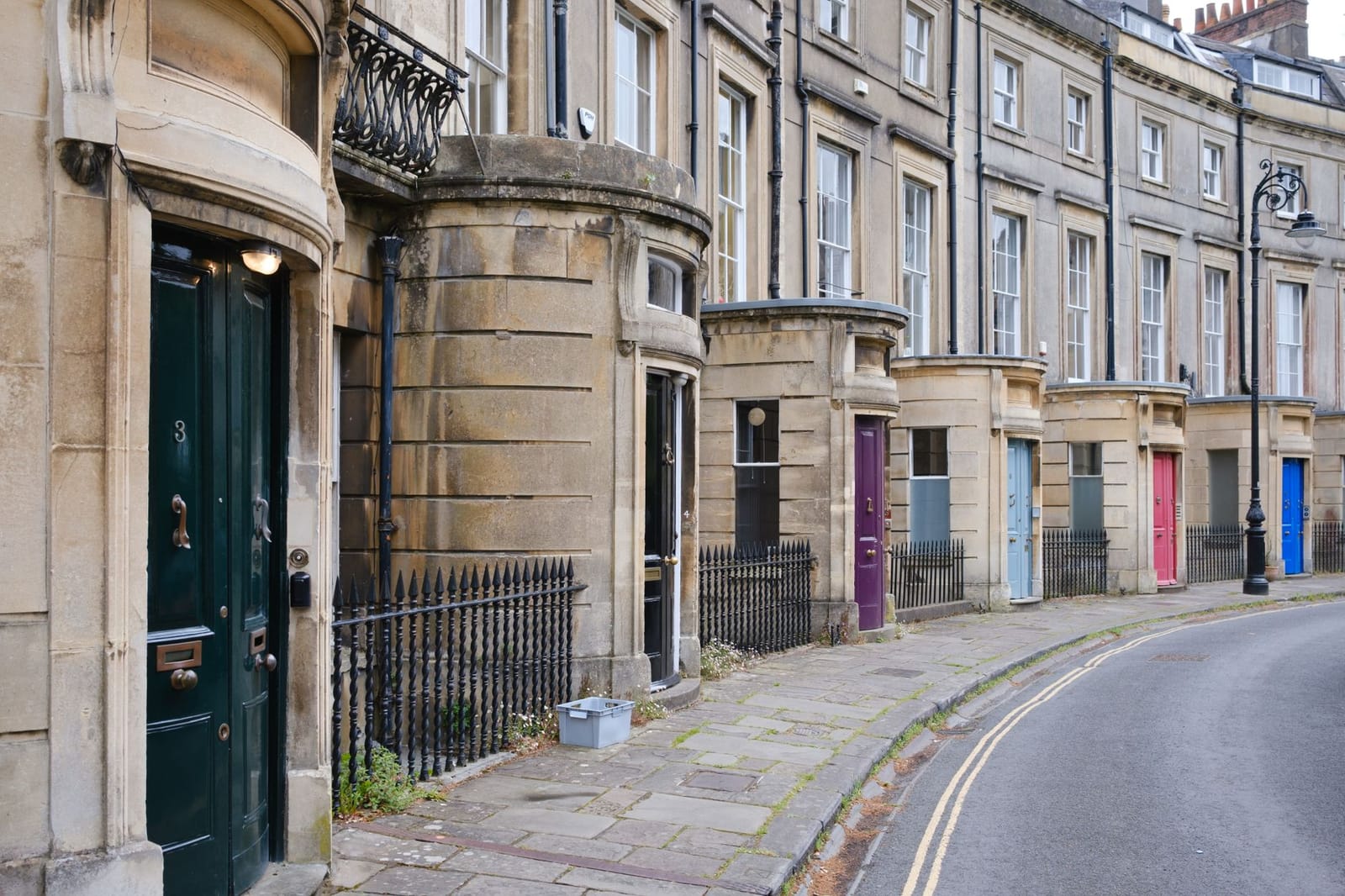
The city that invented the home energy rating
Milton Keynes has a claim no other UK city can make: the home energy rating was effectively invented here. In 1986 the Milton Keynes Development Corporation staged Energy World at Shenley Lodge, an exhibition of 51 low-energy houses, each required to beat the Building Regulations of the day by at least 30% and each scored using the Milton Keynes Energy Cost Index, a rating method developed with the Open University. That index evolved into the National Home Energy Rating scheme in 1990, the UK’s first national energy rating for houses and a direct ancestor of the SAP score printed on every EPC today.
Forty years on, that head start shows. One 2025 analysis of the open EPC register across 30 UK towns and cities put Milton Keynes first, with just over 60% of homes rated C or above, against a national picture where the median English home scores 69, scraping the bottom of band C. The Office for National Statistics’ 2025 analysis of energy efficiency of housing in England and Wales adds another local superlative: 92% of MK’s flats have walls rated average or better, the highest share of any local authority district.
So if you own one of the MK homes still sitting at D or E, the good news is structural: this city’s stock rarely has the £10,000 solid-wall problem. The points you need are usually cheap ones.
Where Milton Keynes homes lose EPC points
Milton Keynes was designated a new town in 1967, so almost the entire housing stock post-dates 1970 and was built with cavity walls. That removes the single biggest drag that afflicts Victorian cities. The points leak elsewhere, in four specific places.
The experimental 1970s grid squares. The earliest rental estates were built fast and unconventionally. Netherfield, 1,043 homes built between 1972 and 1977, the largest rental scheme in the city, used timber platform frames bolted to concrete slabs, profiled metal sheet walls and flat aluminium roofs, and suffered leaking roofs and condensation from the outset. Milton Keynes City Council is now retrofitting around 300 Netherfield homes under the Social Housing Decarbonisation Fund, adding external wall insulation, warm roofs, new windows and ventilation. Privately owned homes on Netherfield, Fishermead, Coffee Hall and the other early grids share the same fabric quirks, and flat or shallow roofs mean the standard “top up the loft” advice needs adapting.
Early-cavity insulation depths. A 1975 cavity is not an insulated cavity. Homes built before the 1990s typically went up with clear or partially filled cavities and 25-100mm of loft insulation, against the 270-300mm a modern EPC expects. These are the cheapest fabric points in the city.
Electric heating pockets. Flats and some early housing carry panel heaters or ageing storage heaters, which score poorly on a cost-based SAP calculation. Modern high-retention storage heaters with automatic charge control recover a meaningful share of those points.
Missing evidence. MK’s owner-occupiers have been improving these homes for five decades, often without keeping a single invoice. Under RdSAP 10, in force since 15 June 2025, that matters more than ever: undocumented boilers and insulation are scored on pessimistic age-band defaults. A well-evidenced MK home routinely out-scores an identical undocumented one.
The cheapest EPC points in Milton Keynes
Band C starts at 69 points and band B at 81. Check your current score, the number, not the letter, free on find an energy certificate, subtract it from your target threshold, and buy that many points in cost-per-point order. For MK’s post-1970 stock the ladder runs:
- LED lamps throughout, £20-£80, typically +1-3 points. Roughly £10-£40 per point, the cheapest on any certificate.
- Hot-water cylinder jacket (80mm), £15-£80, typically +1-4 points where a cylinder exists. Many MK homes are combi-fed; if yours has a bare cylinder, this is the best £25 you will spend.
- Heating controls, programmer, room thermostat and TRVs, £150-£500, typically +2-5 points. A surprising number of 1970s, 80s MK homes still run without a room stat. Smart controls are now recorded under RdSAP 10.
- Draught-proofing, £30-£250, typically +1-3 points, and it makes the metal-clad early estates markedly more comfortable.
- Loft insulation top-up to 270-300mm, £300-£800, typically +5-15 points where the roof is pitched. The best sub-£1,000 fabric measure in the city.
- Cavity wall insulation, £400-£1,500, typically +5-15 points on unfilled pre-1990s cavities.
That full package rarely exceeds £2,500, and for most MK homes at D it is more than the gap to C. Double glazing sits at the other end of the ladder: a documented landlord case added 2 points for £5,400 of new windows, around £2,700 per point. Most MK homes are already double glazed anyway; see the glazing and windows guide before spending there. Full ladder detail is on our cheapest EPC improvements page, with pricing context in the cost guide.
Improving the 1970s and 80s grid-square estates
The early grids need their own plan, because two standard measures behave differently here.
Flat and shallow roofs. On Netherfield-type homes there is no loft to top up. The insulation route is a warm-roof build-up when the roof covering is renewed, effective but four-figure, which is why it anchors the council’s retrofit rather than a private quick-win list. If your flat-roofed MK home needs points this year, take the controls, lighting, draught-proofing and heating points first and fold roof insulation into the next re-roofing cycle.
Non-traditional walls. Timber-frame and metal-clad construction should not be cavity-filled as if it were masonry. Get construction confirmed before any installer quotes; external wall insulation designed for the system, as ECD Architects specified for the council’s Netherfield scheme, is the correct fabric fix, at £8,000+. The honest sequencing for private owners is the same as everywhere: exhaust the sub-£1,000 measures first, then price the walls against the points that remain. Our insulation guide covers loft, cavity, floor and wall options in that order.
Heating, controls and the evidence rule
For the majority of MK homes, gas-heated, cavity-walled, 1980s onward, the fastest wins after insulation are in the heating inventory. Replacing a pre-2005 non-condensing boiler typically adds 5-15 points (£2,000-£3,500); full controls add 2-5 more. Under RdSAP 10 the assessor scores the actual boiler from its documented model number, so dig out the manual or photograph the data plate, an efficient boiler without evidence defaults to age-band assumptions that throw points away. The same applies to cavity guarantees, FENSA certificates and insulation invoices. Details on the heating and controls page.
Worth knowing locally: installations of insulation, heating controls, heat pumps and solar on residential property carry 0% VAT until 31 March 2027, after which the rate reverts to 5%.
A worked Milton Keynes example (illustrative)
Take a 1977 three-bed grid-square terrace rated D (58), pitched roof, gas combi from 2012 with no room thermostat, 100mm of loft insulation, halogen spots. The gap to C is 11 points. The plan: LED throughout (£60, +1-3), programmer plus room stat plus TRVs (£420, +2-5), loft top-up to 300mm (£500, +5-15), draught-proofing (£120, +1-3). Total roughly £1,100 against published typical ranges, comfortably covering the 11-point gap, with the 2012 boiler scoring properly once its model number is evidenced. A fresh assessment (£45-£120) then lodges the new score on the national register. This is an illustrative sequence using published ranges, not a guaranteed uplift; the exact arithmetic for your home comes from its current certificate and recommendation report.
The rules and dates that matter in Milton Keynes
For landlords, the law today is a minimum EPC E to let, in force for new tenancies since 1 April 2018 and all tenancies since 1 April 2020, with a £3,500 cost cap and penalties of up to £5,000 per property, enforced by Milton Keynes City Council. On 21 January 2026 the government confirmed that privately rented homes must reach EPC C by 1 October 2030, measured across two reformed metrics with a proposed £10,000 cost cap, confirmed policy, not yet law, with secondary legislation reported as targeted for 2027.
Two more dates shape the plan. Domestic EPCs are moving to four headline metrics (energy cost, fabric, heating system, smart readiness) produced with the Home Energy Model, targeted from October 2026, subject to regulations. And Milton Keynes City Council’s own sustainability strategy aims the city at net zero by 2030, the most ambitious target of any UK city its size. Fabric and controls points score under every version of these rules; that is why they come first.
Commercial owners on Kingston, Tongwell or Linford Wood face the separate non-domestic track: minimum E to let since April 2023 for continuing leases, with a proposed EPC B by 2031 for buildings over 1,000 square metres (interim response, 18 June 2026), a proposal, not law, and the floated 2027 C milestone was dropped.
Milton Keynes EPC improvement questions
My MK home is timber-frame, can I still get cavity wall insulation?
Not conventionally, and a responsible installer will refuse. Timber-frame and metal-clad homes on estates like Netherfield and parts of the early grids need system-appropriate wall insulation, usually external, designed to manage moisture. Confirm your construction type first (the council’s retrofit programme documentation, your survey, or an assessor can tell you), then buy the cheap non-wall points while you plan any fabric work properly.
Why does my 1980s MK house score worse than my neighbour’s identical one?
Almost always evidence. Under RdSAP 10 (in force 15 June 2025) an assessor scores what can be seen or documented. If your neighbour handed over a boiler manual, a cavity-fill guarantee and loft invoices and you handed over nothing, the same physical house can land several points apart. Gather the paperwork before re-assessing.
Is it worth improving if my home is already a C?
In Milton Keynes, often yes, the jump worth having is C to B (81 points). With the cheap fabric points usually done, the B-band tools are solar PV (typically +6-15 points, £4,500-£8,000) and a heat pump (£7,500 Boiler Upgrade Scheme grant available, England and Wales). Green-mortgage products price on A/B bands, which is where the payback sits for MK’s large remortgaging market.
Do flat-roofed grid-square homes ever reach band C?
Yes, regularly, because the roof is only one element. Controls, lighting, draught-proofing, floor insulation, an efficient evidenced boiler and, where walls allow, insulation together carry most homes to 69 points without touching the roof. The roof points then arrive with the next re-covering as a warm-roof build-up.
How many points does my MK home actually need?
Subtract your current score from 69 (band C) or 81 (band B). A mid-D home at 62 needs 7 points, a quick-win package job. A weak E at 45 needs 24 and a fuller sequence. Your current certificate’s recommendation report already estimates the uplift per measure; we turn that into a cheapest-first order with costs. Start by checking the score, then browse our FAQs for the arithmetic.
Areas we serve around Milton Keynes
We plan and deliver EPC score improvements across all Milton Keynes postcodes, MK1 through MK15, from Bletchley and the southern estates through Central Milton Keynes to Wolverton and Stony Stratford in the north, plus Newport Pagnell and Olney. The same cheapest-points-first method applies across the wider corridor: see our pages for Northampton and Luton, where the older stock changes the sequencing considerably.
Get your Milton Keynes EPC plan
Milton Keynes built the first energy-rated homes in Britain; there is no reason yours should be scoring below its potential. Tell us your current score and property type and we will improve your EPC score with a sequenced, costed plan, cheapest points first, evidence pack prepared for RdSAP 10, and a fresh certificate lodged when the work is done. Request your free quote, no obligation, and if your home only needs £150 of measures, that is what the plan will say.
Postcodes covered in Milton Keynes
- MK1
- MK2
- MK3
- MK4
- MK5
- MK6
- MK7
- MK8
- MK9
- MK10
- MK11
- MK12
- MK13
- MK14
- MK15
Other areas we cover
Get a free quote in Milton Keynes
Responds within one working day
- 1. Gap analysis from your current EPC, your score, the gap to the next band, no obligation.
- 2. A ranked plan costed per point, cheapest first, with the evidence to keep.
- 3. Re-assessment by an accredited energy assessor, lodged on the national register.
- Accredited DEAs & NDEAs
- RdSAP 10 evidence-based
- Costed per point
- Lodged on the register