Improve Your EPC Score in Luton
Serving Luton and the wider Bedfordshire area, including Dunstable, Houghton Regis, Harpenden.
Two housing stocks, two different routes to band C
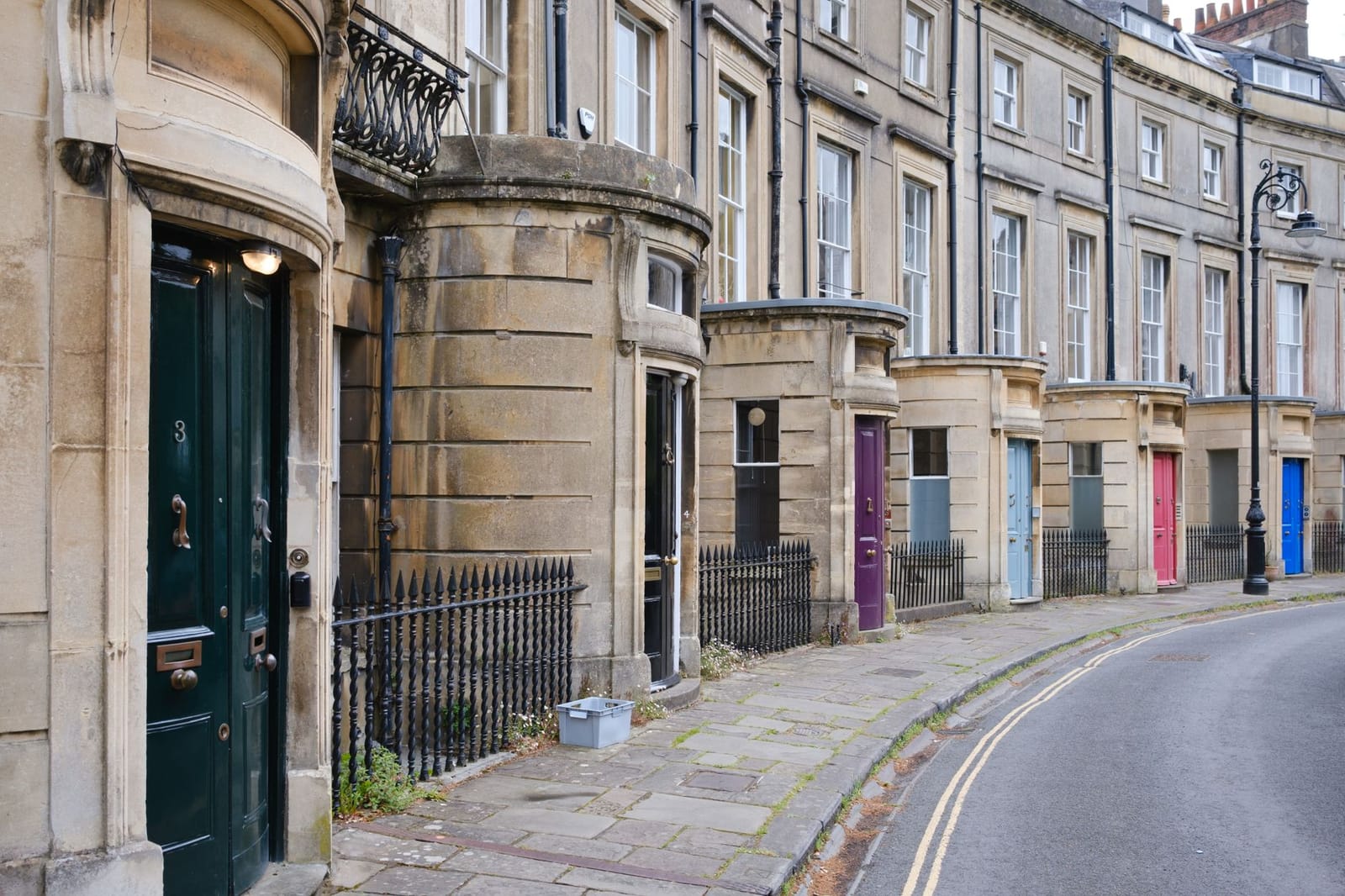
Luton’s housing history splits cleanly in two, and so does the right way to raise an EPC score here. Before 1919, the town grew on hats: at its peak the industry produced around 70 million hats a year, and the terraces it built for its workers still stand in High Town and Bury Park, solid brick walls, no cavity, the property type that anchors bands E and F. The quarter where the trade was concentrated is now the Plaiters’ Lea conservation area around Bute Street and Guildford Street, assessed by Historic England as one of England’s distinctive industrial districts.
After 1905 the growth engine changed to Vauxhall, and the town that motor manufacturing built looks completely different: street after street of interwar and postwar semi-detached homes across Stopsley, Leagrave and Limbury, built with cavity walls. Luton Council’s own Census 2021 analysis confirms the shape of the stock, a larger share of semi-detached homes and flats than the national average, and fewer detached houses.
That split is the whole improvement strategy. A cavity-walled 1930s semi is among the cheapest property types in Britain to lift a full band. A solid-wall hat-era terrace needs its points bought in a different order. This page sets out both, priced per point.
The Vauxhall-era semi: Luton’s cheap band jump
Most unimproved 1930s semis score between the mid-40s and mid-60s, a D or low E. Band C starts at 69, so the typical gap is 5 to 20 points. Three measures usually close it:
- Cavity wall insulation, £400-£1,500 installed, typically +5-15 points. The defining measure for this stock: the walls were built with a cavity that was never filled, and filling it is roughly £80-£150 per point against £500-£1,000 per point for solid-wall insulation on the older terraces. Keep the CIGA-style guarantee, under RdSAP 10 it is scoreable evidence.
- Loft insulation top-up to 270-300mm, £300-£800, typically +5-15 points. Interwar lofts frequently carry 100mm or less.
- Full heating controls, programmer, room thermostat, TRVs: £150-£500, typically +2-5 points. A striking number of Luton semis still run a combi with no room stat, which costs points for nothing.
Add LED lamps (£20-£80, +1-3) and draught-proofing (£30-£250, +1-3) and the complete package lands at roughly £900-£2,600, routinely enough to take a D-rated semi past 69 with points to spare. The step-by-step version is on our insulation hub and the heating and controls guide; pricing context sits in the cost guide.
The hat-era terrace: right measures, right order
High Town and Bury Park terraces carry solid 9-inch brick walls, so the cavity shortcut does not exist and the walls are the single biggest drag on the score. The mistake is concluding that £8,000-£15,000 of wall insulation is therefore step one. The documented arithmetic says otherwise: a published solid-wall Victorian terrace case went from E (48) to C (77), 29 points, for around £8,550, with the points coming principally from an £800 loft top-up, floor insulation and existing efficient heating, not from the walls, which were never insulated.
The Luton terrace order: LED and cylinder jacket first (£35-£160 combined, +2-7 typical), then controls, then draught-proofing, particularly valuable in pre-1919 fabric, then the loft top-up, then suspended-floor insulation where a void is accessible (£400-£2,300, +2-6). Only after those are priced does wall insulation enter the calculation, and in Plaiters’ Lea and other sensitive streets external insulation may face consent constraints in any case, which points to internal insulation room-by-room or a legitimately registered exemption for landlords. Glazing deserves its own honesty check: a documented £5,400 front-elevation replacement added 2 points. Windows are 10-15% of the score; buy them for comfort and noise, not for the certificate, the full numbers are on our glazing guide.
The Luton cost-per-point ladder
Every common measure, ranked by what a point costs (published typical ranges; property-specific figures come from your assessment):
| Measure | Typical cost | Typical points | £ per point |
|---|---|---|---|
| LED lighting throughout | £20-£80 | +1-3 | ~£10-£40 |
| Cylinder jacket (80mm) | £15-£80 | +1-4 | ~£10-£40 |
| Heating controls | £150-£500 | +2-5 | ~£75-£150 |
| Draught-proofing | £30-£250 | +1-3 | ~£30-£150 |
| Loft top-up to 300mm | £300-£800 | +5-15 | ~£50-£100 |
| Cavity wall insulation | £400-£1,500 | +5-15 | ~£80-£150 |
| Condensing boiler (replacing non-condensing) | £2,000-£3,500 | +5-15 | ~£200-£400 |
| Solar PV (~4 kWp) | £4,500-£8,000 | +6-15 | ~£400-£800 |
| Double glazing (front elevation, documented case) | £5,400 | +2 | ~£2,700 |
| Solid wall insulation | £8,000-£15,000+ | +10-20 | ~£500-£1,000 |
Two general rules fall out of the table. First, in a cavity-walled Luton semi you can usually buy a whole band for less than £2,500. Second, in a solid-wall terrace the first £1,500 of measures does most of the work and the last £10,000 buys the fewest points per pound, sequence accordingly.
Funding, evidence and the 0% VAT window
Luton Council has delivered central-government retrofit funding locally, most recently the Sustainable Warmth programme, run for the council by City Energy through the South East Net Zero Hub’s Bedfordshire consortium, with its Home Upgrade Grant strand aimed at lower-income owner-occupied homes without mains-gas heating. Rounds open and close; check the council’s energy grants pages for what is currently live, alongside ECO4 (tenant-eligibility-driven, end phase, verify on GOV.UK) and the council-flexed eligibility route for low-income households.
Universally available and dated: 0% VAT applies to installations of insulation, heating controls, heat pumps and solar on residential property until 31 March 2027, and the Boiler Upgrade Scheme pays £7,500 toward a heat pump in England and Wales, landlords included. And whatever you install, keep the paperwork, under RdSAP 10 (in force 15 June 2025) the assessor scores documented reality: boiler model numbers, cavity guarantees, FENSA certificates and photographed insulation depths are all literally worth points, while undocumented improvements default to pessimistic assumptions.
A Bury Park worked example (illustrative)
A pre-1919 solid-wall terrace off Dunstable Road, privately let, rated E (49), 20 points short of C, and the landlord has been quoted £11,000 for external wall insulation as “the only way”. The cheapest-first sequence instead: LED throughout (£50), cylinder jacket (£25), programmer, room stat and TRVs (£420), draught-proofing (£200), loft top-up to 300mm (£520), floor insulation via the accessible front-room void (£850). Total ~£2,065, against published ranges of +13 to +36 points. If the re-assessment lands at 66-68, the remaining 1-3 points are bought with the next cheapest item (commonly a smart control upgrade or completing the floor), still leaving the walls, and £8,000+, untouched. Illustrative sequencing from published ranges, not a guaranteed outcome; the property’s own recommendation report drives the final plan.
Where the law stands (and where it is heading)
Today, letting a Luton home requires a minimum EPC E, the rule has covered new tenancies since 1 April 2018 and all tenancies since 1 April 2020, with a £3,500 landlord cost cap and penalties up to £5,000 per property. Luton Council enforces the standard and publishes its own MEES guidance for local landlords; the underlying rules are in the domestic MEES landlord guidance on GOV.UK.
The next standard is confirmed policy but not yet law: on 21 January 2026 the government confirmed privately rented homes in England and Wales must reach EPC C by 1 October 2030, measured across two reformed metrics (fabric performance plus heating system or smart readiness), with a proposed £10,000 cost cap, delivery through secondary legislation reported as targeted for 2027. The certificate itself is also being reformed: four headline metrics via the Home Energy Model, targeted from October 2026, subject to regulations. Fabric and controls score under both regimes, one more reason the cheap points come first. Homeowners selling into Luton’s commuter market have their own timing incentive: the 0% VAT window closes 31 March 2027, and Luton Council’s borough-wide Luton 2040 programme targets net zero by 2040, keeping retrofit demand, and installer lead times, on a rising path.
Luton EPC improvement questions
How do I know if my Luton home has cavity walls?
Age and brickwork. Broadly, pre-1919 homes (High Town, Bury Park, the town centre terraces) are solid wall; interwar and later (Stopsley, Leagrave, Limbury, Farley Hill) are cavity. A stretcher-bond brick pattern (all bricks lengthways) usually signals a cavity; alternating headers suggest solid. A borescope check during an assessment confirms it, and whether an existing fill was ever done, since an unevidenced 1990s cavity fill scores nothing under RdSAP 10 without its guarantee.
My terrace is in the Plaiters’ Lea conservation area. What can I actually change?
Everything internal: lighting, controls, draught-proofing, loft and floor insulation, a cylinder jacket, the whole cheap half of the ladder needs no consent. External wall insulation and uPVC windows are where conservation-area constraints bite; secondary glazing is the consent-safe window measure and it is scored. For a landlord, a genuine consent refusal can support a registered exemption, but most Plaiters’ Lea-area homes reach E, and many reach C, on internal measures alone.
Is cavity wall insulation risky on 1930s Luton semis?
Done properly, no, it is the single best-value fabric measure this stock has. The cautions: walls must be sound and unexposed to driving rain problems, and the installer should provide a 25-year-type guarantee. Keep that certificate; it is the evidence the assessor scores. Where a previous fill has failed, extraction and refill is possible and the EPC gain is the same.
We are selling, is it worth improving the EPC first?
Often, yes, if the measures are cheap ones. University of Cambridge research for the then Department of Energy and Climate Change found band C homes sold at around a 10% premium to band G, and D at 8%, and mortgage lenders now price green products on band. Spending £600 on a loft top-up and controls to move a listing from D to C is a defensible pre-sale decision; spending £6,000 on windows for 2 points is not.
How many points does my home need, exactly?
Your current score minus 69 (for C) or 81 (for B). The score, the number, is on your certificate, free to check on the national register. A Luton semi at D (61) needs 8 points: a loft top-up alone frequently covers it. A hat-era terrace at E (45) needs 24 and the full quick-win sequence. Our FAQs walk through the arithmetic and every measure’s typical range.
Areas we serve around Luton
We plan EPC improvements across LU1, LU4, High Town, Bury Park, Stopsley, Leagrave, Limbury, Farley Hill and the town centre, and the surrounding market: Dunstable, Houghton Regis, Harpenden, St Albans and Hitchin. The stock changes fast with geography: compare Milton Keynes, where post-1970 construction makes walls a non-issue, and Cambridge, where conservation-area terraces meet the highest prices in the region.
Get the sequence right before you spend
Whether it is a Stopsley semi eight points off a C or a Bury Park terrace facing a £11,000 wall quote it does not need yet, the plan is the same discipline: score, gap, cheapest points first, evidence pack, re-assessment. We build that plan and improve your EPC score for the least money the arithmetic allows. Request a free quote, it starts with your current score, not a sales pitch.
Postcodes covered in Luton
- LU1
- LU2
- LU3
- LU4
Other areas we cover
Get a free quote in Luton
Responds within one working day
- 1. Gap analysis from your current EPC, your score, the gap to the next band, no obligation.
- 2. A ranked plan costed per point, cheapest first, with the evidence to keep.
- 3. Re-assessment by an accredited energy assessor, lodged on the national register.
- Accredited DEAs & NDEAs
- RdSAP 10 evidence-based
- Costed per point
- Lodged on the register