Improve Your EPC Score in Plymouth
Serving Plymouth and the wider Devon area, including Saltash, Plympton, Plymstock.
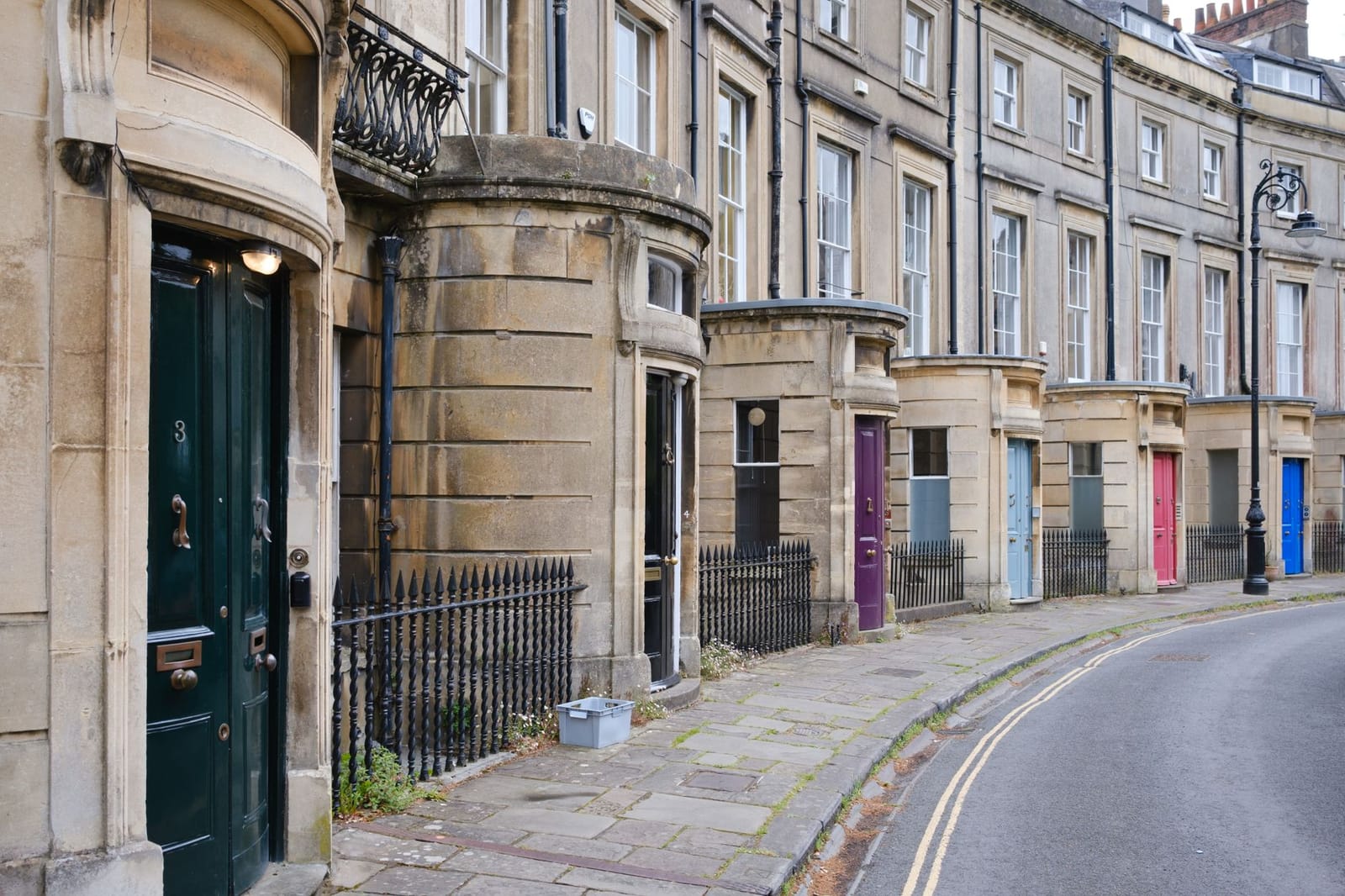
Improving an EPC score in Plymouth is shaped by the postwar rebuild
A domestic EPC is a SAP rating from 1 to 100, and band C starts at 69 points. Your certificate shows a letter, but the plan lives in the number, subtract your score from 69 and you have the gap. Plymouth’s housing story is unlike anywhere else in this batch, and it changes the EPC arithmetic. The city was among the most heavily bombed in Britain: over 18,000 houses were damaged and nearly 4,000 destroyed, and the rebuild that followed, Sir Patrick Abercrombie’s Plan for Plymouth, constructed from 1948 to 1962, replaced them at scale with a new generation of housing. The result is a city with a very large stock of postwar cavity-walled semis and estates across Efford, Ernesettle, Whitleigh and beyond, alongside the surviving Victorian terraces of Stoke and Mutley and the newer development at Estover and Plymstock.
That postwar dominance is good news for the EPC, because cavity walls take insulation cheaply and effectively, the opposite of the solid-wall problem that defines older cities. The complication is location: Plymouth sits in the South West, the region with the highest share of homes off the mains gas grid (around 24% in 2021, tied with Inner London), so a meaningful slice of the city runs on electric or oil heating, which the RdSAP model treats less favourably. This page sets out where Plymouth homes lose EPC points and how to buy them back cheapest first, and off-gas heating does not cap the score the way owners often fear. For the method, start with how to improve your EPC score.
Where Plymouth homes lose EPC points
The EPC models what a home should cost to heat, light and run per square metre, so it penalises heat loss and inefficient heating, and in Plymouth the pattern is postwar-plus-off-gas rather than solid-wall.
Unfilled cavity walls are the biggest cheap opportunity. The Abercrombie-era semis and estates were built with cavity walls, but a great many were never insulated. Where the cavity is empty, cavity wall insulation is one of the strongest cost-per-point measures there is, far better value than anything available on the older solid-wall stock. The surviving pre-1919 terraces in Stoke and Mutley are the exception, with solid brick and no cavity.
Off-gas heating is the Plymouth-specific drag. In the roughly one-in-four homes without mains gas, heating is often electric storage heaters or oil, and the RdSAP running-cost model scores these less kindly than a gas condensing boiler. That is not a dead end, it is the single biggest reason to look at a heat pump, which the model and the grant regime both favour.
Thin lofts and undocumented improvements cost points across the board. Many Plymouth lofts hold 100mm or less against a 270-300mm benchmark. And since RdSAP 10 came into force on 15 June 2025, the assessor measures every window individually and scores insulation and heating from evidence, so a home improved years ago can be scored on pessimistic defaults if the paperwork is gone, losing points already paid for.
The cheapest EPC points in Plymouth
Ranked by cost per point, the division competitors skip, the order on Plymouth’s postwar stock puts cavity insulation high, alongside the universal cheap tier. Our cheapest EPC improvements hub details the full sub-£500 package; applied to Plymouth:
- LED lamps throughout, £20 to £80, typically one to three points. The cheapest points on any certificate.
- Hot-water cylinder jacket (80mm+), £15 to £80, typically one to four points where a cylinder exists.
- Full heating controls, programmer, room thermostat and TRVs, £150 to £500, typically two to five points, now recorded under RdSAP 10.
- Draught-proofing, £30 to £250, typically one to three points.
- Loft insulation top-up to 270-300mm, £300 to £800, typically five to fifteen points. The best sub-£1,000 fabric measure everywhere.
- Cavity wall insulation (postwar stock), £400 to £1,500, typically five to fifteen points. On Plymouth’s Abercrombie-era semis this is often the single biggest cheap jump available.
For the postwar semis, a cavity fill plus a loft top-up plus controls frequently carries a whole band for under £2,500. Against the proposed £10,000 landlord cost cap, most homes clear C with a wide margin. The same order is costed nationally on our cost and cost-per-point guide.
The measures that fit Plymouth’s postwar and off-gas stock
Cavity fill and loft on the Abercrombie-era estates
The first thing an owner of a postwar Plymouth semi should establish is whether the cavity was ever filled. If it was not, cavity wall insulation at £400 to £1,500 typically adds five to fifteen points at £80 to £150 per point, and combined with a loft top-up to 300mm it routinely carries a whole band on its own. Keep the CIGA guarantee for the RdSAP evidence file. Our insulation EPC improvements hub covers cavity, loft and floor. On the surviving Stoke and Mutley solid-wall terraces the cavity option does not exist, so the loft, floor and controls carry the load, with solid-wall insulation the last resort at £8,000 to £15,000+ and the wall-insulation exemption available where expert advice shows it would damage the fabric.
Heat pumps on the off-gas homes
For Plymouth’s substantial off-gas stock, the heating is the biggest single drag, and it is also the biggest opportunity. An air-source heat pump typically adds ten to twenty points and most clearly satisfies the proposed future heating-system metric, and for a home currently on expensive electric or oil heating, the running-cost model often responds well. The Boiler Upgrade Scheme pays £7,500 toward an air or ground-source heat pump (landlords eligible, MCS installer required, no outstanding loft or cavity recommendations on the EPC, so the cheap fabric measures come first anyway), with a temporary higher grant announced for oil and LPG homes in 2026 that is directly relevant here, check the current figure on gov.uk. Our heat pump EPC hub covers the honest uplift picture. Plymouth also has real local funding: the council delivers the Warm Homes: Local Grant in partnership with Plymouth Energy Community for eligible privately owned and rented homes (a £3.02 million award covering over 200 homes after heavy oversubscription), plus an earlier HUG2 scheme that retrofitted 60 off-gas homes with £1.1 million of funding. All eligibility- and address-dependent, so check what is currently open.
Glazing, for comfort, rarely for points
Plymouth’s exposed coastal position makes draughty windows a genuine comfort issue, and owners are sold replacements as an EPC fix, but the documented arithmetic pushes back: £5,400 of new front-elevation double glazing added exactly two points in a published case, around £2,700 a point against £50 to £100 for the loft. Windows carry only 10-15% of the score. Draught-proofing captures much of the same benefit far cheaper, and on the Barbican’s heritage stock secondary glazing is the consent-safe route and is scored. Fit glazing for warmth and saleability; buy your points elsewhere. The detail is on our glazing EPC improvements hub.
A Plymouth worked example
Take the Efford semi in the scenario: a late-1940s Abercrombie-rebuild semi, cavity-walled but never insulated, an ageing loft, partial double glazing and no mains gas, running electric heating, like a notable share of the city. It assessed E (53), sixteen points short of C. The owner assumed the off-gas heating capped the rating.
Sequenced cheapest-first: cavity wall insulation (around £900), a loft top-up to 300mm (around £500), full heating controls (around £420), LED throughout (around £60) and a cylinder jacket (around £25). That is roughly £1,900 to £2,200, and on the published cost-per-point ranges the cavity fill and loft alone carry most of the sixteen points, with controls and lighting closing much of the rest, leaving a modest remainder where a heat pump (with the £7,500 grant) would both clear C and transform the running-cost picture. The evidence pack, CIGA guarantee, invoices, product details, depth photos, went to the assessor, because under RdSAP 10 documentation converts directly to points. This is an illustrative scenario from the published ranges, not a guarantee, but Plymouth’s postwar cavity stock is exactly where the cheap measures do this much work.
Compliance context: why the number matters, and by when
Raising the score is worth doing on its own terms, but for Plymouth landlords there is a dated backdrop. Current law is a minimum of EPC E to let, in force for all tenancies since 1 April 2020, cost cap £3,500, penalties up to £5,000 per property enforced by Plymouth City Council. Ahead of that, the government confirmed on 21 January 2026 that privately rented homes in England and Wales must reach EPC C by 1 October 2030, measured across two of the reformed metrics (fabric performance plus heating system or smart readiness), with a proposed £10,000 cost cap. That is confirmed government policy, not yet enacted law, delivered through secondary legislation reported as targeted for 2027, so the final exemption detail is not settled. For Plymouth’s postwar and off-gas stock the read is the same: the cheap fabric points are the future-proof points, and off-gas homes have the clearest heat-pump case. Plymouth declared a climate emergency on 18 March 2019 and pledged to be carbon-neutral by 2030 under its Net Zero Action Plan, two decades ahead of the national date.
Plymouth EPC improvement FAQs
My Plymouth home is off the gas grid, does that cap my EPC?
No, though it does shape the plan. Around one in four South West homes is off the mains gas grid, and electric or oil heating scores less well than a gas condensing boiler under RdSAP, but the fabric measures (cavity, loft, controls) still work exactly the same, and off-gas is the single strongest case for an air-source heat pump. A heat pump typically adds ten to twenty points and attracts the £7,500 Boiler Upgrade Scheme grant, with a temporary higher grant announced for oil and LPG homes in 2026, check gov.uk for the current figure.
Was my postwar Plymouth semi’s cavity ever filled, and does it matter?
It matters a lot, because an unfilled cavity is one of the cheapest big point-gains available (£400 to £1,500 for five to fifteen points). Plymouth’s Abercrombie-era rebuild produced a very large stock of cavity-walled semis, many never insulated. An RdSAP assessor records the wall construction and whether it is insulated; if you are unsure, check it first, because on postwar stock a cavity fill plus a loft top-up often carries a whole band on its own.
How many EPC points do I need on a Plymouth home to reach C?
Subtract your current score from 69. The letter alone is not enough for planning, an E at 53 needs sixteen points, a D at 62 needs seven. Check your current number free on the government’s find-energy-certificate service. On postwar cavity stock the gap often closes on the cavity-plus-loft-plus-controls package; off-gas homes may need a heating upgrade on top, which is where the heat-pump grant earns its place.
Is there grant funding to improve my EPC in Plymouth?
There can be. Plymouth City Council delivers the Warm Homes: Local Grant with Plymouth Energy Community for eligible privately owned and rented homes (a £3.02 million award covering over 200 homes), and has run HUG2 retrofits for off-gas homes. It is eligibility- and address-dependent, so confirm current availability with the council or Plymouth Energy Community. Nationally, the Boiler Upgrade Scheme offers £7,500 toward a heat pump and 0% VAT on energy-saving materials runs until 31 March 2027.
Do I need a new EPC after improving a Plymouth home, and what does it cost?
Yes, a certificate cannot be edited, so the score only changes when a fresh assessment is lodged on the national register, superseding the old one for ten years. A domestic re-assessment in Plymouth typically runs £45 to £100. It is the cheapest line in the project and the only one that makes the improvements visible to letting agents, buyers, lenders and MEES enforcement. Hand the assessor your invoices, CIGA cavity guarantee, MCS heat-pump certificate, boiler model number and insulation depth photos, under RdSAP 10, evidence converts directly to points.
Areas we cover around Plymouth
We plan EPC improvements across all of Plymouth’s postcode districts, PL1 to PL9 and out to PL19 and PL20, from the postwar cavity estates of Efford, Ernesettle and Whitleigh to the surviving solid-wall terraces of Stoke and Mutley and the newer development at Estover and Plymstock. Beyond the city we also cover Saltash, Plympton, Plymstock, Tavistock and Ivybridge, along with the mixed commercial-and-residential stock around Marsh Mills and Langage. Whether it is an off-gas semi in PL5 or a Victorian terrace in PL4, the plan is the same: find the gap, buy the cheapest points first, re-assess. For nearby markets see our Bristol and Swindon pages.
Plan your Plymouth EPC improvement, cheapest points first
Start from your actual number. Pull your current score, subtract from 69, and sequence the measures by cost per point for your specific Plymouth property, cavity and loft first on postwar stock, a heat pump for off-gas homes, evidence in hand for the re-assessment. Browse the full method on our FAQs, see the measures costed on our cost guide, or begin with the flagship cheapest EPC improvements hub. Confirm your current rating and check the lodged inputs on the national EPC register (gov.uk), and read the heat-pump grant detail at the Boiler Upgrade Scheme (gov.uk).
Postcodes covered in Plymouth
- PL1
- PL2
- PL3
- PL4
- PL5
- PL6
- PL7
- PL9
- PL19
- PL20
Other areas we cover
Get a free quote in Plymouth
Responds within one working day
- 1. Gap analysis from your current EPC, your score, the gap to the next band, no obligation.
- 2. A ranked plan costed per point, cheapest first, with the evidence to keep.
- 3. Re-assessment by an accredited energy assessor, lodged on the national register.
- Accredited DEAs & NDEAs
- RdSAP 10 evidence-based
- Costed per point
- Lodged on the register